Pagani: Inside the World of Italy’s Most Exclusive Hypercar Maker

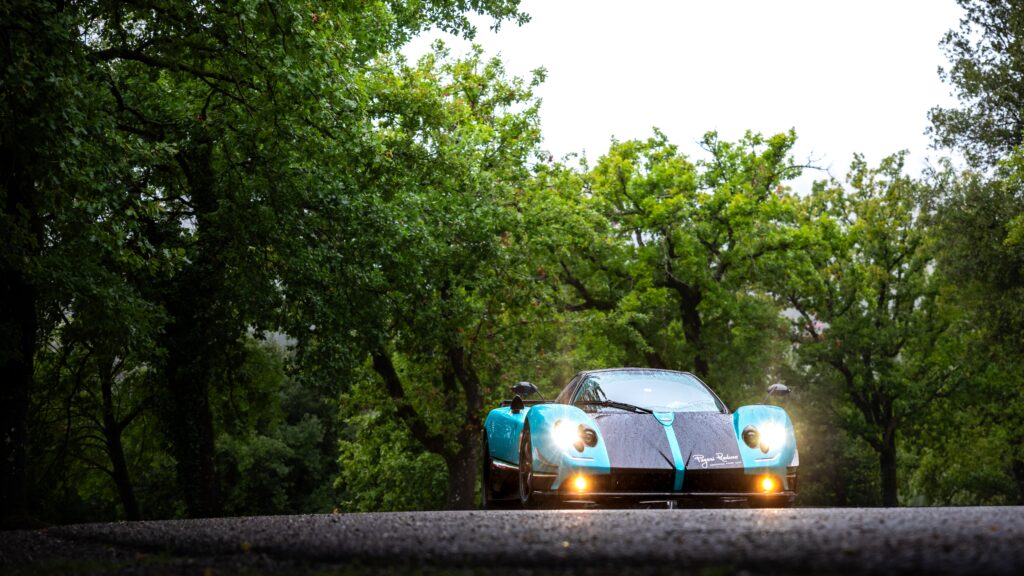
If you’ve ever seen a Pagani in person, you probably remember exactly where you were standing. There’s a reason for that. This isn’t a car you glance at and move on from — it’s one you circle twice, phone out, mouth slightly open.
Pagani builds fewer cars in a year than some dealerships sell in an afternoon, and that scarcity is only part of the appeal. Every Pagani is part sculpture, part engineering thesis, and part obsession, hand-assembled in a small workshop in San Cesario sul Panaro, Italy.
In this guide, we’ll walk through what makes Pagani cars so different — the history, the design philosophy, the engineering under the skin, real-world performance numbers, pricing, and how these cars stack up against rivals from Bugatti, Koenigsegg, and Ferrari. Whether you’re a lifelong enthusiast or just discovered Pagani exists, you’re in the right place.
For the latest models, technical specifications, and official announcements, visit the Pagani Automobili official website.
What is Pagani?
Pagani Automobili is a low-volume Italian manufacturer that builds some of the most extravagant hypercars on the planet. Based in Modena’s supercar heartland, the company was founded by Argentine-born engineer Horacio Pagani, a man who once worked for Lamborghini before deciding he’d rather build his own dream from scratch.
Unlike mass-market brands, Pagani doesn’t chase sales volume. It produces a handful of cars each year, and each one takes months of hand-finishing before it ever reaches an owner’s garage.
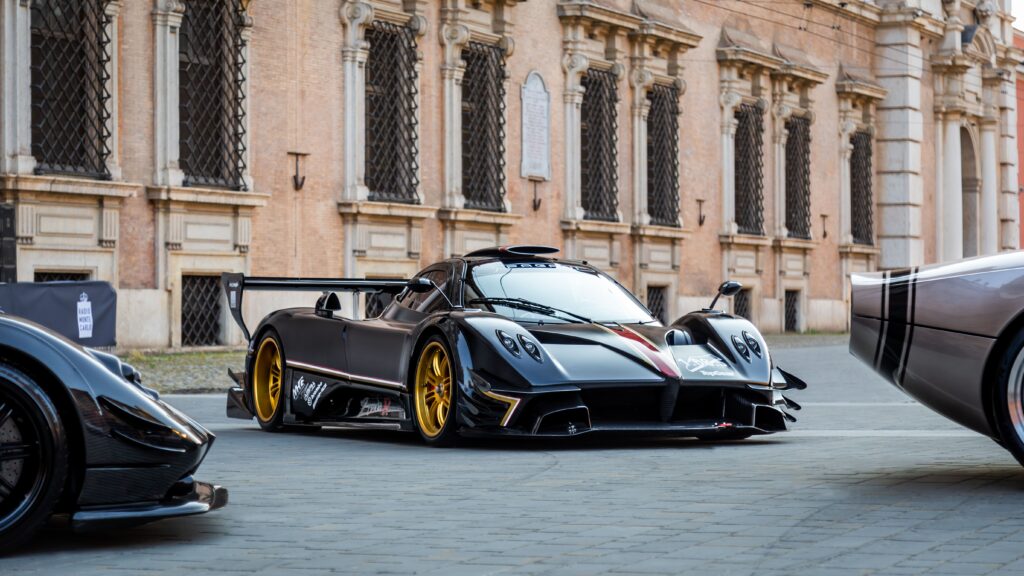
The lineup today revolves around two model families: the now-retired Zonda, which put Pagani on the map, and the Huayra, which carried that legacy forward before evolving into the brand-new Utopia. Along the way, there have been track specials, roadsters, and one-off commissions that read more like art pieces than automobiles.
What separates this hypercar from other exotic brands isn’t just the price tag. It’s the obsession with detail — carbon fiber weaves treated like fine fabric, titanium bolts milled to jewelry-grade finish, and an interior that feels more like a watchmaker’s workshop than a car cabin.
History and Background
Horacio Pagani grew up in Argentina, building scale models and dreaming about Italian sports cars long before he ever set foot in Italy. In 1982, he moved to Modena specifically to work near Lamborghini, and within a few years, he landed a job there.
During his time at Lamborghini, Pagani became fascinated with carbon fiber, a material barely used in road cars back then. He pushed to bring it into Lamborghini’s production, but the company wasn’t ready to commit the resources.
Frustrated but undeterred, Pagani left in 1991 to start his own composites company, Modena Design, which supplied carbon fiber parts to various manufacturers. It was a smart move — it funded his real ambition quietly, year after year.
That ambition became reality in 1999, when Pagani unveiled the Zonda C12 at the Geneva Motor Show. It used a Mercedes-AMG V12 engine, a relationship that continues to this day and remains one of the most important partnerships in the supercar world.
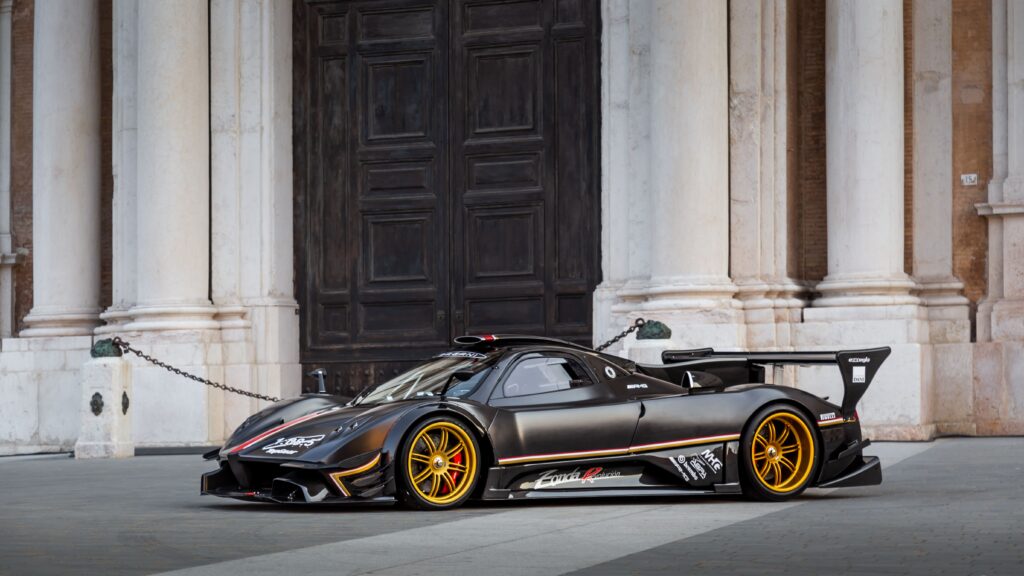
The Zonda ran for well over a decade, evolving through numerous special editions — the Cinque, the Revolución, the R — each one pushing weight down and power up. By the time it retired, the Zonda had become a cult icon.
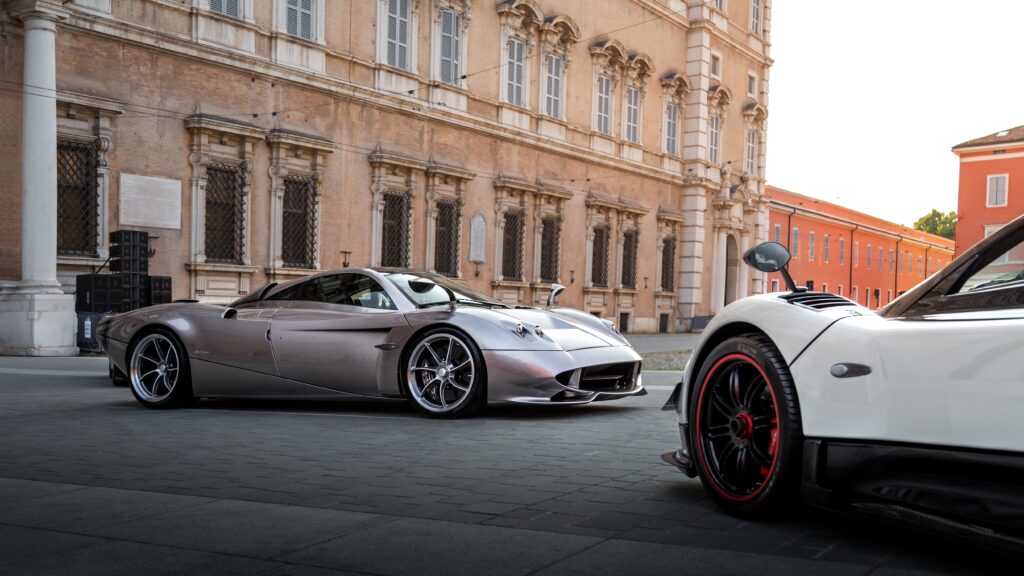
Its successor, the Huayra, arrived in 2011 and introduced active aerodynamics, a twin-turbo V12, and a design language that was somehow even more theatrical. The Huayra itself spawned track-only and limited variants like the BC, the Roadster, and the Imola before Pagani moved on to its next chapter: the Utopia, launched in 2022 as a spiritual reset — a car built for driving pleasure rather than lap times.
Design and Exterior
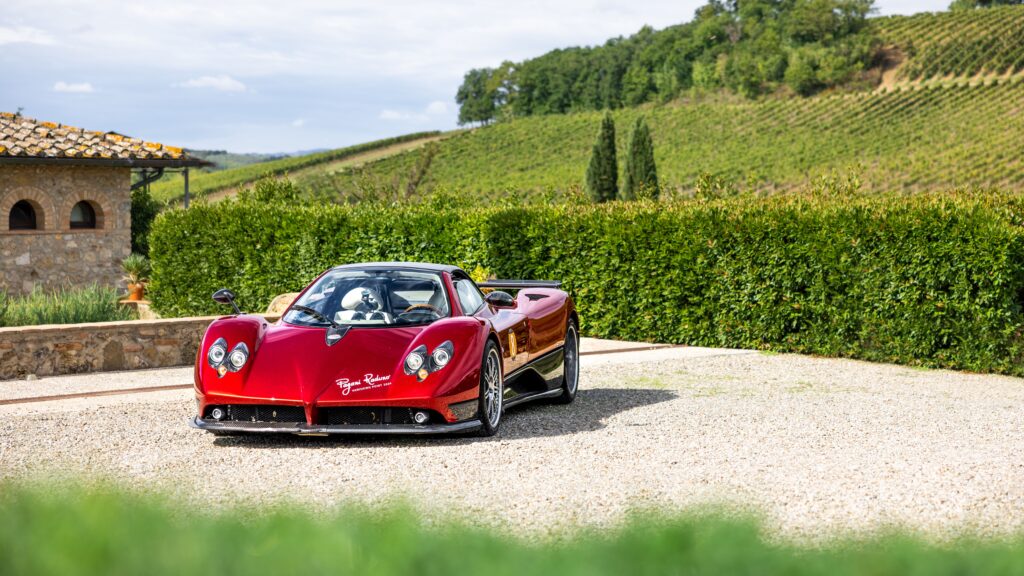
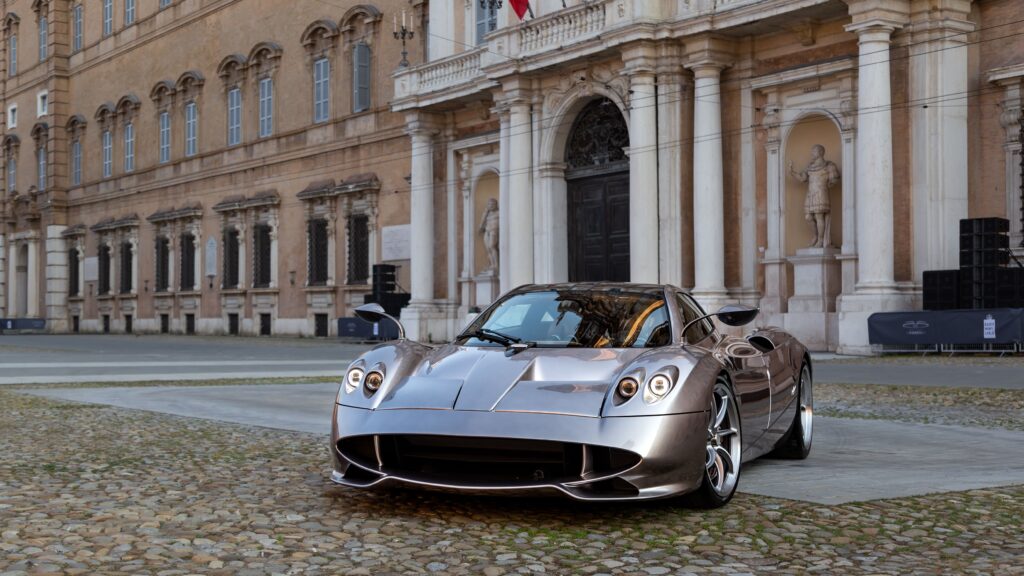
This hypercar exterior design doesn’t follow typical supercar trends. While rivals lean into sharp aggression or minimalist futurism, Pagani leans into detail — visible bolts, sculpted air vents, and curves that look almost hand-carved.
Look closely at any Pagani and you’ll notice things most manufacturers hide. Exposed titanium fasteners, intricate exhaust tips that resemble jet engine nozzles, and body panels shaped with almost obsessive symmetry.
That’s intentional. Horacio Pagani has said publicly that he wants every component, even ones nobody will ever touch, to be beautiful. It’s a philosophy borrowed partly from Renaissance art and partly from aerospace engineering.
The Huayra introduced active aero flaps hidden within the front and rear bumpers, which adjust independently to balance the car through corners without relying on a fixed wing. The Utopia dialed this back slightly, favoring a cleaner silhouette that channels classic Group C racers from the 1960s and 70s.
Every Pagani body is built from a mix of carbon fiber and titanium, sometimes referred to as “Carbo-Titanium” or “Carbo-Triax,” materials developed specifically to shave weight while maintaining rigidity.
Interior and Technology
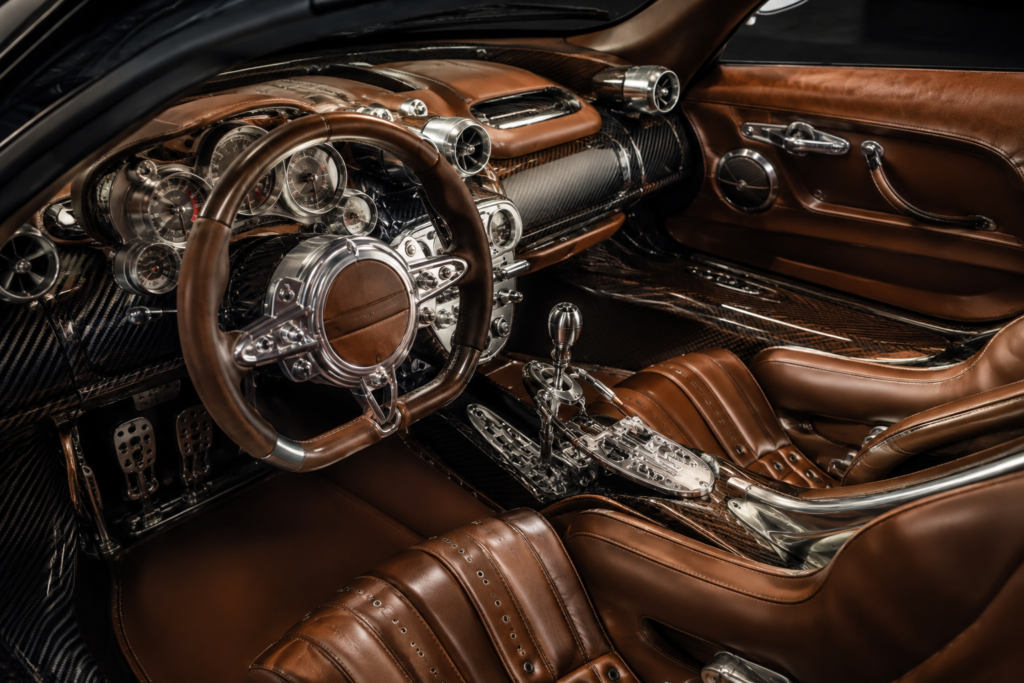
Step inside a Pagani and the first thing you’ll notice is how little it resembles a modern car cockpit. There’s no oversized touchscreen dominating the dashboard, no menus buried three layers deep.
Instead, you get milled aluminum switches, exposed mechanical linkages for the gear selector, and analog-style gauges that look like they belong in a fine wristwatch. This hypercar interior design leans heavily on craftsmanship over digital flash.
That doesn’t mean it’s old-fashioned. The materials — carbon fiber trim, hand-stitched leather, aviation-grade aluminum — are as advanced as anything in the industry, just presented in a more tactile, human way.
Even the air vents are engineering showpieces. This hypercar designed a compass-like mechanism for adjusting airflow that’s become something of a signature detail across every model since the Zonda.
Comfort hasn’t been ignored either. Later Huayra and Utopia models added better infotainment integration, improved sound insulation, and more supportive seating, addressing early criticism that Pagani interiors prioritized art over usability.
Engine and Performance
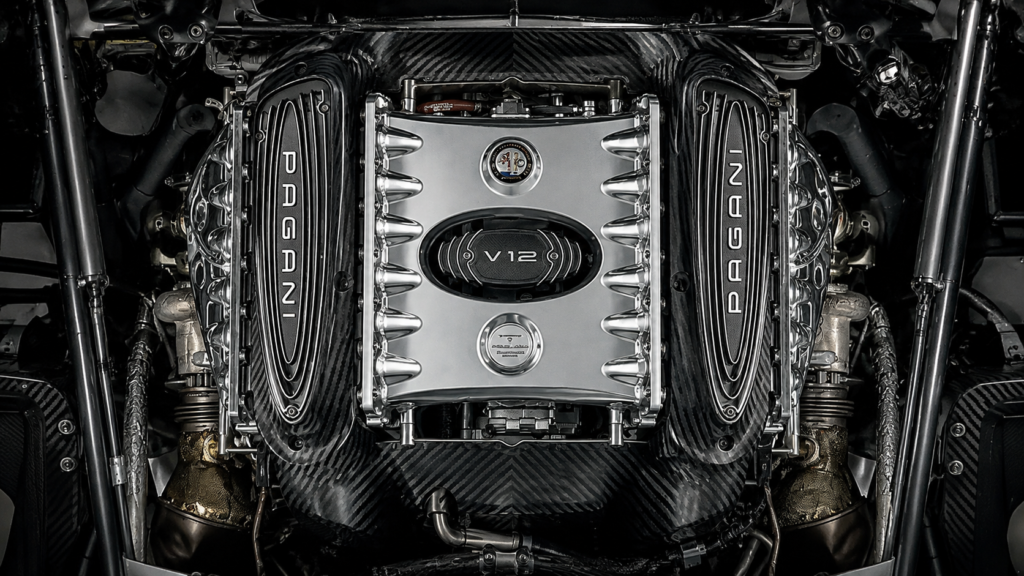
Every modern Pagani, from the Huayra through to the Utopia, uses a version of the same foundation: a 6.0-liter twin-turbocharged V12 engine, developed exclusively for Pagani by Mercedes-AMG’s High Performance Powertrains division.
This isn’t a shared engine pulled from another AMG model. It’s a bespoke unit, hand-built in Affalterbach, Germany, and shipped to Italy specifically for Pagani’s chassis. Depending on the model and tune, output ranges from around 720 horsepower in the original Huayra up past 860 horsepower in the Utopia and Imola.
What makes this hypercar engines stand out isn’t just the number on the spec sheet — it’s how that power gets delivered. Massive torque arrives early and stays flat across a wide rev range, which is part of why these cars feel so effortlessly quick rather than peaky or nervous.
Transmission choice is where this hypercar really separates itself from the pack. While most modern hypercars have gone all-in on dual-clutch automatics, Pagani still offers a proper manual gearbox on the Utopia, developed with British specialist Xtrac, alongside a sequential automated option for those who want quicker shifts without a clutch pedal.
That manual option matters more than it might seem. In an era where hybrid batteries and silent drivetrains are becoming the norm, this hypercar has stayed loyal to naturally engaging, driver-focused engineering — no electrification, no shortcuts.
Specifications
Here’s a quick snapshot comparing the current Utopia with the outgoing Huayra and the track-only Huayra R, so you can see how the range breaks down at a glance.
Quick Specifications
| Spec | Pagani Utopia | Pagani Huayra (base) | Pagani Huayra R |
|---|---|---|---|
| Engine | 6.0L Twin-Turbo V12 (AMG) | 6.0L Twin-Turbo V12 (AMG) | 6.0L Naturally Aspirated V12 (AMG) |
| Power | ~864 hp | ~720 hp | ~838 hp |
| Torque | ~1,100 Nm | ~1,000 Nm | ~750 Nm |
| Transmission | 7-speed manual or automated manual (Xtrac) | 7-speed sequential (Xtrac) | 6-speed sequential (Xtrac) |
| 0–100 km/h | ~3.1 seconds | ~3.2 seconds | Under 3 seconds |
| Top Speed | ~350 km/h (217 mph) | ~383 km/h (238 mph) | Track-limited |
| Dry Weight | ~1,280–1,340 kg | ~1,350 kg | ~1,050 kg |
| Body/Chassis | Carbon-titanium monocoque | Carbon-titanium monocoque | Carbon-titanium monocoque |
| Production | Limited, ongoing | Discontinued | 30 units, sold out |
Numbers vary slightly by trim, region, and configuration, since Pagani builds many cars to individual client specification rather than fixed production runs.
Top Speed and Acceleration
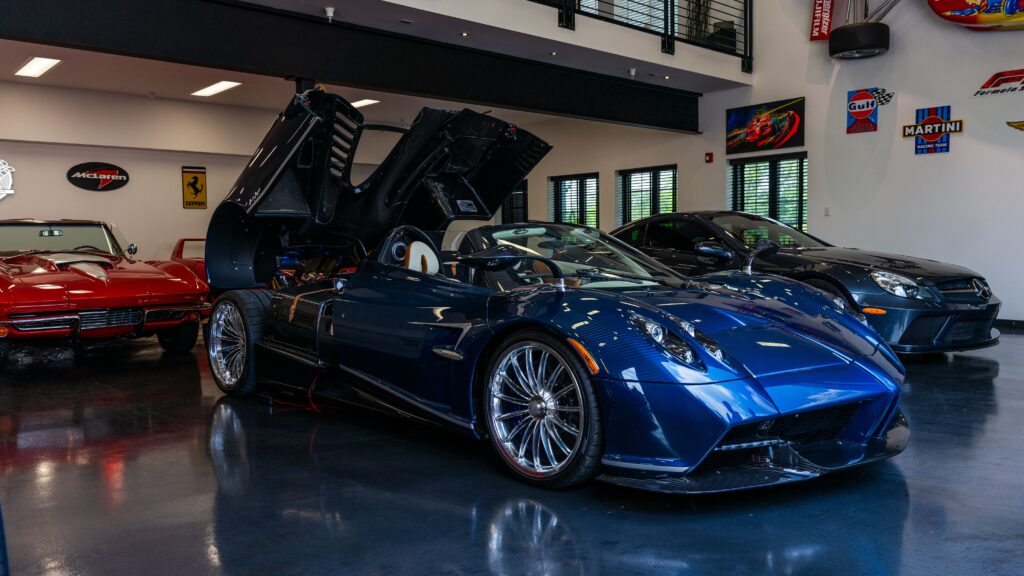
Pagani top speed figures tend to surprise people who assume these cars are built purely for straight-line bragging rights. They’re quick, but the engineering priority has always leaned toward balance and control rather than chasing a record number.
The Utopia is electronically limited to roughly 350 km/h (217 mph), with a 0–100 km/h sprint of around 3.1 seconds. That’s supercar-quick, but noticeably more conservative than some rivals that chase 300+ mph headlines.
The track-only Huayra R, stripped of emissions equipment and running a naturally aspirated version of the V12, is even sharper off the line thanks to its lighter weight, even though its top speed is intentionally limited by aerodynamic setup rather than raw power.
What’s genuinely impressive is how these acceleration figures translate on the road. Because the V12 delivers such a wide torque band, a Pagani doesn’t need to be at redline to feel savage — it just pulls, consistently, from almost any gear.
Price
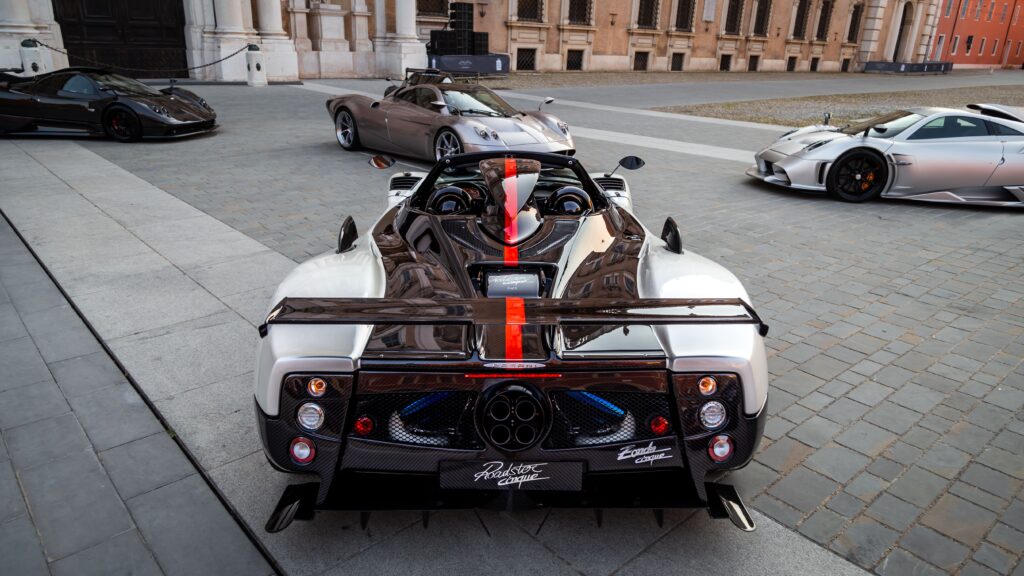
Pagani price tags start where most supercar price tags end. Even the “entry point” into Pagani ownership sits comfortably above $2 million before options, custom finishes, or bespoke interior work.
The Utopia coupe starts around $2.2 million to $2.4 million, with the Roadster variant pushing past $3 million once you factor in typical client customization. Limited editions climb even higher.
The Huayra Imola, limited to just five units, was priced around $5.4 million each — and every single one sold before the car was publicly shown. The Huayra Codalunga went further still, with a starting price near $7 million.
That pricing isn’t just about exclusivity marketing. Every Pagani is essentially bespoke, built to individual client specification with materials, stitching, and finishes chosen car by car. Two Paganis rarely look identical inside, even from the same model year.
Pros and Cons
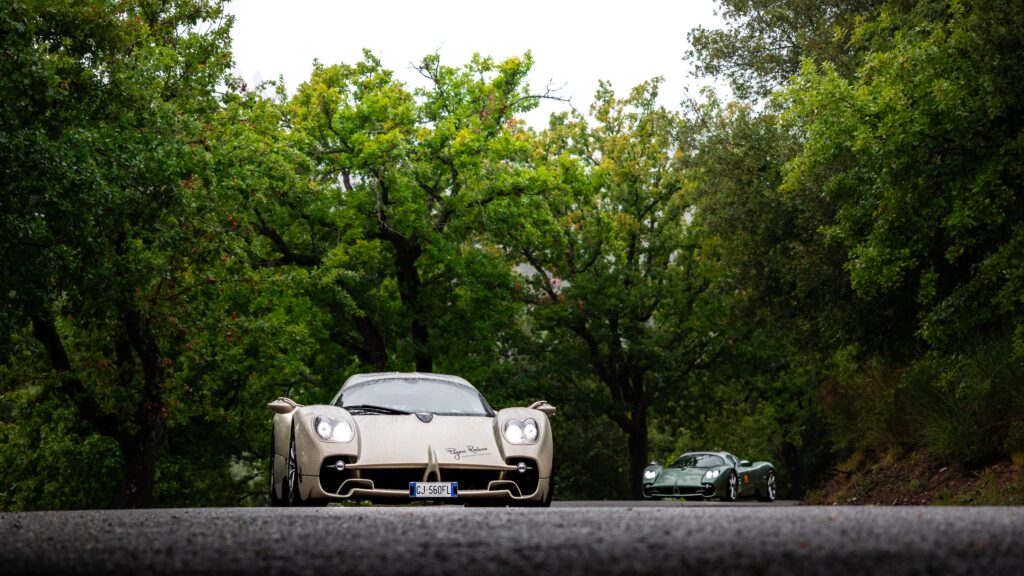
No car is perfect, even one that costs more than most houses. Here’s a balanced look at where Pagani genuinely excels, and where it asks for compromise.
Pros:
- Genuinely bespoke build quality with a level of detail few rivals attempt
- Distinctive, sculptural design that doesn’t chase passing trends
- Manual gearbox still available in an era where almost nobody offers one
- Strong resale value and long-term collectability due to tiny production numbers
- Engine sound and character that’s hard to replicate with turbocharged rivals
Cons:
- Extremely limited availability — waiting lists and client vetting are common
- Servicing and parts require specialist knowledge, often overseas
- Price puts it out of reach for the vast majority of enthusiasts
- Rear visibility and everyday practicality take a back seat to design
- Depreciation on early, less desirable variants can be steeper than flagship models
Comparison with Competitors
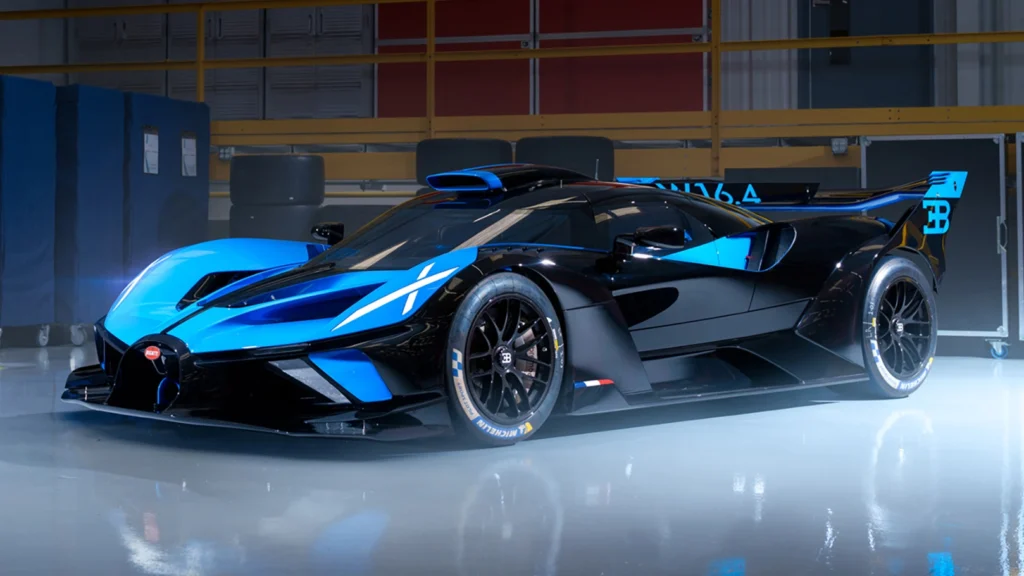
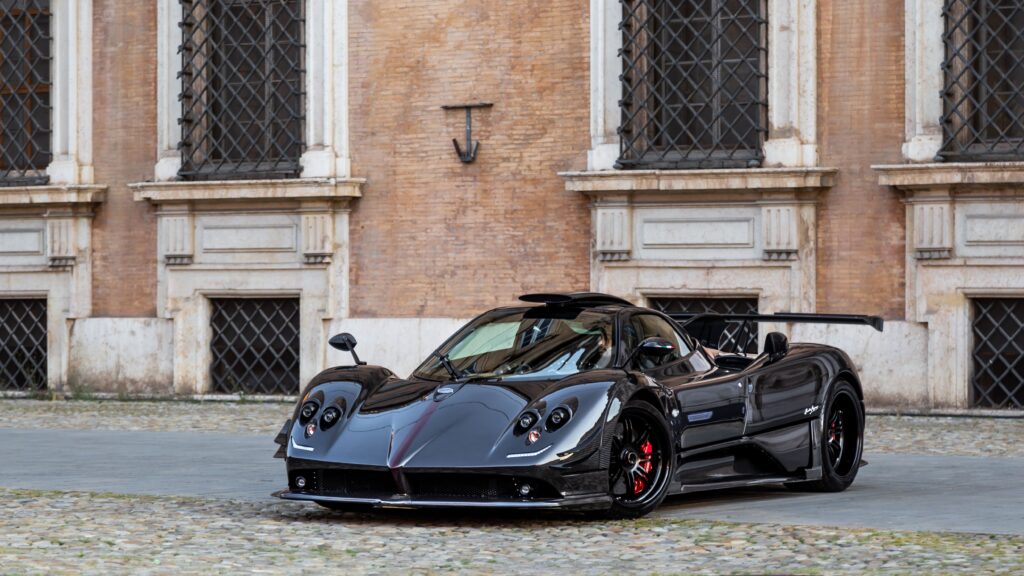
Pagani doesn’t really compete on volume or brand recognition the way Ferrari or Lamborghini do. Instead, it sits in a rarefied tier alongside Bugatti and Koenigsegg, where exclusivity matters as much as outright numbers.
| Model | Engine | Power | Top Speed | Starting Price |
|---|---|---|---|---|
| Pagani Utopia | 6.0L Twin-Turbo V12 | ~864 hp | ~350 km/h | ~$2.2 million |
| Bugatti Chiron | 8.0L Quad-Turbo W16 | ~1,479 hp | ~420 km/h | ~$3 million |
| Koenigsegg Jesko | 5.0L Twin-Turbo V8 | ~1,600 hp | ~480 km/h (claimed) | ~$3.4 million |
| Ferrari SF90 Stradale | 4.0L Twin-Turbo V8 Hybrid | ~986 hp | ~340 km/h | ~$625,000 |
| McLaren Senna | 4.0L Twin-Turbo V8 | ~789 hp | ~336 km/h | ~$1 million |
What this table shows is telling. This hypercar doesn’t have the highest horsepower or the fastest top speed in this group — it’s actually one of the more modest cars here on paper. What it offers instead is craftsmanship, exclusivity, and a driving character built around feel rather than statistics.
Ferrari and McLaren both push more accessible pricing with strong dealer networks and easier ownership experiences. Bugatti and Koenigsegg chase outright speed records. Pagani occupies its own lane entirely — art first, numbers second.
Who Should Buy It?
Realistically, a Pagani isn’t cross-shopped the way a typical car is. Buyers usually already own several other exotic cars and are looking for something that feels personal rather than mainstream.
It suits someone who values craftsmanship and story as much as raw performance — a collector who wants a car that will be talked about decades from now, not just fast today.
It’s less suited to buyers who want easy servicing, everyday usability, or the reassurance of a large dealer network nearby. This hypercar ownership requires patience, both in acquiring one and in maintaining it afterward.
For enthusiasts without the budget, this hypercar still matters as a benchmark. Its engineering philosophy — favoring feel, materials, and driver engagement over spec-sheet dominance — influences how the entire hypercar segment thinks about what “special” really means.
Conclusion
Pagani isn’t trying to win a horsepower war or chase the next top-speed record. What makes this hypercar special is the obsession behind every rivet, stitch, and switch — a philosophy that treats a car more like a piece of functional art than transportation.
From the Zonda’s debut in 1999 through the Huayra’s many variants and now the Utopia, Horacio Pagani’s vision has stayed remarkably consistent: build something beautiful first, then make sure it performs.
That approach comes at a serious price, both in dollars and in patience for anyone hoping to own one. But for those who do, a Pagani represents something increasingly rare in the automotive world — a car built by hand, for people who notice the difference.
Whether you’re saving up, dreaming, or just admiring from a distance, Pagani remains one of the few brands that still makes the supercar world feel a little bit magical.
Frequently Asked Questions (FAQs)
Pagani is a name derived from Horacio Pagani, an Argentine-Italian engineer and founder of Pagani Automobili S.p.A. The name is associated with high-performance, luxury hypercars known for their unique design and engineering. The company was established in Modena, Italy, and is known for models like the Zonda and Huayra.
No. Pagani is an independent, privately owned Italian manufacturer, but it has a long-standing engineering partnership with Mercedes-AMG, which builds bespoke V12 engines exclusively for Pagani.
Production numbers are very low, typically in the range of 20 to 40 cars annually, depending on model and client demand, since much of the process is done by hand.
The original Huayra, in certain configurations, has recorded top speeds around 383 km/h (238 mph), making it one of the quickest Paganis ever tested, though newer models prioritize balance over outright top speed.
Yes. The Pagani Utopia offers a genuine 7-speed manual gearbox alongside an automated manual option, a rarity among modern hypercars.
Maintenance costs are significantly higher than typical supercars due to bespoke parts and limited specialist support, with annual servicing often running into tens of thousands of dollars.
The Pagani Huayra replaced the Zonda in 2011, introducing a twin-turbocharged V12 and active aerodynamics in place of the Zonda’s naturally aspirated setup.
In theory yes, but in practice, limited editions are typically offered first to existing Pagani owners and known collectors, with waiting lists extending years for certain models.