Pagani Huayra Roadster: Inside the Open-Top Hypercar Masterpiece
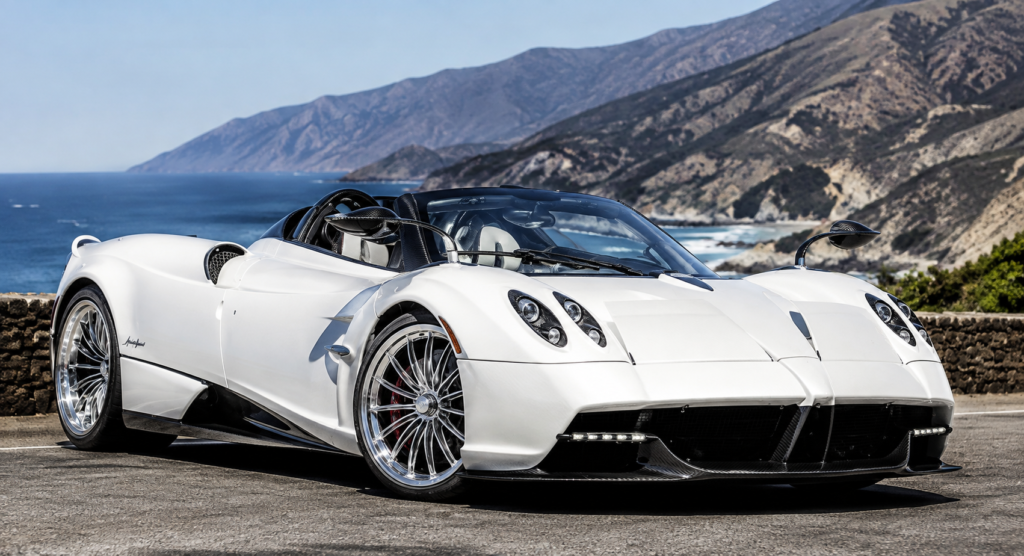
There are supercars, and then there’s whatever category the Pagani Huayra Roadster belongs to. Pagani Huayra Roadster isn’t just a car with the roof sliced off. It’s a completely re-engineered piece of rolling sculpture that happens to let the wind hit your face at nearly 230 mph.
The Pagani Huayra Roadster is one of the most breathtaking hypercars ever built. If you’re new to the brand, explore our complete guide to Pagani Hypercars before diving into this masterpiece.
I’ve spent years covering everything from mainstream sports cars to seven-figure exotics, and few machines generate the kind of hushed reverence that a Pagani does in person. Photos genuinely don’t do it justice.
This article breaks down everything worth knowing about the Huayra Roadster—its history, its engineering, how it drives, what it costs, and how it stacks up against siblings like the Pagani Huayra R, Pagani Huayra BC, and the newer Pagani Utopia and Pagani Imola.
Whether you’re a lifelong Pagani obsessive or you just stumbled onto a photo of one and need answers, you’re in the right place.
To explore the official specifications, design philosophy, and engineering details, visit the official Pagani Huayra Roadster page.
Quick Specifications
| Spec | Detail |
|---|---|
| Engine | 6.0L twin-turbo V12 (Mercedes-AMG built) |
| Power | 754 hp @ 6,200 rpm |
| Torque | 738 lb-ft @ 2,400 rpm |
| Transmission | 7-speed automated manual, rear-wheel drive |
| 0–60 mph | 3.0–3.1 seconds |
| Top Speed | Around 230 mph (roof on) |
| Weight | Approx. 2,820 lbs (dry) |
| Production | Limited to 100 units, 2017–2019 |
| Original Price | Around $2.4–2.6 million |
What is the Pagani Huayra Roadster?
At its core, the Pagani Huayra Roadster is the convertible sibling of the Huayra Coupe, built by the small Italian atelier Pagani Automobili. But calling it “just a convertible” undersells what actually happened during development.
Pagani didn’t simply remove the roof and reinforce a few pillars. Engineers rebuilt the carbon-titanium monocoque from scratch so it could handle open-top loads without the extra weight most convertibles carry.
The result is a car that’s actually lighter than the coupe it’s based on, despite losing the structural rigidity a fixed roof normally provides. That’s an engineering feat most manufacturers never attempt, let alone pull off.
Only 100 examples were ever built, which instantly makes this one of the rarest hypercars on the planet. If you’re new to the brand, think of it as the automotive equivalent of a hand-tailored suit—every stitch, bolt, and vent is deliberate.
History and Background
To understand the Huayra Roadster, you have to go back to Horacio Pagani himself. He started his career at Lamborghini before founding his own company in 1992, determined to build cars without compromise.
His first creation, the Pagani Zonda, put the brand on the map through the late 1990s and 2000s. It became a cult favorite among collectors long before most casual fans had heard the Pagani name.
The Huayra arrived in 2011 as the Zonda’s successor, named after Huayra-tata, an Andean wind god. That naming choice wasn’t random—active aerodynamics, essentially flaps that adjust in real time to control airflow, are central to how the car handles.
The Huayra Coupe sold out its production run of 100 units by 2015. Rather than end the story there, Pagani struck a deal with Mercedes-AMG, its longtime engine partner, to build an open-top version.
That collaboration produced the Huayra Roadster, unveiled in 2017 at the Geneva Motor Show. It wasn’t a mid-cycle refresh; it was treated as its own model, with its own engineering challenges and its own waiting list of buyers.
Since then, Pagani has continued expanding the family with track-focused variants like the Pagani Huayra BC and the even more extreme Pagani Huayra R, before eventually moving on to the next-generation Pagani Utopia.
The Pagani Huayra Roadster: Rarity Built Into Every Detail
Some cars chase headlines with spec sheets. The Pagani Huayra Roadster chases something harder to fake — restraint. Only 100 were ever built, and Pagani never once talked about expanding that number.
That decision alone tells you everything about how the brand thinks. A Pagani Huayra Roadster isn’t manufactured to meet demand; demand simply has to accept the number Pagani decided on years in advance.
Spend time around a Pagani Huayra Roadster in person, and the rarity stops feeling like a marketing line and starts feeling real. Owners often mention how few people, even seasoned car enthusiasts, have ever seen one outside of photos.
That scarcity is also why the Pagani Huayra Roadster keeps showing up at auctions well above its original asking price. Buyers aren’t just chasing performance numbers here — they’re chasing something Pagani intentionally made almost impossible to find.
In a market flooded with limited-edition badges slapped onto mass-produced platforms, the Pagani Huayra Roadster stands out simply because its exclusivity was never a marketing gimmick. It was the entire point from day one.
Design and Exterior
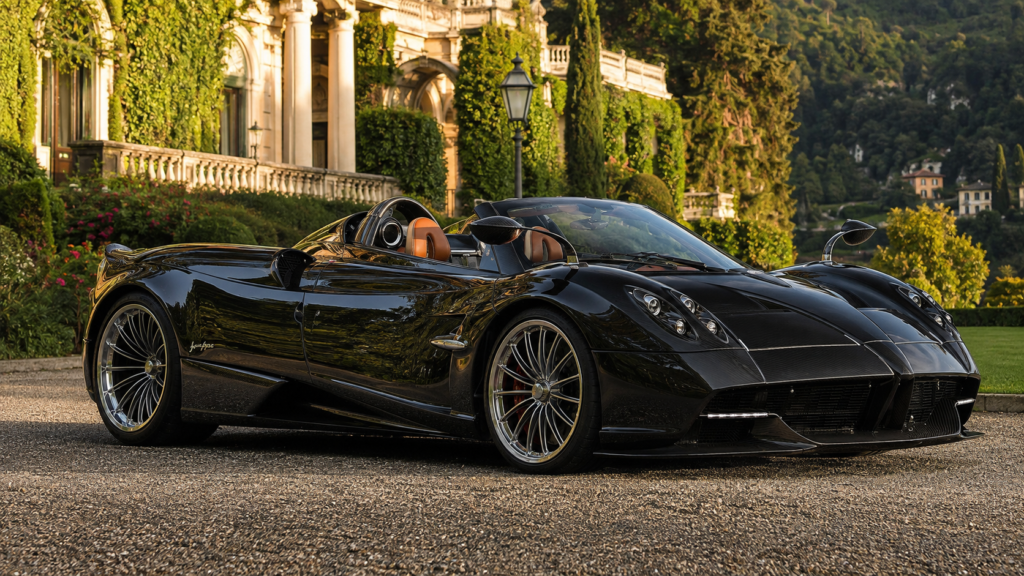
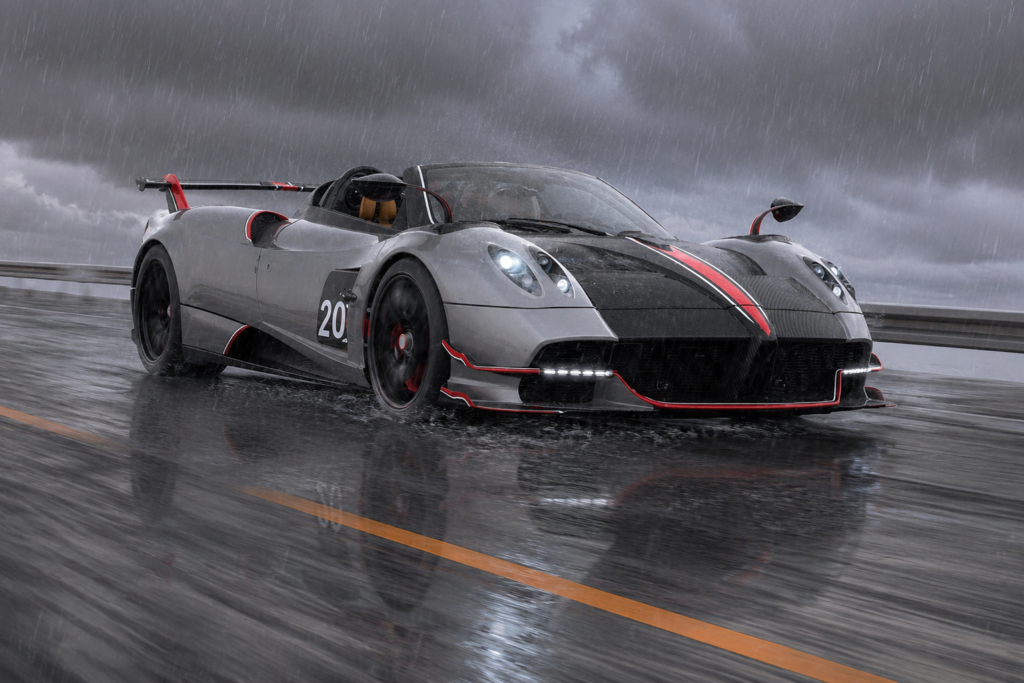
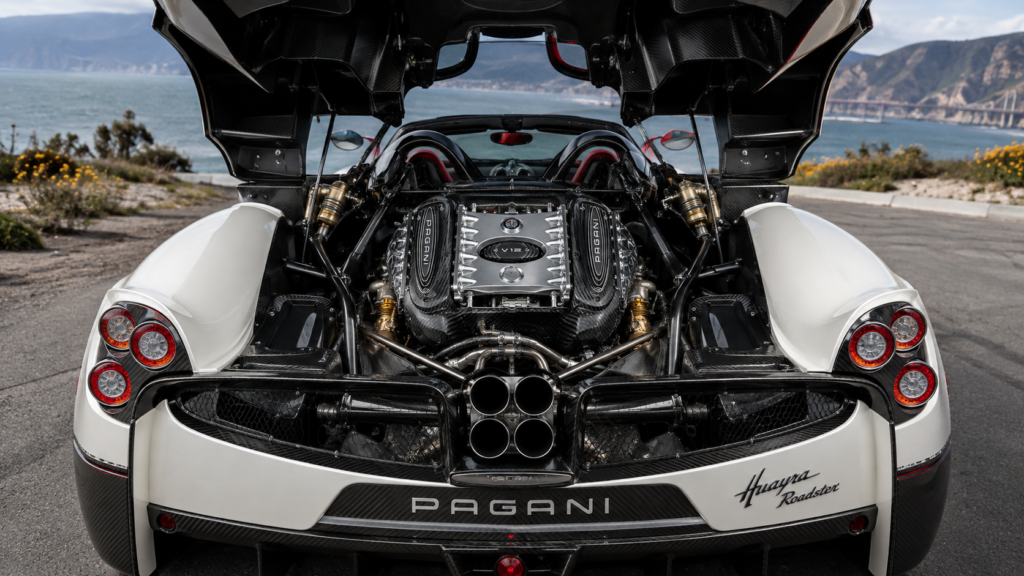
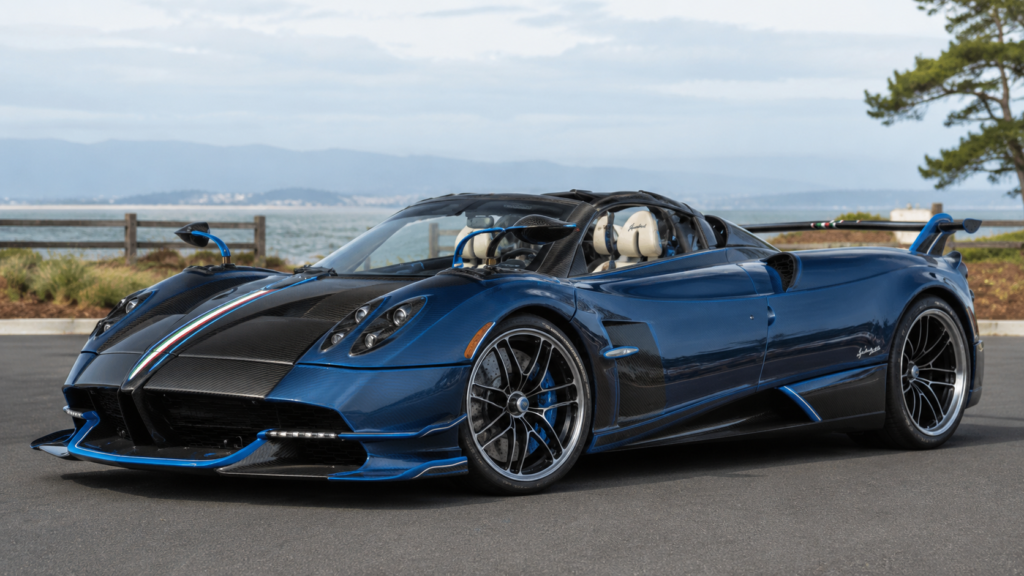
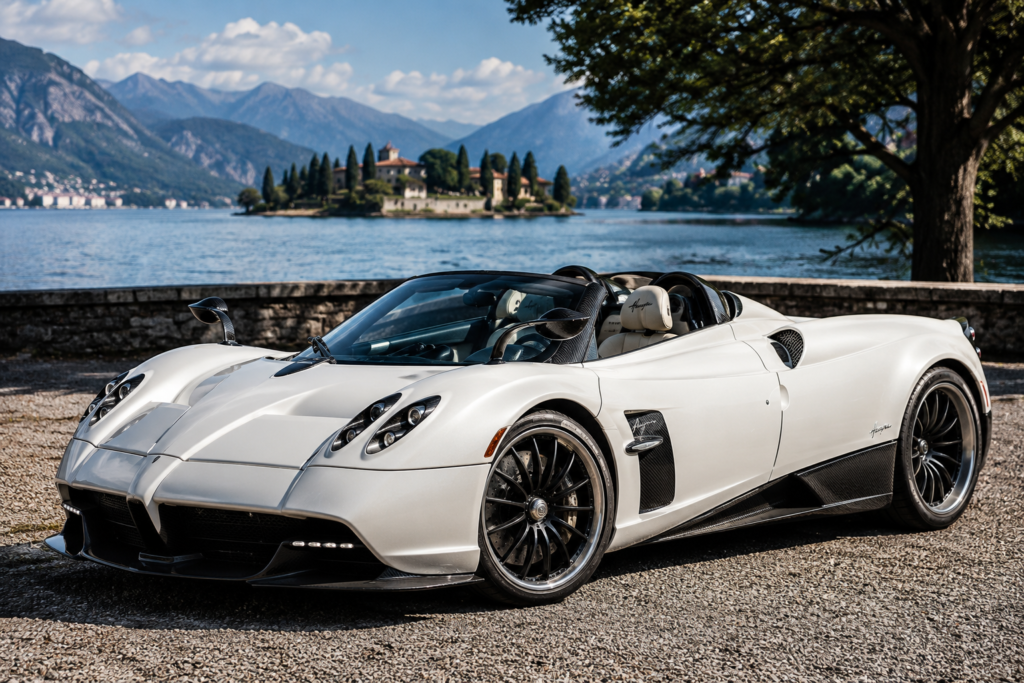
The first thing you notice about the Huayra Roadster isn’t a spec sheet number—it’s the exhaust. Four titanium tailpipes emerge from the center of the tail, arranged like something off a fighter jet.
Every panel gap, every visible carbon weave pattern, is aligned by hand. Pagani’s craftspeople actually line up the carbon fiber fabric so the pattern flows consistently across separate body panels, which sounds minor until you see it in person and realize how rare that level of care actually is.
The active aerodynamics system uses four flaps, one near each wheel, that open and close independently based on how the car is cornering, braking, or accelerating. Instead of a fixed rear wing constantly creating drag, the car only adds downforce when it actually needs it.
Removing the roof meant Pagani had to add hidden reinforcement without visually cluttering the design. A carbon hard top can be fitted for weather protection, and there’s also a soft-top style cover for lighter storage.
Even the door hinges got attention—each one was designed to open in a way that echoes an old pocket watch mechanism, a signature touch across Pagani’s lineup. It’s a small detail, but it says a lot about the brand’s obsession with mechanical artistry over pure practicality.
Interior and Technology
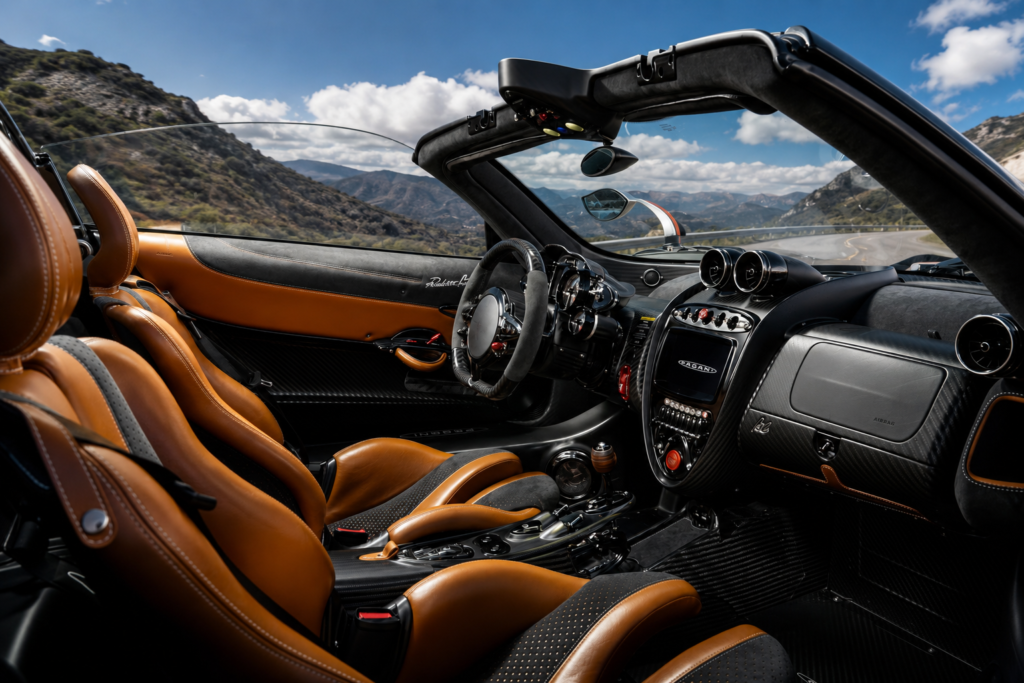
Step inside, and you’ll find a cabin that feels more like a bespoke wristwatch than a modern car dashboard. Exposed metal gear linkages, aluminum switchgear, and hand-stitched leather dominate the space.
Pagani deliberately avoids the touchscreen-heavy approach most rivals lean on. Physical dials, analog-style gauges, and metal toggle switches are the norm here, which enthusiasts tend to appreciate since it keeps the focus on driving rather than menus.
That’s not to say it lacks modern comforts. Buyers can option Bluetooth connectivity, a premium audio system, and navigation, but these features are integrated so subtly that they never dominate the design.
Materials matter enormously to Pagani. Carbon fiber trim pieces, aerospace-grade titanium bolts (the company famously counts and catalogs every single one), and leather sourced specifically for softness and durability all play a role.
Because this is a roadster, cabin insulation and wind management were rethought entirely. Pagani added a wind deflector system to reduce buffeting at speed, something that matters more than people expect once you’re doing 100+ mph with the top down.
Every Huayra Roadster is also essentially bespoke. Pagani works directly with each buyer through what’s called the “Atelier” program, letting them choose colors, stitching patterns, and trim combinations that make no two cars quite identical.
Engine and Performance
Under that sculpted rear end sits a 6.0-liter twin-turbocharged V12, co-developed with Mercedes-AMG specifically for Pagani. It’s not a shared engine pulled from another Mercedes model; it’s a bespoke unit built to Pagani’s specifications.
Output lands around 754 horsepower and 738 lb-ft of torque, with that torque available shockingly low in the rev range, around 2,400 rpm. In plain terms, that means the car pulls hard from just above idle, not just at high revs like many high-strung supercars.
Power reaches the rear wheels through a 7-speed automated manual transmission, sometimes called an AMT. Unlike a standard automatic, this type of gearbox uses a single clutch that engages and disengages automatically, giving quicker, more mechanical-feeling shifts.
Pagani chose this transmission specifically for weight savings over a heavier dual-clutch setup, even though it means shifts aren’t quite as seamless as in some rivals. It’s a trade-off, but one that fits Pagani’s obsession with keeping weight down everywhere possible.
Massive carbon-ceramic brakes from Brembo handle stopping duty, which matters enormously in a car capable of hitting triple-digit speeds in seconds. Carbon-ceramic simply means the brake discs are made from a carbon-reinforced ceramic compound instead of standard steel, so they resist heat fade far better during hard, repeated braking.
On the road, the character is unmistakably different from a Ferrari or Lamborghini. There’s a mechanical, almost analog feel to how the Huayra Roadster delivers power, with turbo boost building in a way that still feels dramatic rather than clinical.
Specifications
| Category | Detail |
|---|---|
| Engine | 6.0L twin-turbo V12, Mercedes-AMG M158 |
| Power Output | 754 hp @ 6,200 rpm |
| Torque | 738 lb-ft @ 2,400 rpm |
| Transmission | 7-speed automated manual (AMT) |
| Drivetrain | Rear-wheel drive |
| Chassis | Carbon-titanium monocoque |
| Suspension | Double wishbone, front and rear |
| Brakes | Brembo carbon-ceramic discs |
| Curb Weight | Approx. 2,820–2,987 lbs |
| Length | 181.3 inches |
| Width | 80.2 inches |
| Wheelbase | 110 inches |
| Tires (front/rear) | 255/35 ZR19 / 325/30 ZR20 |
| Production Run | 100 units, 2017–2019 |
Top Speed and Acceleration
Numbers alone can’t fully capture what this car feels like at speed, but they’re still worth knowing. The Huayra Roadster hits 0–60 mph in roughly 3.0 to 3.1 seconds, depending on conditions and testing method.
Top speed sits around 230 mph with the removable roof panel installed, which is genuinely staggering for a car that can also be driven fully open. Most convertibles sacrifice serious top-end speed for the ability to lose the roof; Pagani refused to accept that compromise.
That kind of speed with the top down does come with real limitations, mainly wind buffeting and structural stress, which is exactly why Pagani engineered the removable hard top in the first place.
Braking is just as impressive as acceleration. The car can reportedly stop from 62 mph in around 31 meters, which is on par with dedicated track cars, thanks to those carbon-ceramic brakes and sticky Pirelli tires.
Lateral grip, meaning how hard the car can corner before losing traction, reportedly reaches figures north of 1.6g, which rivals dedicated race cars far more than road-legal exotics.
Price
When new, the Pagani Huayra Roadster carried a price tag in the range of $2.4 to $2.6 million, though final figures varied based on customization through Pagani’s Atelier program.
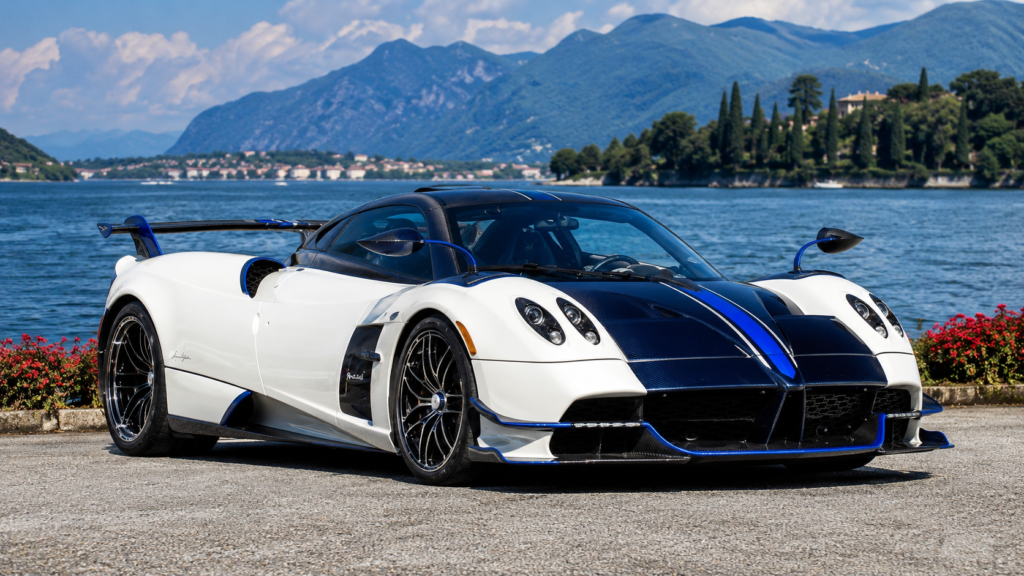
Since every car is essentially bespoke, options like specific leather treatments, exposed carbon finishes, or unique paint (called “Tricolore” carbon in some cases) could push the final price well beyond the base figure.
On the used market today, values have generally held steady or climbed, which isn’t surprising given only 100 units exist worldwide. Auction results in recent years have shown well-kept, low-mileage examples commanding seven-figure sums comfortably.
For context, that puts the Huayra Roadster well above cars like the Ferrari SF90 or McLaren 750S, and firmly in territory shared with ultra-limited hypercars from Bugatti and Koenigsegg.
The Real Cost of Owning a Pagani Huayra Roadster
Money talks in the hypercar world, and the Pagani Huayra Roadster speaks a language most buyers simply can’t afford to learn. But price alone doesn’t tell the full story here.
Owning a Pagani Huayra Roadster isn’t like owning a Ferrari or Lamborghini, where a network of dealerships and independent shops can handle servicing. Every Pagani Huayra Roadster requires factory-trained technicians, specialized parts, and a level of patience most supercar owners never have to consider.
That’s exactly why resale values for the Pagani Huayra Roadster have stayed so strong. Buyers aren’t just paying for horsepower — they’re paying for a relationship with the brand, a guaranteed spot on Pagani’s radar, and bragging rights that come with owning one of only 100 examples on Earth.
In many ways, the true cost of a Pagani Huayra Roadster isn’t the sticker price at all. It’s the commitment to maintaining something this rare exactly the way Horacio Pagani intended.
Pros and Cons
Pros:
- Genuinely bespoke build process; no two cars are identical
- Removing the roof didn’t compromise structural rigidity or top speed
- Naturally dramatic V12 soundtrack, unlike most modern turbocharged rivals
- Extreme exclusivity with only 100 units ever produced
- Strong value retention and appreciation potential
Cons:
- Astronomical purchase price puts it out of reach for nearly everyone
- Single-clutch automated transmission isn’t as smooth as a dual-clutch setup
- Limited cargo space and everyday practicality
- Servicing and parts require specialized Pagani-trained technicians
- Production has ended, so availability depends entirely on the used market
Why Enthusiasts Keep Talking About the Pagani Huayra Roadster
Ask ten car enthusiasts to name the most talked-about open-top hypercar of the last decade, and the Pagani Huayra Roadster comes up more often than you’d expect from a car only 100 people actually own.
Part of that comes down to timing. The Pagani Huayra Roadster arrived right as the hypercar world was drifting toward hybrid systems and digital driving aids, and it doubled down on mechanical feel instead.
Enthusiast forums and YouTube garages still dissect the Pagani Huayra Roadster years after production ended, picking apart everything from its exhaust note to the way its active aero flaps move independently through a corner.
That kind of lasting attention is rare. Plenty of limited-run hypercars fade from conversation within a year or two, but the Pagani Huayra Roadster keeps resurfacing, whether it’s at auction, at a concours event, or simply parked outside a hotel with a crowd forming around it.
It also helps that the Pagani Huayra Roadster never feels like a marketing exercise dressed up as a car. Every detail traces back to Horacio Pagani’s own obsessions, and that authenticity is exactly why people keep coming back to talk about it.
Comparison with Competitors
| Model | Engine | Power | 0–60 mph | Approx. Price |
|---|---|---|---|---|
| Pagani Huayra Roadster | 6.0L twin-turbo V12 | 754 hp | 3.0 sec | $2.4M+ |
| Pagani Huayra BC | 6.0L twin-turbo V12 | 789 hp | 2.8 sec | $2.7M+ |
| Pagani Huayra R | 6.0L naturally aspirated V12 (track-only) | 850 hp | Under 2.5 sec | $3.5M+ |
| Pagani Imola | 6.0L twin-turbo V12 (track-focused) | 827 hp | Under 3.0 sec | $5.4M |
| Pagani Utopia | 6.0L twin-turbo V12 | 852 hp | ~3.0 sec | $2.4M+ |
| Bugatti Chiron | 8.0L quad-turbo W16 | 1,479 hp | 2.4 sec | $3M+ |
| Ferrari SF90 Spider | Hybrid twin-turbo V8 | 986 hp | 2.5 sec | $600K |
A few things stand out here. The Pagani Huayra BC and Pagani Huayra R push further into track-focused territory, with the R being a track-only, non-street-legal machine built for pure driving purity.
Meanwhile, the Pagani Imola, limited to just five units, represents Pagani’s most extreme road-legal-adjacent creation before the brand’s full transition to the Pagani Utopia platform.
Compared to a Bugatti Chiron, the Huayra Roadster can’t match outright top speed or straight-line power, but it offers something a Chiron doesn’t: a genuinely analog, mechanical driving experience with far more character behind the wheel.
Against something like the Ferrari SF90 Spider, the price gap is enormous, but so is the exclusivity gap. You’re paying a premium not just for performance, but for owning one of only 100 examples ever built.
Who Should Buy It?
Realistically, this isn’t a car most people will ever own, and Pagani knows that. It’s built for established collectors who already have several other hypercars and are looking for something genuinely rare to add to a garage.
If you value everyday usability, tech features, or dealership convenience, this isn’t your car. Servicing requires specialized knowledge, parts aren’t sitting on a shelf anywhere, and daily practicality was never part of the design brief.
But if you’re drawn to hand-built craftsmanship, mechanical artistry, and the idea of owning something with a genuinely limited production run, few cars deliver that experience as completely as this one does.
It also appeals strongly to collectors interested in the broader Pagani story, from the original Pagani Zonda through the Huayra family to the modern Pagani Utopia. Owning a Roadster means owning a specific, well-documented chapter of that story.
Why the Pagani Huayra Roadster Still Stops Traffic
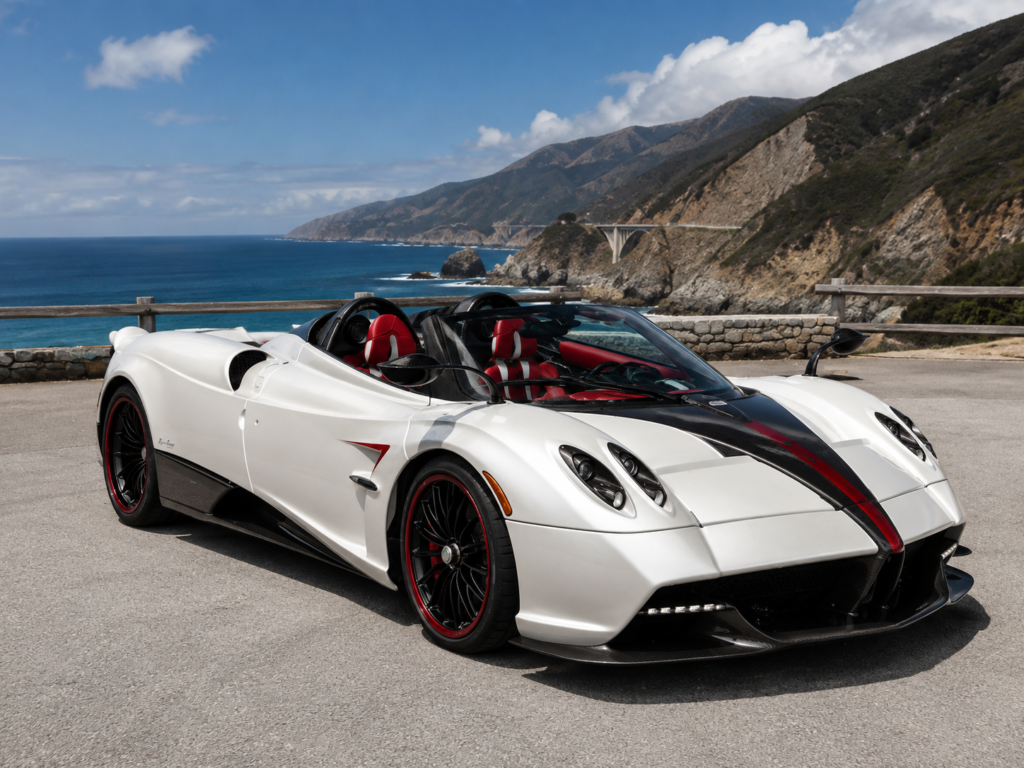
Say the words “Pagani Huayra Roadster” to anyone who follows cars, and you’ll notice the reaction is almost always the same — a slight pause, then genuine excitement. That’s rare in an era where new hypercars seem to launch every month.
Part of it comes down to scarcity. With only 100 units ever built, the Pagani Huayra Roadster isn’t something you stumble across at a local cars-and-coffee meet. Spotting one still feels like an event.
But the bigger reason the Pagani Huayra Roadster holds its mystique is intent. Every version in the lineup — from the standard Huayra to the track-hungry Huayra BC and Huayra R — shares that same obsessive attention to detail, and the Roadster distills it into an open-top experience few other hypercars even attempt.
Compared to the newer Pagani Utopia or the ultra-limited Pagani Imola, the Huayra Roadster still holds a special place as the car that proved Pagani could remove a roof without removing any of the drama.
Conclusion
The Pagani Huayra Roadster isn’t just another entry in the hypercar arms race chasing bigger horsepower numbers. It’s a statement about craftsmanship, patience, and refusing to compromise structural integrity just to open up the roof.
From its hand-aligned carbon weave to its bespoke Mercedes-AMG V12, every element feels deliberate rather than mass-produced. That philosophy connects directly back through the Pagani Zonda, the standard Pagani Huayra, and forward into track specials like the Huayra BC, Huayra R, and the limited Pagani Imola.
With only 100 units built, it remains one of the rarest and most desirable open-top hypercars ever created. Whether you’re comparing it to the newer Pagani Utopia or older Zonda variants, the Roadster holds its own as a genuine engineering achievement.
For collectors, it represents far more than a fast car—it’s a piece of automotive history that happens to hit 60 mph in three seconds. Few machines manage to be both a work of art and a genuine performance weapon, and that rare combination is exactly why the Huayra Roadster still turns heads years after its debut.
Frequently Asked Questions (FAQs)
New pricing landed around $2.4 to $2.6 million, though heavily customized examples through Pagani’s Atelier program could cost more. Used market prices today often exceed the original sticker.
Pagani built exactly 100 units between 2017 and 2019, making it one of the rarest hypercars in existence.
It uses a 6.0-liter twin-turbocharged V12 engine co-developed with Mercedes-AMG, producing 754 horsepower and 738 lb-ft of torque.
They’re extremely close in performance, but the Coupe has a slight edge in outright top speed due to marginally better aerodynamic efficiency without an open roof.
The Huayra BC is more track-focused, with more power and sharper handling, while the Roadster prioritizes open-top driving without sacrificing much performance.
Yes, though top speed is typically quoted with the removable hard top installed. Without it, wind buffeting becomes more noticeable at extreme speeds.
The Utopia is Pagani’s newer platform, built after the Huayra family concluded production, with updated design language and a manual gearbox option unavailable on the Huayra.
Yes, unlike the track-only Huayra R, the Roadster is fully street legal and road-registered in most markets, including the United States.