BMW Explained: A Complete 2026 Guide to Models, Specs, Performance, and Value
I’ve spent the better part of fifteen years test-driving cars for a living, and if there’s one brand that consistently sparks debate at every dinner table, garage meetup, and comment section I’ve encountered, it’s BMW. People either love the badge or roll their eyes at it—there’s rarely much middle ground.
That reputation isn’t accidental. The luxury automaker has spent decades building cars that prioritize how they feel from behind the wheel, not just how they look on a spec sheet. Whether you’re cross-shopping a compact sedan or trying to decide between an X5 and an X7 for your growing family, this guide breaks down everything you actually need to know before signing on the dotted line.
I’ll walk you through the history, the current lineup, real performance numbers, pricing realities, and where the brand genuinely beats the competition—along with where it doesn’t. No fluff, no marketing spin.
You can learn more about BMW’s complete lineup, performance models, and luxury vehicles by visiting the BMW Official Website.
What is BMW?
BMW—short for Bayerische Motoren Werke, or Bavarian Motor Works—is a German automaker headquartered in Munich. It’s one of the “big three” German luxury brands, sitting alongside Mercedes-Benz and Audi in most buyers’ minds.
What sets the brand apart, at least historically, is its obsession with driving dynamics. The company built its identity around the phrase “The Ultimate Driving Machine,” and while marketing slogans rarely hold up under scrutiny, this one has stuck around because there’s genuine substance behind it.
Today’s lineup spans everything from compact hatchbacks to full-size luxury SUVs, high-performance M cars, and a growing range of electric vehicles like the iX and i4. The automaker is no longer a one-trick pony—it’s a sprawling ecosystem of vehicles built for very different kinds of buyers.
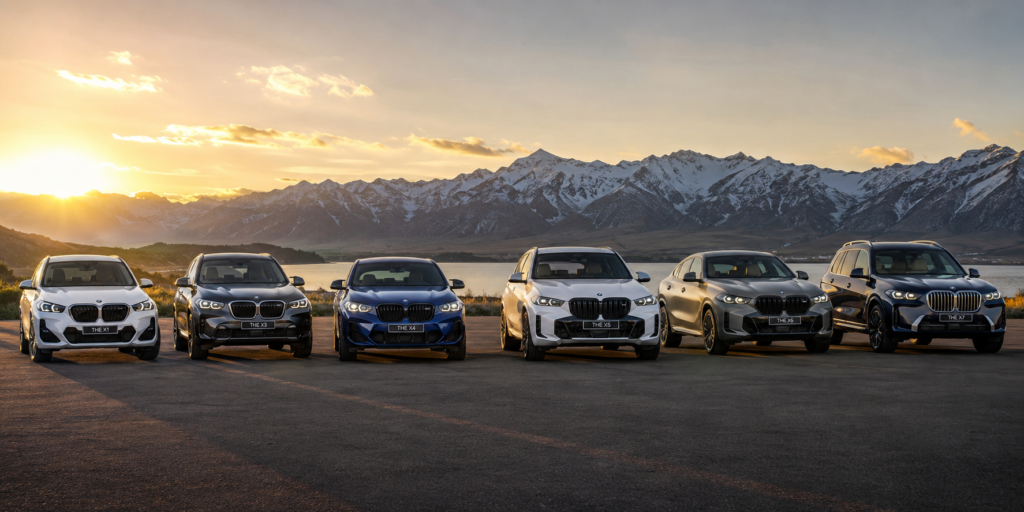
If you’re researching its SUVs specifically, you’ll run into a naming pattern fairly quickly: X1, X3, X4, X5, X6, and X7, each one bigger (and pricier) than the last.
History and Background
BMW’s roots trace back to 1916, when it started as an aircraft engine manufacturer during World War I. Once the Treaty of Versailles restricted German aircraft production, the company pivoted—first to motorcycles, then to automobiles in 1928.
The brand really found its identity in the 1960s and 70s with the “New Class” sedans, which introduced the sporty, driver-focused character that would define the automaker for the next half-century. This era also gave birth to the 3 Series in 1975, arguably the most influential compact luxury sedan ever built.
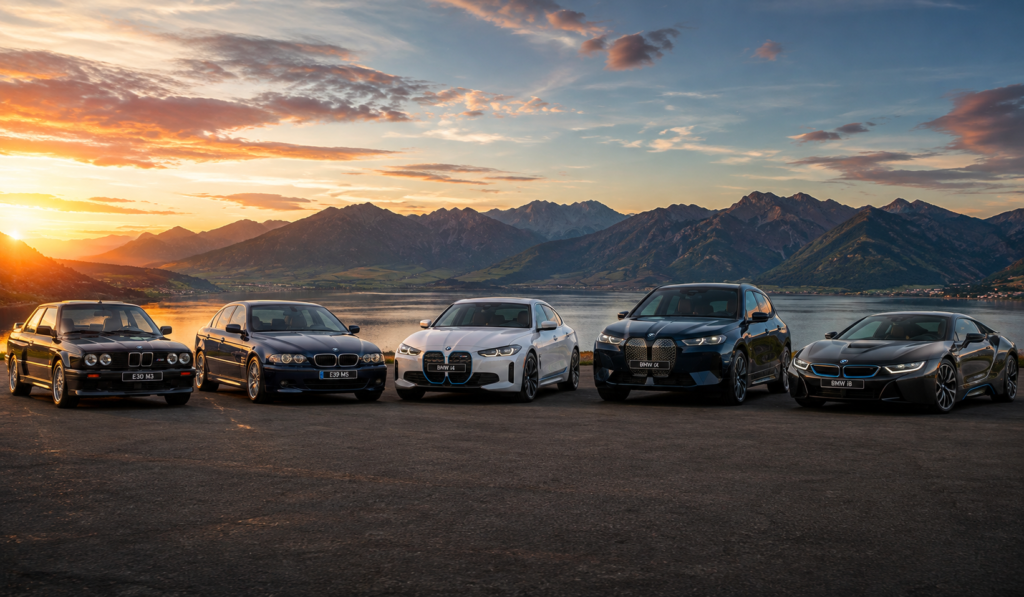
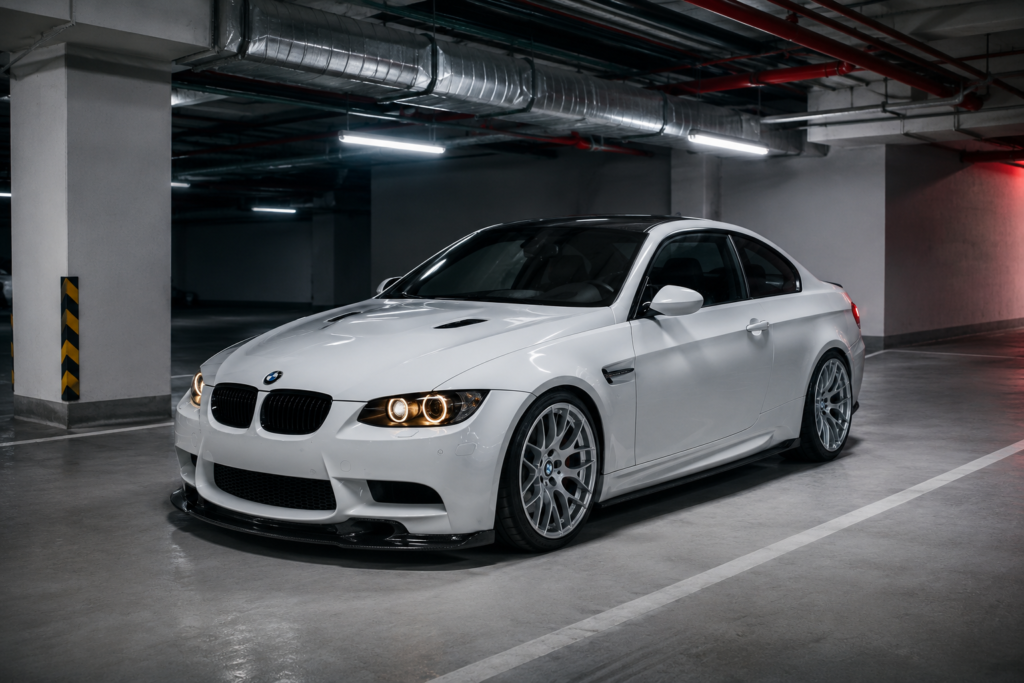
The 1980s and 90s brought the M division into the spotlight. What started as a small motorsport offshoot became one of the most respected performance sub-brands in the industry, giving us icons like the E30 M3 and the E39 M5.
More recently, the German automaker has leaned hard into electrification and technology. The i3 arrived in 2013 as an early, somewhat unconventional EV. Since then, the lineup has expanded to include the i4, iX, and the now-discontinued but still beloved i8 hybrid sports car.
Design and Exterior
BMW’s design language has always walked a fine line between conservative elegance and bold statement pieces, and lately, it’s leaned harder into the latter.
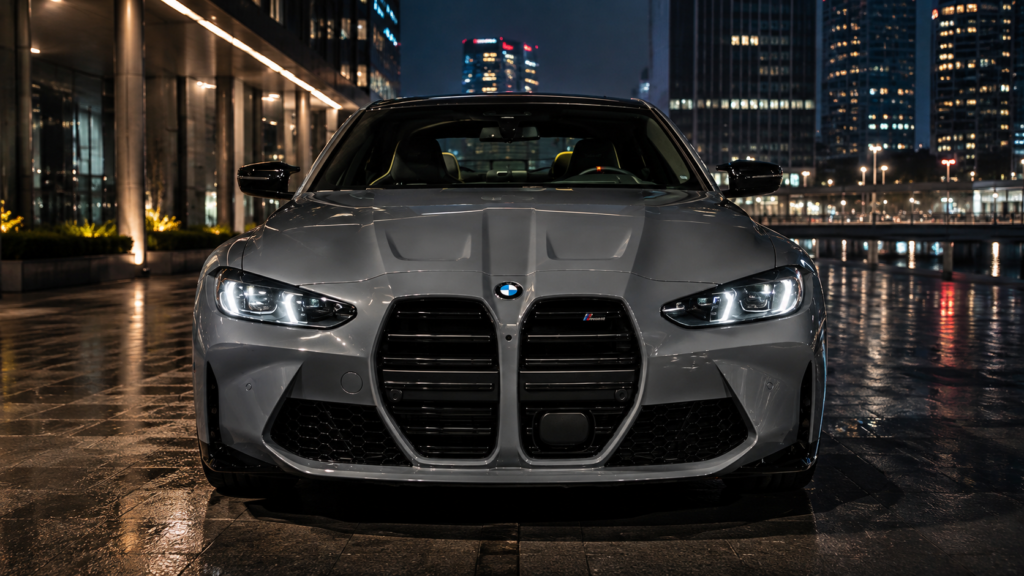
The most talked-about design element in recent years is the enlarged kidney grille, first seen prominently on the 4 Series and later adopted across the X7 and other models. Opinions are split—some love the bold, aggressive front end, while longtime fans miss the subtler proportions of older models.
Beyond the grille debate, the automaker’s exterior design generally emphasizes:
- Long hoods and short front overhangs for a classic sporty stance
- Hofmeister kink—the signature bend in the rear window pillar, a design cue dating back to the 1960s
- Sharp character lines along the body panels that catch light and add visual movement
- Frameless windows on coupe and M models for a sleeker profile
The M models take things further with wider fender flares, larger air intakes, quad exhaust tips, and aerodynamic elements like carbon-fiber roofs on cars like the M4 Competition.
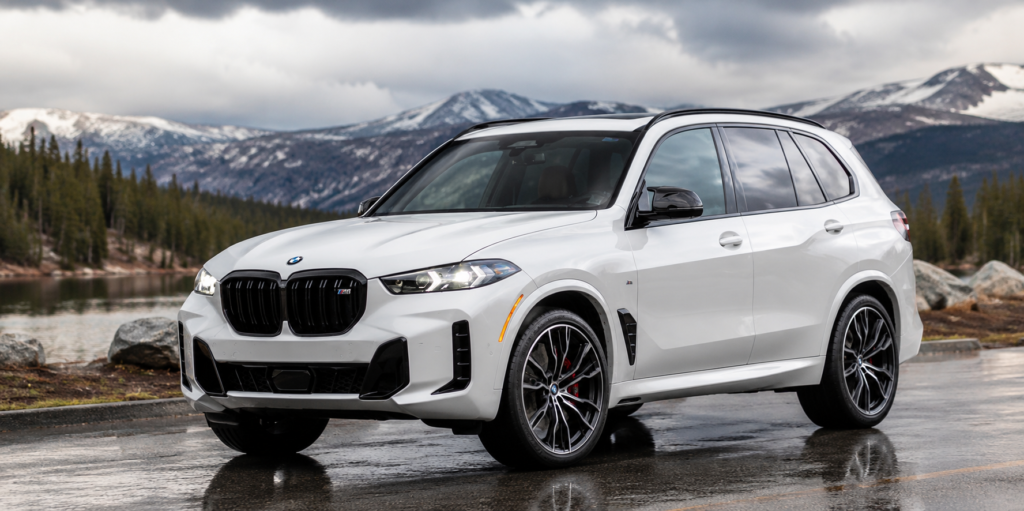
SUVs like the X5 and X6 blend that sporty DNA with a more upright, commanding presence—useful if you actually want to see over traffic, which, let’s be honest, most SUV buyers do.
Interior and Technology
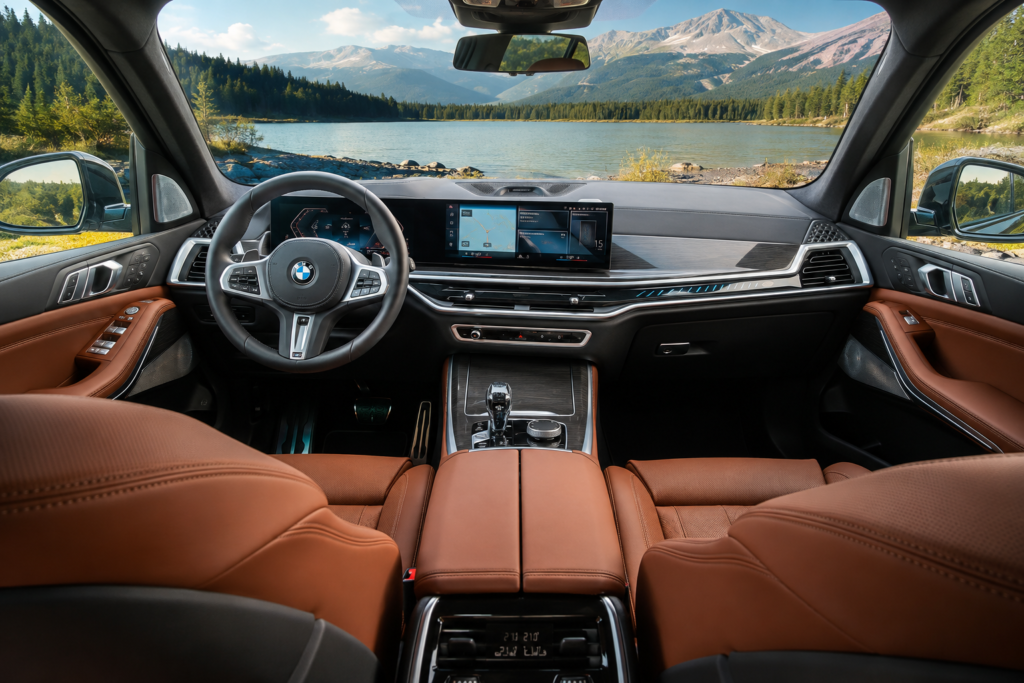
Step inside a modern BMW and the first thing you’ll notice is the curved display setup—a combination of digital instrument cluster and infotainment screen that flows together as one glass panel. This debuted with the iX and has since spread across most of the lineup.
The interior build quality on the brand’s higher trims genuinely competes with anything from Mercedes or Audi. Soft-touch materials, tasteful ambient lighting, and well-damped switchgear all contribute to that “expensive car” feeling.
The automaker’s infotainment system, called iDrive, has evolved significantly over the years. The latest version (iDrive 8/8.5) is more touchscreen-focused than older iterations, though the company smartly kept the physical rotary controller—a small thing, but it matters when you’re trying to adjust climate settings without taking your eyes off the road.
Key tech features across most current models include:
- Wireless Apple CarPlay and Android Auto
- Head-up display projecting speed and navigation onto the windshield
- Gesture control (a bit gimmicky, but it works)
- Harman Kardon or Bowers & Wilkins premium audio options
- Over-the-air software updates, similar to what Tesla popularized
For families cross-shopping the X5 or X7, rear-seat entertainment screens and heated second-row seats are worth checking on the options list, since they’re not always standard.
Engine and Performance
This is where BMW earns its reputation, and where I’ve personally spent the most seat time across different trims and generations.
The brand’s inline-six engines are legendary in enthusiast circles for their smoothness and power delivery. The B58 3.0-liter turbocharged inline-six, found in cars like the M340i and 330i-adjacent models, is widely regarded as one of the best engines currently in production—reliable, powerful, and genuinely thrilling to rev out.
Then there’s the M division lineup, which takes things to another level entirely:
- BMW M2 – compact, rear-wheel-drive, and arguably the purest driver’s car in the current lineup
- BMW M3 and M4 – twin-turbo inline-six power, available in rear- or all-wheel drive, with the Competition trims pushing well over 500 horsepower
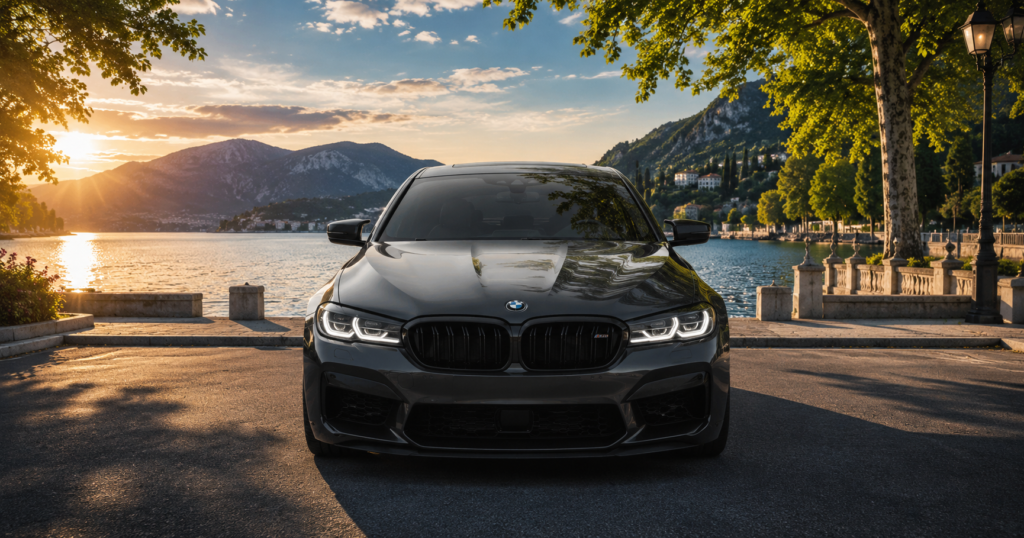
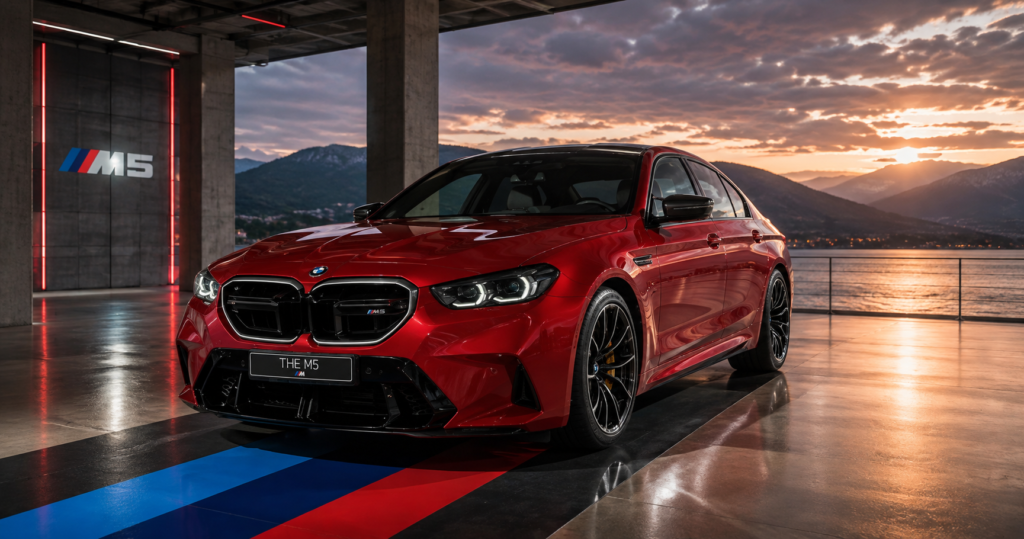
- BMW M5 – a full-size sedan with supercar-slaying acceleration, now offered with hybrid assistance
- BMW M8 – the flagship grand tourer, blending luxury with genuine track capability
On the electric side, the i4 and iX use electric motors that deliver instant torque—no turbo lag, no waiting for revs to build. It’s a genuinely different driving sensation, and one that’s winning over even skeptical enthusiasts.
The now-discontinued i8 deserves a mention too. As a plug-in hybrid sports car with butterfly doors and a three-cylinder engine paired with an electric motor, it was unlike anything else on the road when it launched—more of a technology showcase than an outright performance car, but unforgettable to drive.
Specifications
Quick Specifications (Popular Models Overview)
| Model | Body Style | Engine Type | Approx. Horsepower | Drivetrain |
|---|---|---|---|---|
| BMW X1 | Compact SUV | Turbo 4-cylinder | 241 hp | AWD (xDrive) |
| BMW 330i | Compact Sedan | Turbo 4-cylinder | 255 hp | RWD/AWD |
| BMW X3 | Compact SUV | Turbo 4-cyl/inline-6 | 248–382 hp | AWD |
| BMW M340i | Sport Sedan | Turbo inline-6 | 382 hp | RWD/AWD |
| BMW M3 | Sport Sedan | Twin-turbo inline-6 | 473–523 hp | RWD/AWD |
| M4 Competition | Sport Coupe | Twin-turbo inline-6 | 503 hp | RWD/AWD |
| BMW X5 | Midsize SUV | Turbo inline-6/V8 | 375–523 hp | AWD |
| BMW X6 | Midsize SUV Coupe | Turbo inline-6/V8 | 335–523 hp | AWD |
| BMW X7 | Full-size SUV | Turbo inline-6/V8 | 375–523 hp | AWD |
| BMW M5 | Performance Sedan | Turbo V8 (hybrid) | 717 hp | AWD |
| BMW M8 | Grand Tourer | Twin-turbo V8 | 617 hp | AWD |
| BMW i4 | Electric Sedan | Dual electric motors | 335–536 hp | RWD/AWD |
| BMW iX | Electric SUV | Dual electric motors | 322–644 hp | AWD |
Figures vary by trim and model year—always confirm exact specs with your local dealer before purchasing.
These numbers shift a bit year to year as BMW refreshes each model, so treat this as a general reference point rather than gospel.
Top Speed and Acceleration
Acceleration is genuinely one of BMW’s strongest selling points, especially once you move into M-badged territory.
The BMW M3 Competition and M4 Competition both hit 0-60 mph in roughly 3.4 seconds with the xDrive all-wheel-drive setup—numbers that would have been supercar territory not too long ago.
The BMW M5, thanks to its hybrid V8 powertrain, is even quicker, with some estimates putting it under 3 seconds to 60 mph. That’s a nearly 5,000-pound sedan outrunning plenty of dedicated sports cars.
Here’s a quick comparison to put things in perspective:
| Model | 0-60 mph (approx.) | Top Speed (approx.) |
|---|---|---|
| BMW 330i | 5.6 sec | 130 mph |
| BMW M340i | 4.1 sec | 155 mph |
| BMW M3 Competition xDrive | 3.4 sec | 180 mph (M Driver’s Pkg) |
| BMW M4 Competition | 3.4–3.8 sec | 180 mph (M Driver’s Pkg) |
| BMW X5 M60i | 4.1 sec | 155 mph |
| BMW M5 | 2.9–3.1 sec | 190 mph (M Driver’s Pkg) |
| BMW i4 M50 | 3.7 sec | 140 mph |
| BMW iX M60 | 3.6 sec | 155 mph |
Standard top speed on non-M BMWs is typically limited to 130-155 mph, but the M Driver’s Package (which usually includes a track-focused driving course) raises that ceiling considerably.
Price
Pricing is where BMW’s range really stretches out, from relatively accessible entry points to genuinely eye-watering territory once you start adding options.
Generally speaking, here’s how the lineup breaks down by category:
- Entry-level (X1, 2 Series): starts in the mid-$30,000s to low $40,000s
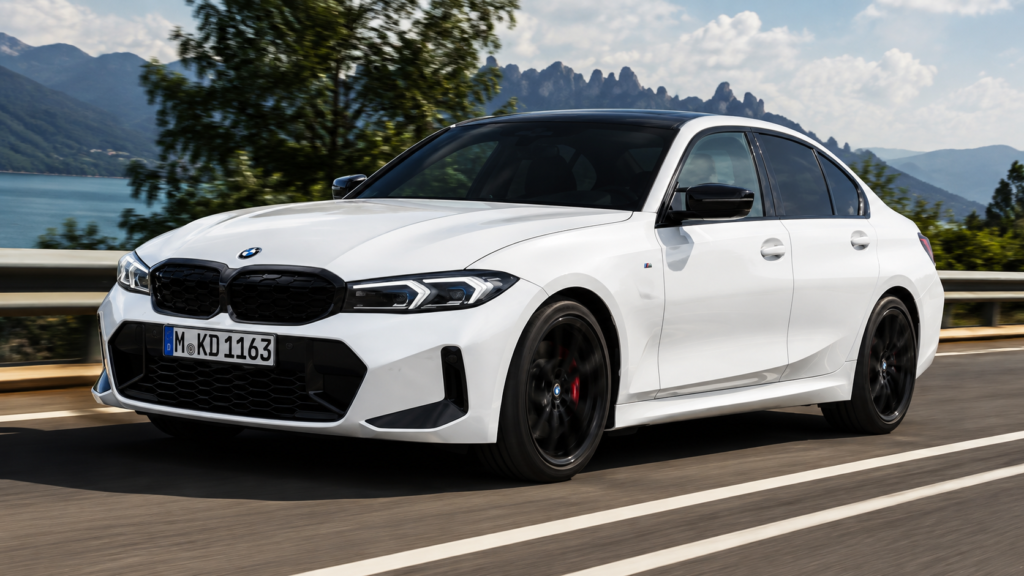
- Compact luxury (330i, X3): roughly $44,000–$55,000
- Performance compacts (M340i, M2): around $58,000–$65,000
- M3 and M4 lineup: starting near $75,000, climbing past $85,000 for Competition xDrive trims
- Midsize SUVs (X5, X6): typically $65,000–$90,000 depending on trim
- Full-size SUV (X7): starts around $80,000 and climbs well past $100,000 loaded
- M5 and M8: firmly in six-figure territory, often $105,000–$135,000+
- Electric models (i4, iX): roughly $52,000 for the i4 eDrive40 up to $90,000+ for the iX M60
Keep in mind these are approximate starting figures. Options packages, especially on M models, can add $10,000 or more quickly. Always check current pricing directly with BMW or a local dealer, since figures shift with each model year and market conditions.
Pros and Cons
No car brand is perfect, and I’d be doing you a disservice if I only highlighted the good stuff.
Pros:
- Genuinely engaging driving dynamics, especially in M models
- Strong engine lineup, particularly the B58 inline-six
- Upscale, tech-forward interiors
- Wide range of body styles and price points
- Solid resale value on M models compared to rivals
Cons:
- Maintenance and repair costs climb sharply after the warranty period
- Run-flat tires (standard on many models) offer a firmer, less forgiving ride
- Some recent styling choices (that grille) have proven divisive
- Options packages can inflate the price quickly
- iDrive’s touchscreen-heavy approach isn’t universally loved by longtime owners
Comparison with Competitors
If you’re cross-shopping, you’re almost certainly looking at Mercedes-Benz and Audi too. Here’s a rough breakdown of how they stack up.
| Category | BMW | Mercedes-Benz | Audi |
|---|---|---|---|
| Driving dynamics | Sharp, driver-focused | Smooth, comfort-leaning | Balanced, grip-oriented (quattro AWD) |
| Interior tech | iDrive 8, curved display | MBUX with large screens | Virtual Cockpit, minimalist |
| Performance sub-brand | M Division | AMG | RS |
| SUV lineup | X1 to X7 | GLA to GLS | Q3 to Q8 |
| Ride comfort | Firmer, sport-tuned | Plusher, more cushioned | Middle ground |
| EV lineup | i4, iX | EQ series | e-tron/Q4 e-tron |
Broadly speaking, if outright driving engagement matters most to you, BMW tends to edge out the competition. If plush comfort is the priority, Mercedes often wins that battle. Audi tends to split the difference, with excellent all-weather grip thanks to quattro all-wheel drive.
None of these brands are “wrong” choices—it really comes down to what you value most behind the wheel.
Who Should Buy It?
BMW isn’t the right fit for everyone, and that’s worth saying plainly.
You’ll likely love a BMW if:
- You genuinely enjoy driving and want a car that rewards spirited backroad runs
- You want a blend of daily usability and weekend performance (think M340i or M3)
- You’re after a tech-forward cabin without going full minimalist like some rivals
- You need SUV practicality without sacrificing on-road handling
You might want to look elsewhere if:
- Ride comfort and cushioned suspension matter more to you than handling precision
- You’re worried about long-term maintenance costs and want the cheapest ownership experience possible
- You prefer a more understated, classic design over BMW’s newer bold styling direction
Families cross-shopping the X5 versus X7 should also think honestly about how often they’ll actually use that third row. If it’s rare, the X5 offers nearly the same comfort with better efficiency and a lower price tag.
Conclusion
BMW remains one of the most compelling choices in the luxury and performance segments, and for good reason. From the everyday practicality of the X3 to the track-ready thrills of the BMW M4 Competition, there’s a genuine range here that caters to very different lifestyles and budgets.
What ties the whole lineup together is that distinct driving character—the sense that engineers prioritized how the car feels, not just how it looks on paper. That’s not true of every luxury brand, and it’s a big part of why the German automaker has held onto such a loyal following for decades.
That said, the brand isn’t a perfect fit for everyone. If low-cost ownership and cushioned ride comfort top your priority list, you may find better matches elsewhere. But if you want a car—or SUV—that actually engages you every time you get behind the wheel, the company earns its reputation honestly.
Whichever model you’re considering, take the time for a proper test drive before deciding. Specs and reviews only tell part of the story; the rest you’ll only understand once you’re actually in the driver’s seat.
Frequently Asked Questions (FAQs)
BMW stands for Bayerische Motoren Werke, which translates to Bavarian Motor Works, reflecting the company’s origins in Munich, Germany.
The BMW X1 or 330i are great starting points—both offer BMW’s driving character without the higher price or maintenance demands of M models.
Yes, generally. BMW parts and labor tend to cost more than mainstream brands, especially once the factory warranty expires.
They share the same engine and platform—the M3 is a four-door sedan, while the M4 is a two-door coupe with slightly different styling and a marginally stiffer chassis feel.
Reliability varies by model year and engine choice. The X3 and X5 generally have solid reputations, though electronics and turbo components can require attention as the miles add up.
Yes, especially if you want similar size and driving dynamics with electric power. The i4 offers strong acceleration and a more premium cabin feel in higher trims.
The BMW M5, with its hybrid V8 powertrain, is currently among the quickest, capable of sub-3-second 0-60 mph runs in its latest form.
Used BMWs offer significant savings but come with higher risk on repair costs. If buying used, a pre-purchase inspection from an independent BMW specialist is strongly recommended.