BMW X5 Review: Price, Specs, Performance, and Everything Else You Need to Know
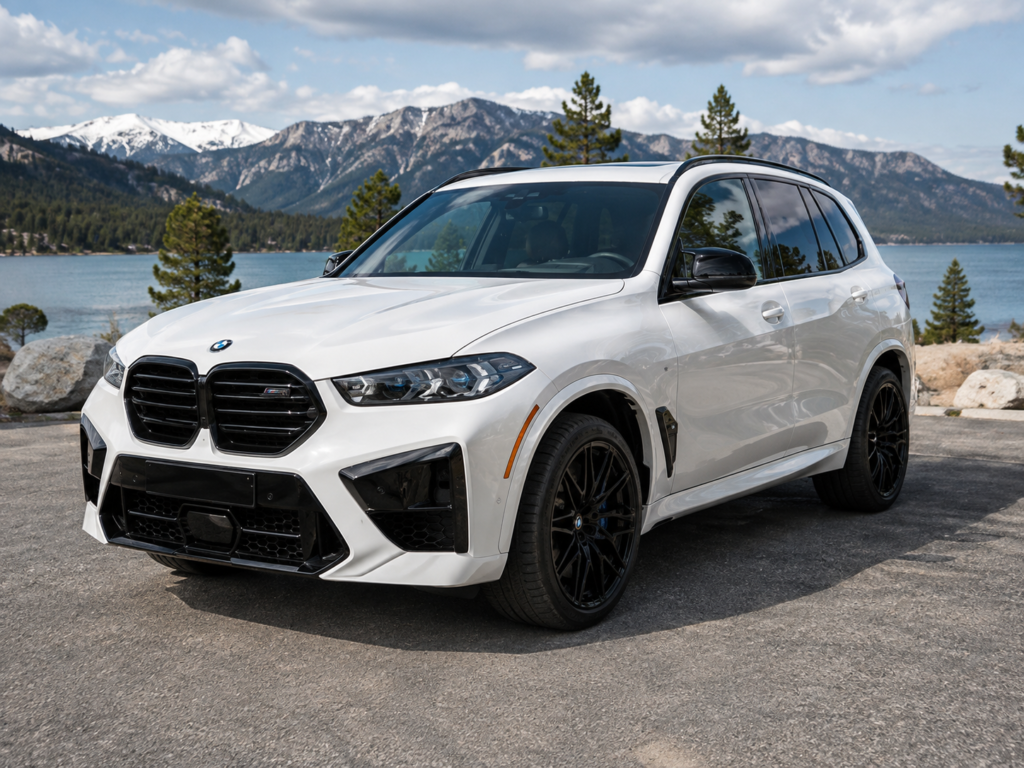
If you’ve spent any time cross-shopping midsize luxury SUVs, chances are you’ve circled back to the BMW X5 more than once. It’s the vehicle that basically invented the “sport” in sport utility vehicle, and more than two decades later, it’s still the one rivals get measured against.
Before choosing the BMW X5, it’s worth exploring the complete BMW lineup. Read our BMW Complete Guide 2026 to discover the brand’s history, popular models, performance technologies, and buying tips.
I’ve spent real seat time in the X5 lineup — from the everyday sDrive40i to the tire-shredding X5 M — and this guide pulls together everything worth knowing before you sign on the dotted line. We’ll cover the design, the tech, the engines, the pricing, and how it holds up against siblings like the X7, X6, and X3, plus a few outside rivals.
Whether you’re a first-time luxury SUV buyer or a BMW enthusiast weighing the X5 against an M340i or even an M4, this article is built to answer your actual questions — not just repeat spec sheets you could find anywhere.
BMW regularly updates the X5 with new features, advanced technology, and available configurations. For the most accurate and up-to-date information, visit the official BMW X5 website.
What is the BMW X5?
The BMW X5 is a midsize luxury SUV that sits right in the middle of BMW’s X lineup — bigger and more upscale than the compact X3, but a notch below the three-row X7 in size and price.
Think of the BMW X5 as the vehicle BMW built to answer a question nobody had really solved before the late 1990s: can an SUV actually be fun to drive? Back then, most SUVs were built on truck platforms and handled like it. The BMW X5 borrowed its bones from BMW sedans instead, which is why it still corners with a confidence that heavier, boxier rivals can’t quite match.
Today’s BMW X5 is offered with a range of engines, from a smooth turbocharged inline-six to a plug-in hybrid to the snarling V8 in the X5 M. That spread means it can play the role of quiet family hauler on a Tuesday commute and genuine backroad weapon on a Saturday, depending on which version you choose.
It’s also worth knowing where the BMW X5 fits alongside BMW’s broader SUV family, since the naming can get confusing fast — more on that in the comparison section below.
Quick Specifications
| Spec | Detail |
|---|---|
| Body Style | Midsize luxury SUV, 5 seats (3-row option on some trims) |
| Starting Price (MSRP) | Around $69,750 (destination included) |
| Engine Options | 3.0L turbo I6, plug-in hybrid I6, twin-turbo V8, M-tuned V8 |
| Horsepower Range | 375 hp to 617 hp (X5 M Competition) |
| Transmission | 8-speed automatic |
| Drivetrain | RWD (sDrive) or AWD (xDrive) |
| 0-60 mph | 3.7 – 5.3 seconds, depending on trim |
| Top Speed | 130 – 177 mph (electronically limited, higher on M models with performance package) |
| Fuel Economy | 21-27 mpg combined (gas models); 40 miles EV range on PHEV |
| Cargo Space | Roughly 33.9 cu ft behind rear seats, 72.3 cu ft with seats folded |
History and Background
BMW launched the first BMW X5 in late 1999, and it genuinely caught the industry off guard. At the time, “luxury SUV” mostly meant Range Rover or Lincoln Navigator — big, plush, and not particularly interested in corners.
BMW went the other direction. They called it a “Sports Activity Vehicle” rather than an SUV, which sounded like marketing spin at launch but turned out to be a fairly accurate description of how the thing actually drove.
Over four generations, the BMW X5 has grown noticeably in size, tech, and power, while staying true to that original mission. The current generation debuted for 2019 and picked up a mid-cycle refresh for 2024, meaning today’s model is a mature, well-sorted version of a formula BMW has now had over 25 years to refine.
That longevity matters more than people realize. A platform BMW has iterated on for decades tends to have fewer rough edges than something rushed to market — the suspension tuning, the drivetrain calibration, and the switchgear all feel like they’ve been lived with and fixed, not just designed once and shipped.

Design and Exterior
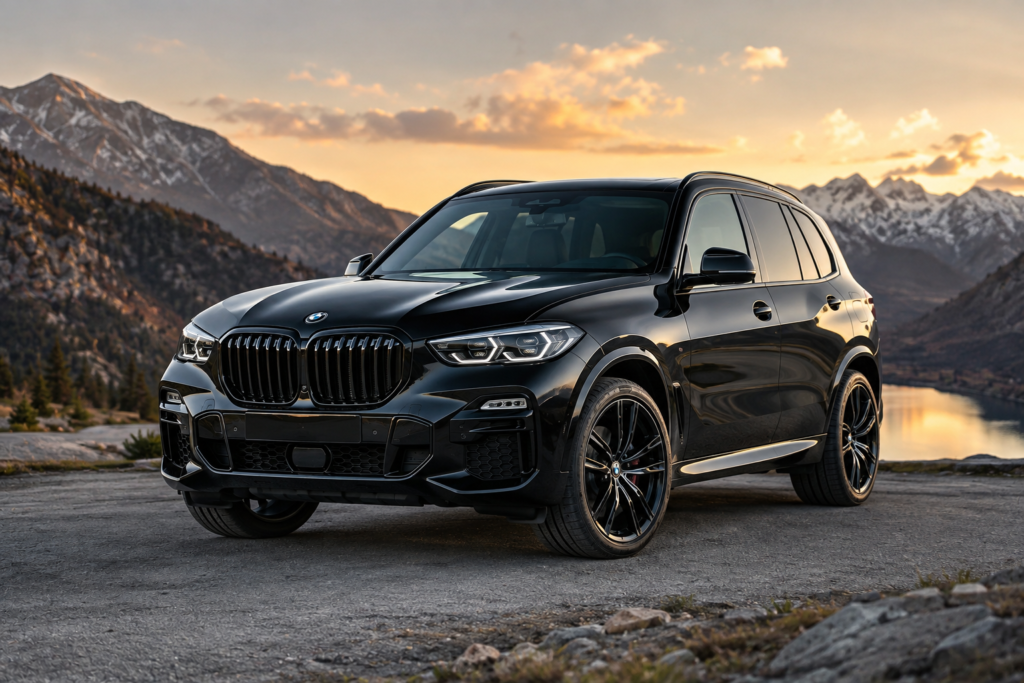
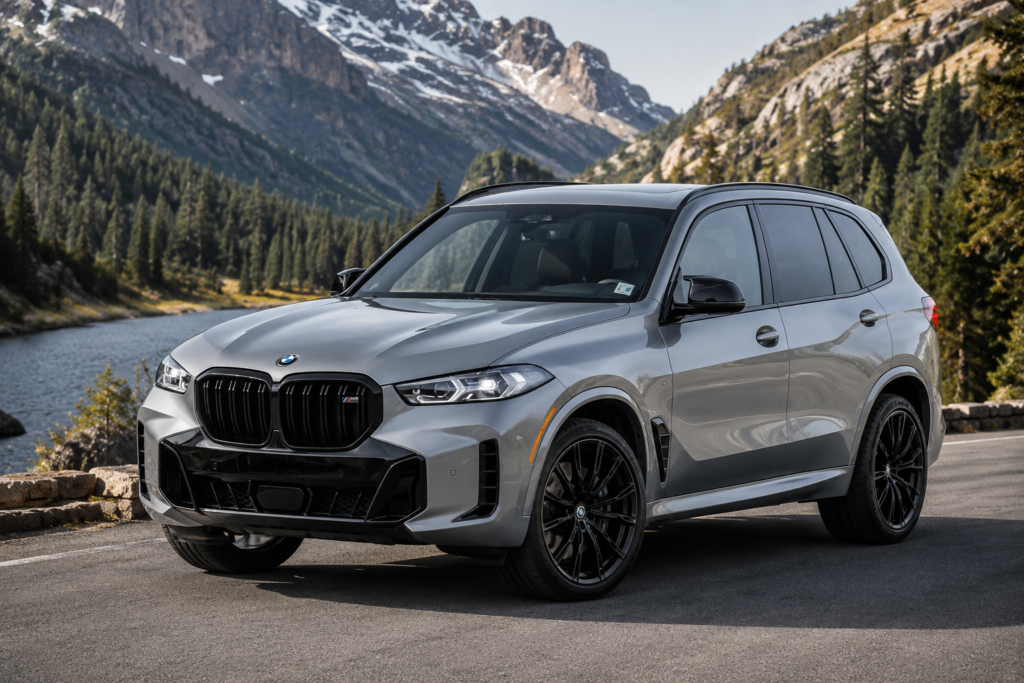
The BMW X5 exterior walks a careful line between “commands attention” and “still looks like a BMW in ten years.” It mostly succeeds.
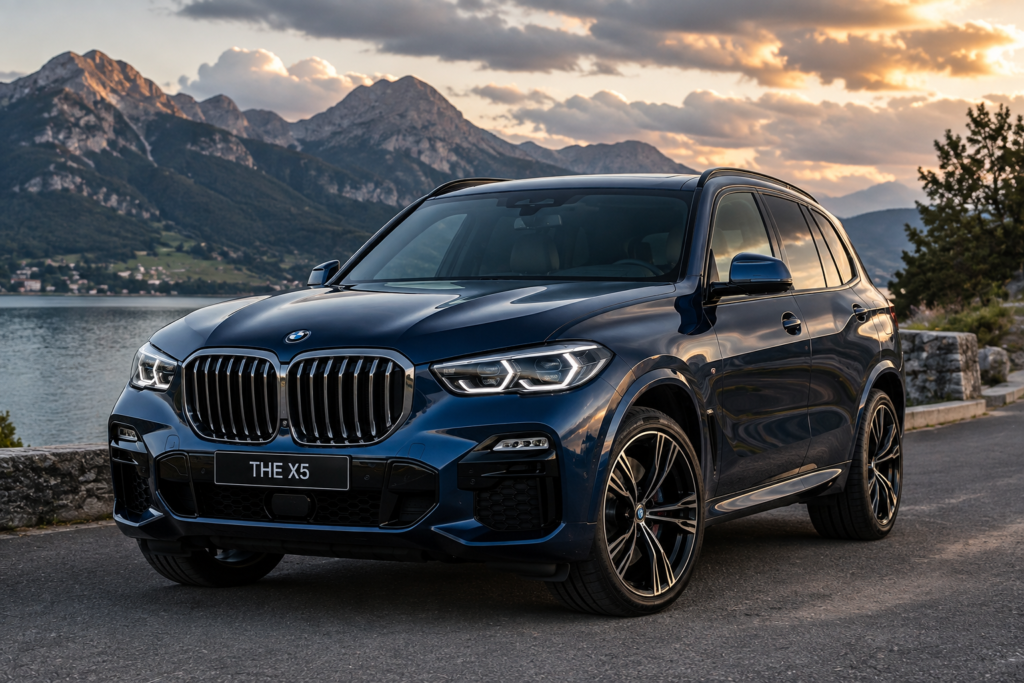
Up front, you get BMW’s now-signature kidney grille, which is large but not nearly as oversized as what you’ll find on some other current BMW models. Wide-set LED headlights and a low, muscular hood give it presence without tipping into gimmicky.
Key exterior details include:
- A strong horizontal character line running the length of the body, which visually stretches the vehicle and downplays its height
- Flared wheel arches that hint at the performance underneath, especially noticeable on M Sport and X5 M trims
- Available wheel sizes up to 22 inches on higher trims, which look sharp but can trade away a bit of ride comfort
- A tailgate design that splits open (a small but genuinely useful touch for loading cargo or perching on it at a tailgate party)
Compared to the X6 — its swoopy, coupe-roofed sibling — the BMW X5 keeps a more traditional SUV silhouette. That means more headroom in the back and a bigger cargo hold, at the cost of some of the X6’s visual drama.
If you’re deciding between the two, it really comes down to whether you value practicality or style more. The BMW X5 leans practical without looking dull, which is a harder balance to strike than it sounds.
Interior and Technology
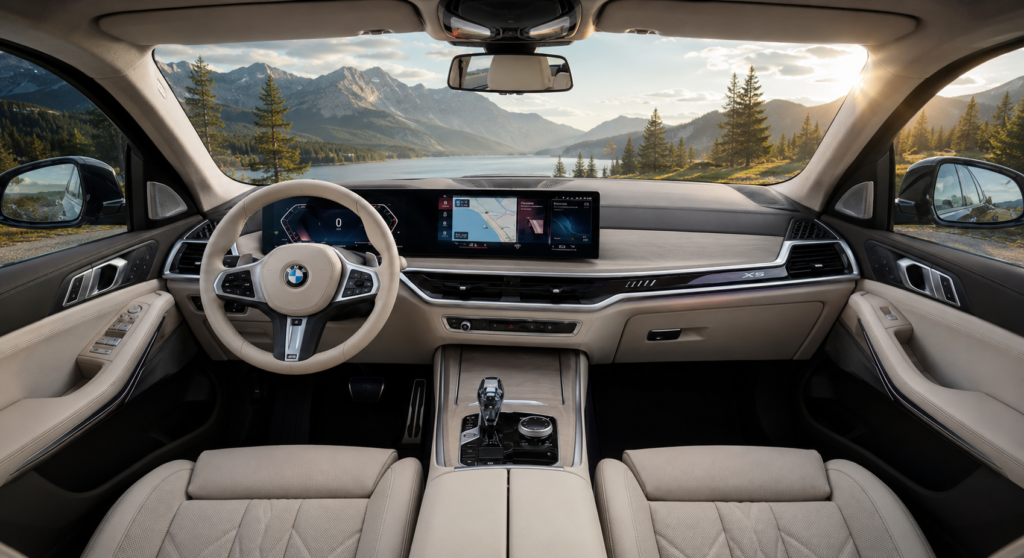
This is where the BMW X5 earns a lot of its price tag. Slide inside and the materials feel genuinely upscale — soft leather, real metal accents on higher trims, and a dashboard layout that feels driver-focused rather than just tech-for-tech’s-sake.
The centerpiece is BMW’s Curved Display, which merges a 12.3-inch digital gauge cluster with a 14.9-inch touchscreen into one continuous glass panel angled toward the driver. It runs BMW’s iDrive 8.5 software, which took some criticism early on for burying certain climate controls in menus, but BMW has steadily improved the interface with over-the-air updates.
Standard and available tech includes:
- Wireless Apple CarPlay and Android Auto
- A head-up display projecting speed and navigation onto the windshield
- Gesture control for basic functions like adjusting volume
- A Harman Kardon or optional Bowers & Wilkins surround-sound system
- BMW’s Driving Assistant Professional suite, which handles adaptive cruise control, lane-centering, and semi-automated lane changes on the highway
Rear-seat passengers get a fair amount of legroom for the class, and the second row reclines — a small feature that makes long road trips noticeably more comfortable.
One thing worth knowing: some trims offer an optional third row. It’s genuinely tight and best reserved for kids or short trips, not adults on a highway run. If three-row seating is a hard requirement, the X7 is the better call, and we’ll get into that comparison shortly.
Engine and Performance
The BMW X5 engine lineup is deep enough to cover almost any kind of buyer, from someone who wants quiet efficiency to someone chasing a genuine adrenaline hit.
The base sDrive40i and xDrive40i use a turbocharged 3.0-liter inline-six making 375 horsepower and 383 lb-ft of torque. It’s a genuinely excellent engine — smooth, quick-revving, and strong enough that most buyers won’t feel like they’re missing out by skipping the V8.
The xDrive50e plug-in hybrid pairs that same inline-six with an electric motor for a combined 483 horsepower. It’s the version that makes the most sense if your daily commute is short enough to run mostly on electricity, since it’s rated for around 40 miles of EV-only range before the gas engine even wakes up.
Step up to the X5 M60i and you get a twin-turbo 4.4-liter V8 producing 523 horsepower — smooth, deep-chested, and genuinely quick without feeling like a stripped-out track toy.
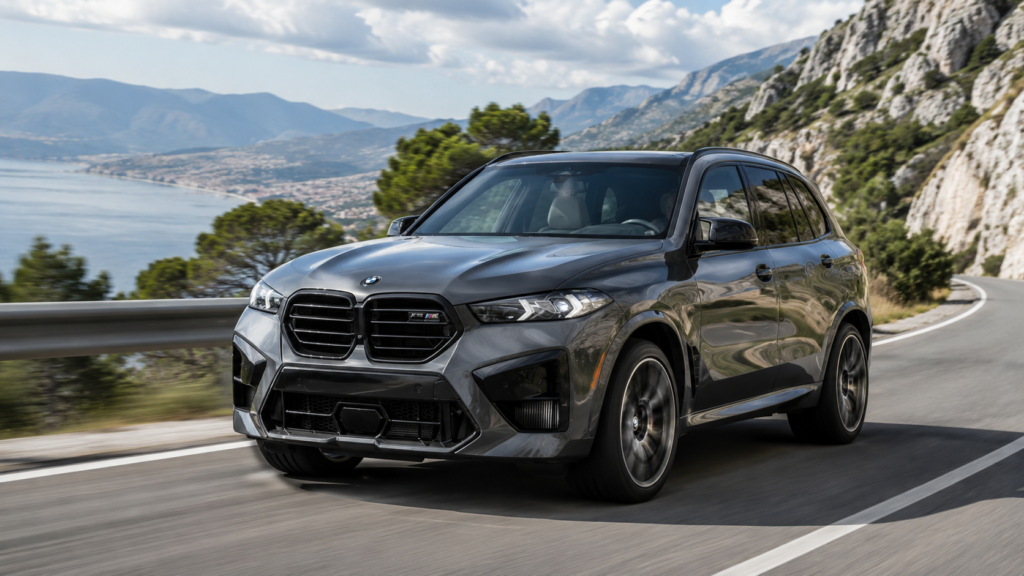
At the top sits the X5 M Competition, BMW M division’s full send on the formula: 617 horsepower from a tuned version of that same V8, paired with stiffer suspension, bigger brakes, and steering that feels far more alert than a vehicle this size has any right to.
Handling-wise, all X5s benefit from a relatively low center of gravity for an SUV, and the optional adaptive suspension does a genuinely good job of soaking up broken pavement without letting the body wallow in corners. It’s not going to out-corner an M3 sedan, but for something that can also tow a boat, it’s remarkably composed.
Specifications
Here’s a closer look at how the major trims stack up on paper.
| Trim | Engine | Horsepower | Torque | Drivetrain | 0-60 mph |
|---|---|---|---|---|---|
| sDrive40i | 3.0L Turbo I6 | 375 hp | 383 lb-ft | RWD | ~5.3 sec |
| xDrive40i | 3.0L Turbo I6 | 375 hp | 383 lb-ft | AWD | ~5.1 sec |
| xDrive50e (PHEV) | I6 + Electric Motor | 483 hp | 516 lb-ft | AWD | ~4.7 sec |
| M60i | 4.4L Twin-Turbo V8 | 523 hp | 553 lb-ft | AWD | ~4.1 sec |
| X5 M Competition | 4.4L Twin-Turbo V8 (M-tuned) | 617 hp | 553 lb-ft | AWD | ~3.7 sec |
All trims use an 8-speed automatic transmission, which shifts smoothly enough that most drivers won’t feel any need for paddle shifters, though they’re available if you want them.
Cargo capacity holds fairly steady across trims at roughly 33.9 cubic feet behind the second row, expanding to about 72.3 cubic feet with those seats folded flat — competitive for the segment, if not class-leading.
Top Speed and Acceleration
Acceleration is genuinely one of the X5’s strong suits, and it scales nicely with how much you’re willing to spend.
The base six-cylinder models aren’t slow by any normal-person standard — mid-5-second 0-60 runs are quicker than the vast majority of cars on the road. But the real story is at the top of the lineup.
The X5 M Competition hits 60 mph in roughly 3.7 seconds, which is supercar territory for a vehicle that can also seat five and haul groceries. Top speed is electronically limited to 155 mph standard, though the optional M Driver’s Package bumps that to 177 mph for track use.
For context, that’s quicker to 60 than a stock BMW M3, and it’s not far off an M4 Competition — remarkable when you consider the X5 M weighs well over 5,000 pounds.
The plug-in hybrid xDrive50e deserves a mention here too. Electric motors deliver instant torque, so even though it’s not the quickest trim on paper, it feels genuinely eager off the line in a way that surprises people expecting a hybrid to feel sluggish.
Price
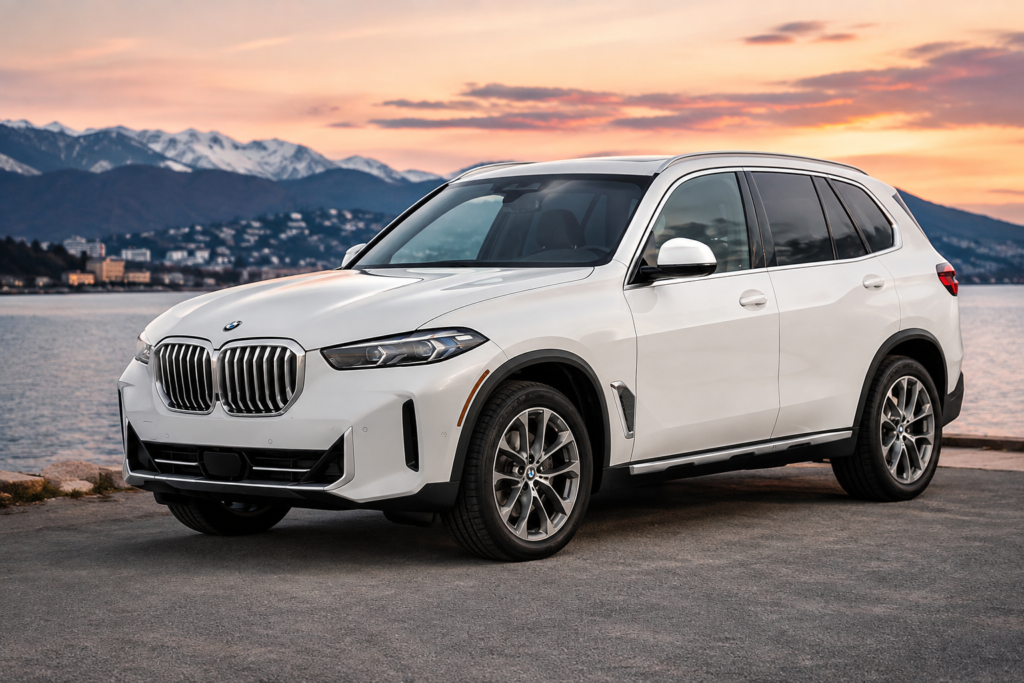
Pricing for the current-model-year X5 lineup starts at roughly $69,750 for the base sDrive40i, including destination charge. Here’s how the broader range breaks down:
| Trim | Starting MSRP (approx.) |
|---|---|
| sDrive40i | $69,750 |
| xDrive40i | $72,050 |
| xDrive50e (PHEV) | $76,000 |
| M60i | $93,600 |
| X5 M Competition | $131,000 |
A few things worth knowing before you budget: options add up fast on the BMW X5. Popular packages like the Premium Package, larger wheels, upgraded sound systems, and the M Sport Package can each add several thousand dollars, and it’s easy to walk a mid-trim BMW X5 north of $85,000 once you start checking boxes.
Most buyers also don’t pay full sticker. Depending on the market and time of year, average transaction prices tend to land a few thousand dollars below MSRP, so it’s worth negotiating and comparing dealer offers rather than assuming the window sticker is final.
Leasing is common on the BMW X5, especially for buyers who like cycling into a new model every two to three years as BMW’s tech continues to evolve.
Pros and Cons
Pros:
- Genuinely fun to drive for a vehicle this size, with sharp steering and a well-controlled ride
- Excellent engine lineup, including a legitimately quick and efficient plug-in hybrid
- High-quality interior materials and a tech suite that keeps improving through software updates
- Strong resale value relative to many rivals
- Wide range of power outputs means there’s a version for nearly every kind of buyer
Cons:
- Options and packages inflate the price quickly
- Optional third row is tight and not great for adults
- Ride can feel stiff on the largest available wheels
- iDrive 8.5 buries a few climate functions in the touchscreen, which takes some getting used to
- Fuel economy on the V8 models trails some hybrid-heavy competitors
Comparison with Competitors
The BMW X5 doesn’t just compete against outside rivals — it also competes against its own siblings, which makes cross-shopping inside the BMW lineup genuinely confusing. Here’s how it stacks up.
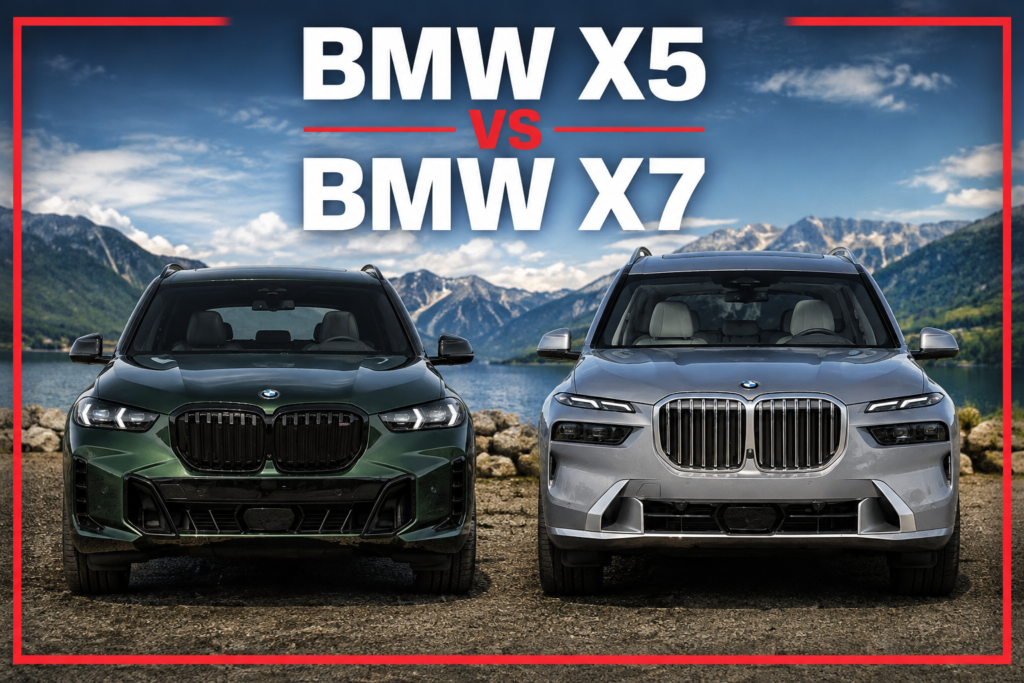
BMW X5 vs BMW X7
The X7 is BMW’s full-size, three-row flagship SUV. It’s bigger, more expensive, and better suited to families who regularly need seating for six or seven. The BMW X5 is more agile and easier to park, and its optional third row is best treated as an occasional-use extra rather than a daily solution.
BMW X5 vs BMW X6
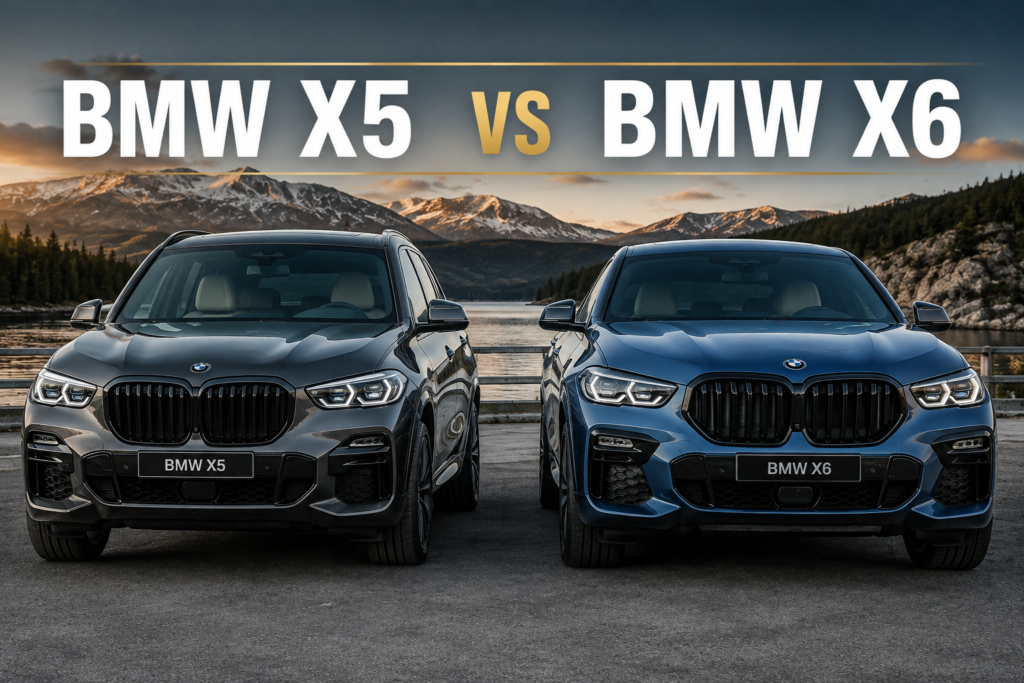
The X6 shares its platform and most of its mechanical parts with the X5, but wraps them in a coupe-like sloped roofline. That styling costs you headroom and cargo space in exchange for a more dramatic look. If practicality matters more than styling drama, the BMW X5 wins easily.
BMW X5 vs BMW X3
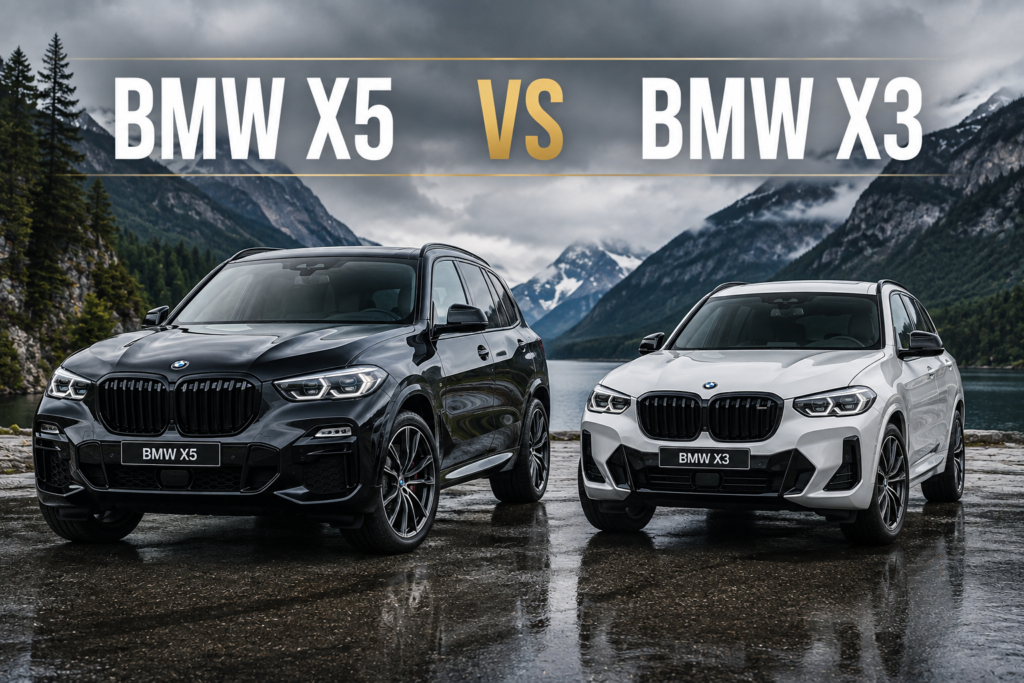
The X3 is a size class down and considerably cheaper to start. It’s a smart choice for buyers who want BMW SUV DNA without the size or price of the BMW X5, though it trades away interior space and the availability of the most powerful engine options.
BMW X5 vs Audi Q7 / Mercedes GLE
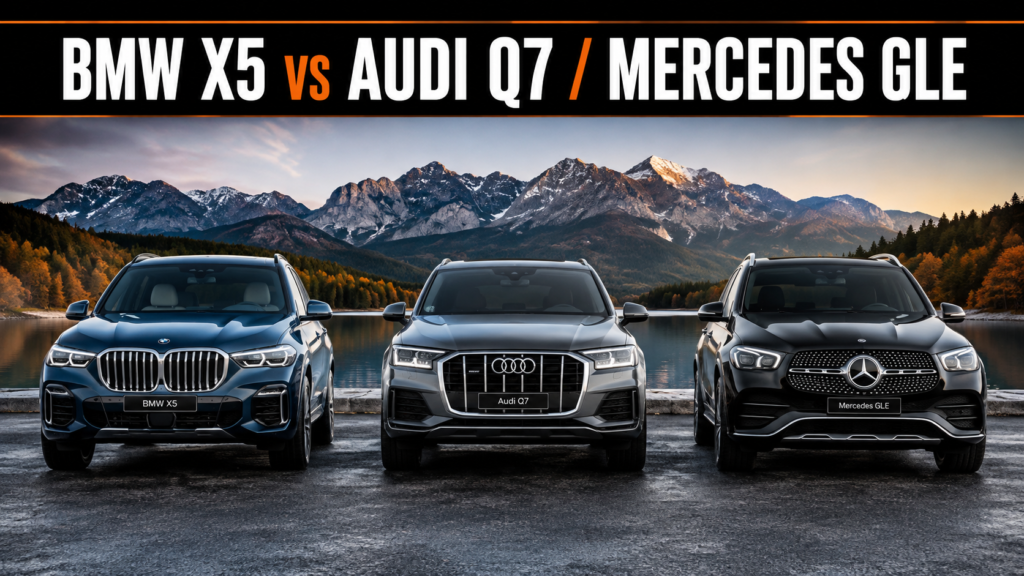
Outside the BMW family, the Audi Q7 and Mercedes-Benz GLE are the X5’s most direct rivals. The Q7 leans slightly more toward third-row usability and a quieter ride, while the GLE splits the difference between comfort and sportiness. The BMW X5 generally wins on driving engagement, which has always been BMW’s calling card.
| Model | Best For | Starting Price (approx.) | Seating |
|---|---|---|---|
| BMW X5 | Driving enjoyment + balance | ~$69,750 | 5 (optional 3rd row) |
| BMW X7 | Families needing 3 rows | ~$83,000 | 6 or 7 |
| BMW X6 | Style-focused buyers | ~$73,000 | 5 |
| BMW X3 | Budget-conscious BMW SUV shoppers | ~$50,000 | 5 |
| Audi Q7 | Comfort and quiet | ~$61,000 | 6 or 7 |
| Mercedes-Benz GLE | Comfort with tech focus | ~$63,000 | 5 (optional 3rd row) |
Where the M cars fit in
It’s worth clearing up a common point of confusion: cars like the BMW M3, M4, M4 Competition, M2, M5, and M8 are not SUVs at all — they’re BMW’s high-performance sedans and coupes, built by the same M division that tunes the X5 M. If outright cornering speed and a lower center of gravity matter more to you than ride height and cargo space, one of those might actually suit you better than any X-series SUV. Meanwhile, models like the 330i and M340i represent BMW’s core sedan lineup, and the i4 and i8 (along with the fully electric iX) show where BMW’s EV ambitions are headed. The X5 sits at the practical, do-everything center of all of it.
Who Should Buy It?
The BMW X5 makes the most sense for buyers who refuse to choose between practicality and driving enjoyment.
- Families who still want a driver’s car: if you need real cargo space and rear-seat room but don’t want to feel like you’re piloting a barge, the X5 threads that needle better than most rivals.
- Commuters considering the PHEV: the xDrive50e is worth serious consideration if your daily drive is under 40 miles and you have access to home charging — you could realistically run on electricity most weekdays.
- Enthusiasts who need one car to do everything: the M60i and X5 M Competition give you genuine performance-car acceleration without giving up all-weather capability or space for a family.
- First-time luxury SUV buyers: even the base sDrive40i delivers enough refinement and performance to make a strong first impression, without the intimidation factor of the higher-performance trims.
Who might want to look elsewhere? Buyers who need a genuinely usable third row should seriously consider the X7 instead, and anyone shopping strictly on budget might find the X3 or a well-equipped 330i delivers most of the brand experience for meaningfully less money.
Conclusion
After spending time across the X5 lineup, it’s easy to see why this SUV has stayed near the top of its class for over two decades. The BMW X5 manages something a lot of rivals still struggle with — it drives like a BMW should, without asking you to give up the space and comfort a family actually needs.
Whether you land on the efficient inline-six, the clever plug-in hybrid, or the genuinely unhinged X5 M Competition, you’re getting a vehicle that feels engineered by people who actually care about how it drives, not just how it looks on a spec sheet.
It’s not perfect — the options list can get expensive fast, and buyers who need real third-row seating should look at the X7 instead. But for the vast majority of shoppers cross-referencing the X5 against the X3, X6, X7, or outside rivals like the Q7 and GLE, it remains one of the smartest, most well-rounded choices in the segment.
If driving enjoyment matters to you as much as practicality does, the X5 is still very much worth your test drive.
Frequently Asked Questions (FAQs)
Reliability on the current generation is generally solid, though it’s worth reviewing owner data on the specific model year and engine you’re considering, since some early plug-in hybrid components have had more reported issues than the standard six-cylinder engine.
They share the same platform and most mechanical components, but the X6 has a sloped, coupe-style roofline that sacrifices some rear headroom and cargo space in exchange for a sportier look.
A heavily optioned X5 M Competition with premium packages can approach or exceed $140,000, while a loaded non-M trim typically lands somewhere between $85,000 and $95,000.
An optional third row is available on certain trims, but it’s tight and best suited to children or short trips rather than regular adult use.
Yes — properly equipped X5s can tow up to around 7,200 pounds, which is enough for most boats, small campers, and utility trailers.
The X3 is easier to park and more affordable, but the X5 offers noticeably more interior space, a smoother ride, and access to more powerful engine options, including the M60i and X5 M.
If you can charge at home and your commute fits within its roughly 40-mile electric range, the xDrive50e can meaningfully cut fuel costs while also being the quickest non-M trim off the line.
The X5 M Competition is the quickest, hitting 60 mph in around 3.7 seconds thanks to its 617-horsepower twin-turbo V8 — performance that rivals BMW’s own M4 Competition in a package that also seats five.