BMW M3 Review 2026: Is It Still the King of Sports Sedans?
There are cars you buy, and then there are cars you argue about at dinner parties. The BMW M3 has always been the second kind.
Ask ten enthusiasts what the “best driver’s car under six figures” is, and at least seven will mention it without hesitation. That’s not marketing spin — it’s a reputation built over four decades of racetrack lap times, back-road blasts, and daily commutes that somehow never felt boring.
I’ve spent time behind the wheel of several BMW M3 generations, from the howling naturally aspirated E92 to today’s twin-turbo G80, and I can tell you this much: the formula has changed, but the mission hasn’t. BMW still wants this car to be usable on a Tuesday morning and vicious on a Saturday track day.
In this guide, we’ll break down everything worth knowing about the current BMW M3 — how it drives, what it costs, how it stacks up against the M4, the Audi RS5, and the Mercedes-AMG C63, and whether it deserves a spot in your driveway. We’ll also touch on where it fits alongside the rest of BMW’s lineup, from the compact X1 to the flagship X7 SUV. If you want the bigger picture on how the BMW M3 fits into BMW’s full model range, our complete 2026 BMW guide covers everything from the X1 to the M8.
Quick Specifications
| Spec | Base M3 | M3 Competition | M3 Competition xDrive |
|---|---|---|---|
| Engine | 3.0L Twin-Turbo I6 (S58) | 3.0L Twin-Turbo I6 (S58) | 3.0L Twin-Turbo I6 (S58) |
| Horsepower | 473 hp | 503 hp | 523 hp |
| Torque | 406 lb-ft | 479 lb-ft | 479 lb-ft |
| Transmission | 6-speed manual | 8-speed automatic | 8-speed automatic |
| Drivetrain | Rear-wheel drive | Rear-wheel drive | All-wheel drive |
| 0–60 mph | ~4.1 sec | ~3.8 sec | ~3.4 sec |
| Starting Price | ~$78,400 | ~$82,600 | ~$87,700 |
What is the BMW M3?
At its core, the BMW M3 is the high-performance version of the BMW 3 Series sedan, built by BMW’s in-house motorsport division, M GmbH. Think of it as a 330i that went through boot camp: stiffer suspension, a more powerful engine, wider tires, and a chassis tuned by engineers who also build cars for the Nürburgring.
It’s not just a trim level with a badge slapped on. The BMW M3 gets its own engine, its own brakes, its own aerodynamic body panels, and a driving character that’s genuinely distinct from the regular 3 Series lineup.
For newcomers, here’s the simplest way to think about it: if the 3 Series is a well-tailored suit, the M3 is that same suit cut for someone who also happens to box on weekends.
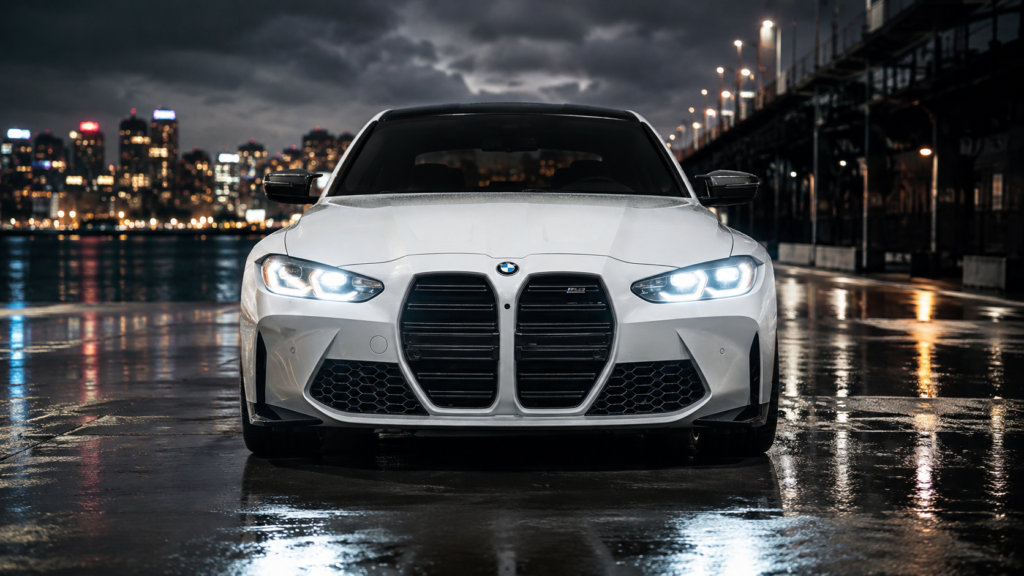
It competes directly with cars like the Audi RS5 and Mercedes-AMG C63, and internally, it shares a lot of DNA with its two-door sibling, the BMW M4. In fact, the two are mechanically near-identical — the M3 is just the four-door version.
History and Background
The story starts in 1986, when BMW built the original E30 M3 not for street cred, but to satisfy racing homologation rules for Group A touring car competition. BMW needed a road car to legalize a race car — and almost by accident, created a legend.
That first M3 made a modest 195 horsepower, which sounds quaint today. But its razor-sharp handling and motorsport pedigree set the template every M3 since has tried to live up to.
Through the 1990s and 2000s, the BMW M3 evolved generation by generation — E36, E46, E90/E92 — each one adding refinement while (mostly) keeping the naturally aspirated engine purists loved. The E46 M3, in particular, is still held up by many journalists as the emotional high point of the nameplate.
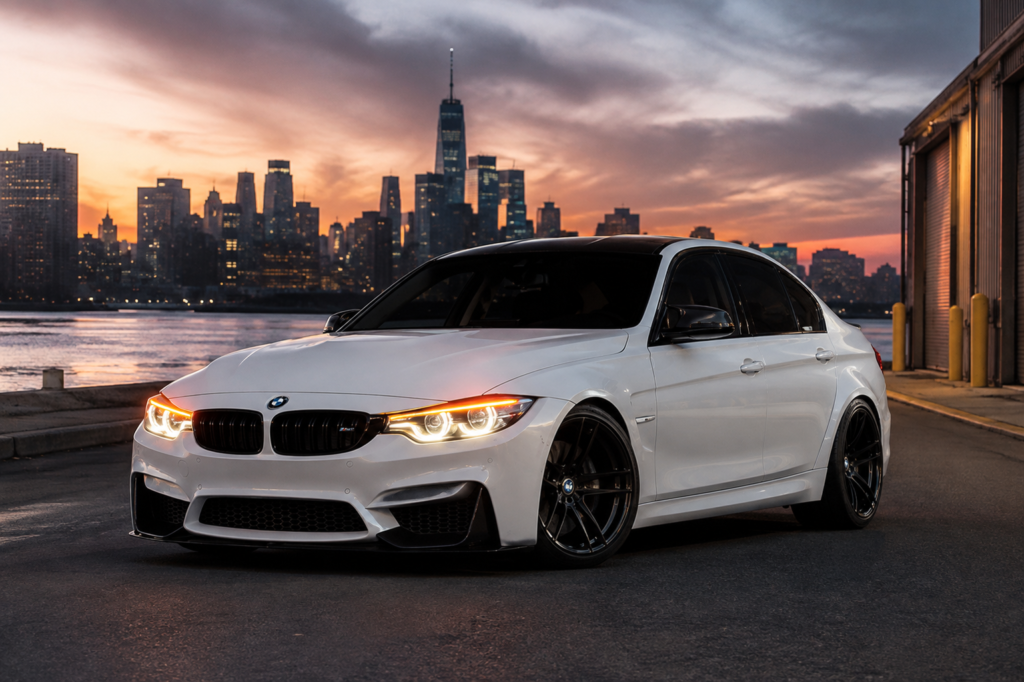
Then came a big shift. In 2014, the F80-generation BMW M3 dropped the naturally aspirated V8 in favor of a twin-turbocharged inline-six. Purists grumbled about turbo lag and a less theatrical soundtrack, but the trade-off was serious: more torque, better efficiency, and real-world speed that the old engines simply couldn’t match.
Today’s G80-generation BMW M3, launched in 2021, continues that turbocharged approach while adding an available all-wheel-drive system for the first time ever — a genuine milestone in the car’s history, since M3s were rear-drive-only for over three decades.
As of 2026, BMW has confirmed this is the final year of the current-generation BMW M3 before the nameplate transitions to the next-generation “Neue Klasse” platform, which will bring a very different technical approach, including hybrid assistance. If you’ve been considering a combustion-focused BMW M3, this generation represents the end of an era.
Design and Exterior
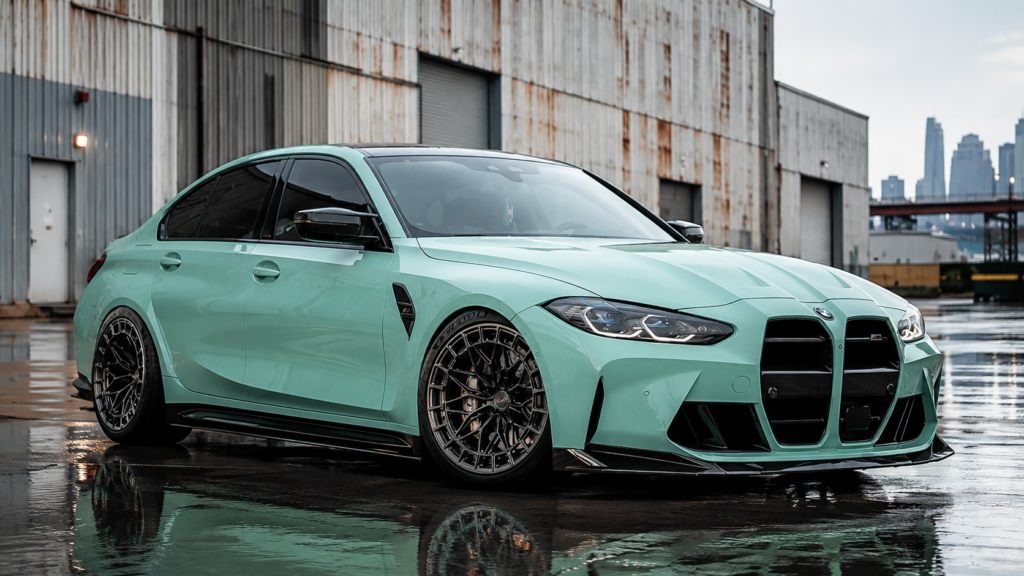
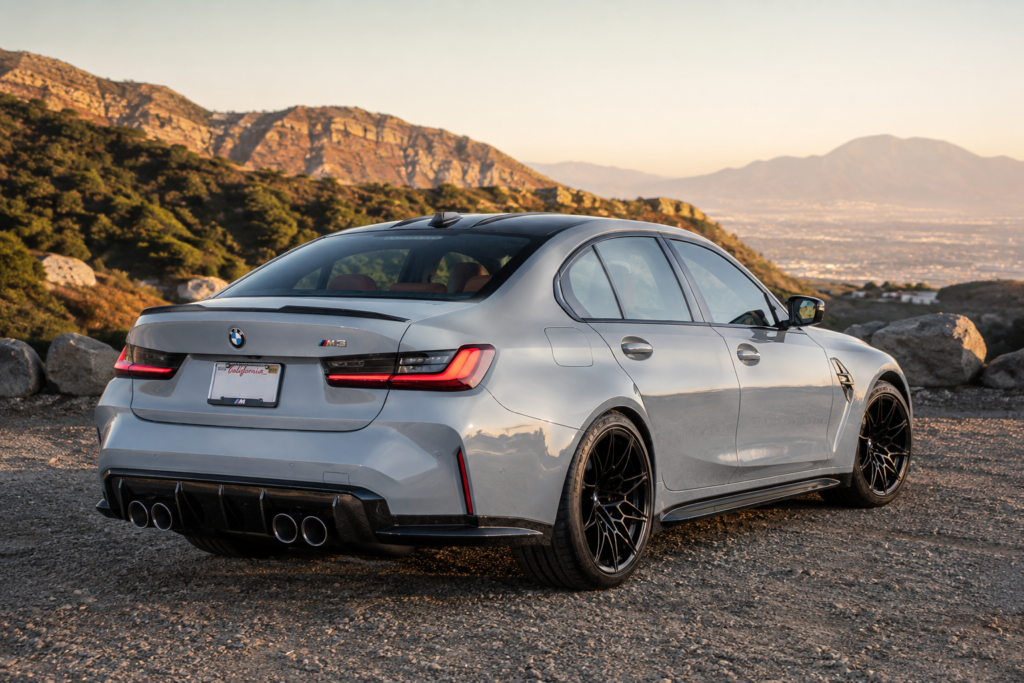
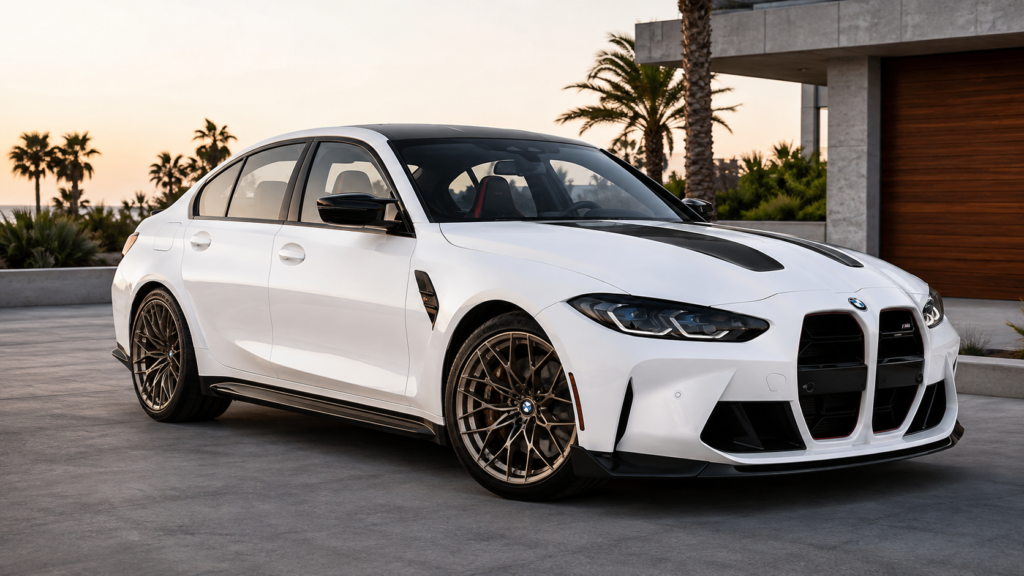
The current M3’s styling has been, to put it mildly, controversial. The oversized kidney grille split opinion the moment it was unveiled, and it’s still the first thing people mention when they see one in a parking lot.
But live with the car for a while, and the rest of the design starts to make more sense. The wide front fenders, the aggressive front splitter, and the quad exhaust tips all serve a purpose — they’re functional, not just decorative.
Underneath the visual drama, there’s real engineering. The M3’s carbon-fiber-reinforced roof (standard on Competition models) lowers the center of gravity, which genuinely improves handling response in corners.
The stance is noticeably wider than a standard 3 Series, thanks to model-specific fenders that house bigger wheels and a track that’s been pushed outward for stability. It’s a car that looks planted even standing still.
Compared to the two-door BMW M4, the M3 keeps the same aggressive face but wraps it around a more practical four-door body — a good option if you want M-car thrills without giving up rear-seat access for passengers.
Interior and Technology
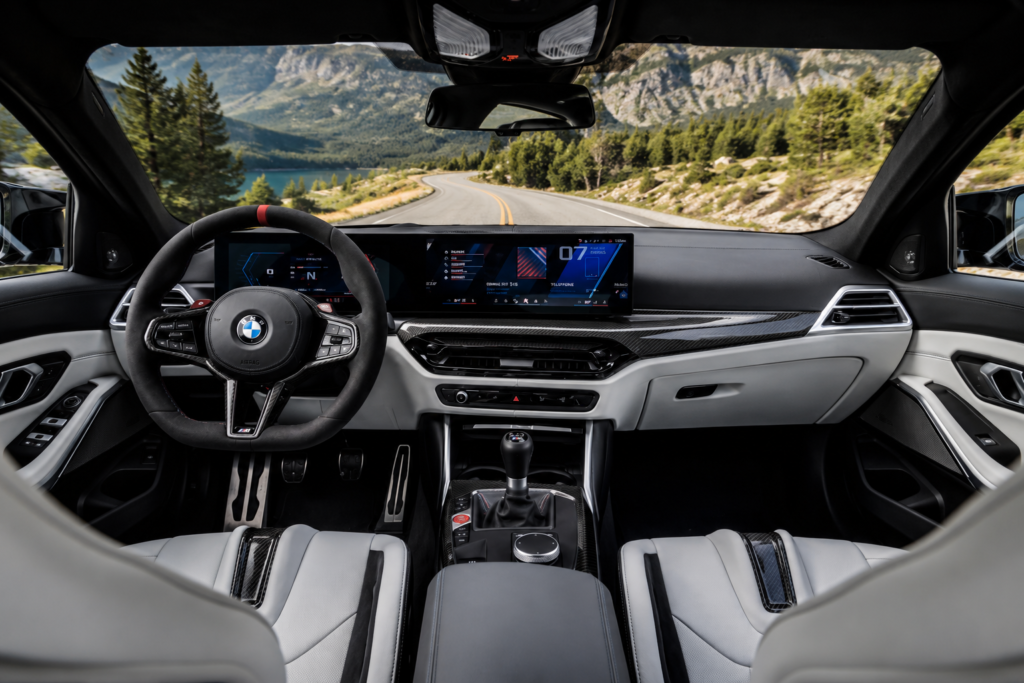
Step inside, and the M3 cabin blends motorsport touches with everyday livability — a balance BMW has gotten quite good at over the years.
The optional carbon-fiber bucket seats are a highlight. They hold you firmly in place during hard cornering, though they’re a bit of a squeeze for larger drivers, so it’s worth testing them before you commit.
BMW’s curved display setup dominates the dashboard — a 14.9-inch touchscreen paired with a 12.3-inch digital instrument cluster. It runs BMW’s iDrive 8 software, which handles everything from navigation to drive-mode customization.
Two things stand out about the tech here. First, the M3 lets you save custom drive-mode profiles (engine response, suspension stiffness, steering weight) to two dedicated steering wheel buttons — handy for switching instantly between “comfortable commute” and “track attack” setups.
Second, this is one of the few performance sedans that still offers proper physical buttons for key functions, which matters more than you’d think when you’re trying to adjust climate control mid-corner.
Standard equipment includes heated front seats, a heated steering wheel, wireless Apple CarPlay and Android Auto, and a solid Harman Kardon sound system, with a Bowers & Wilkins upgrade available if you want concert-hall audio on your commute.
Rear-seat space is adequate for adults on shorter trips, though this isn’t a car you buy primarily for chauffeuring people around — for that, BMW would rather sell you an X5 or X7.
Engine and Performance
This is where the M3 earns its reputation. Every current M3 uses BMW’s S58 engine — a 3.0-liter twin-turbocharged inline-six that’s become one of the most respected performance engines on sale today.
In base trim, it produces 473 horsepower and 406 lb-ft of torque, sent through a six-speed manual transmission to the rear wheels only. This is the version enthusiasts tend to romanticize, and for good reason — it’s the last remaining M3 you can order with a proper clutch pedal.
Step up to the Competition trim, and output climbs to 503 horsepower and 479 lb-ft of torque, paired exclusively with an eight-speed automatic. It’s quicker in a straight line, but you lose the manual gearbox entirely.
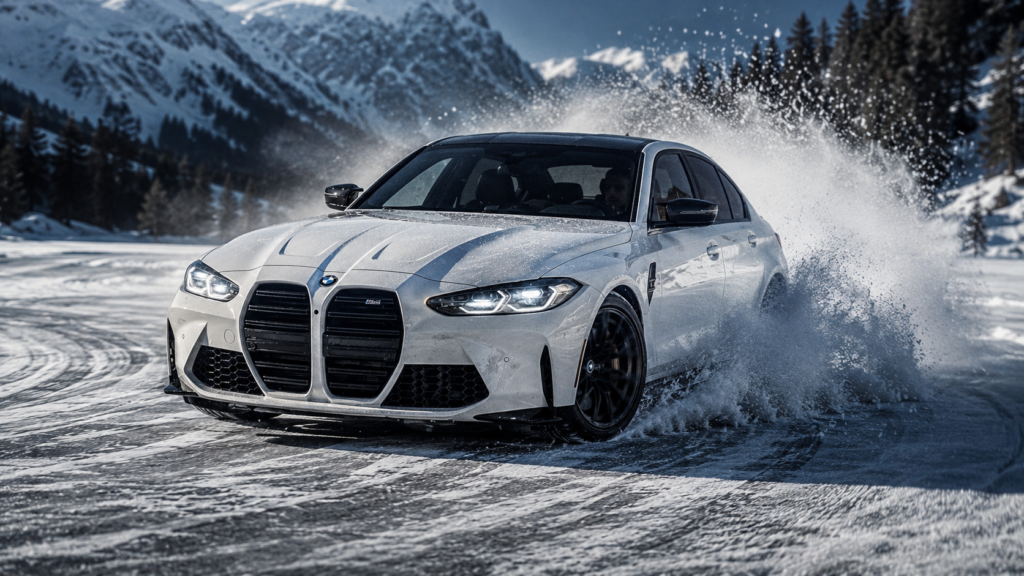
The range-topping Competition xDrive adds BMW’s all-wheel-drive system on top of the Competition’s power figures, putting all 523 lb-ft… sorry, 479 lb-ft of torque and 523 horsepower down through all four wheels. It’s the version to pick if you deal with snow, rain, or just want maximum traction off the line.
On the road, what impresses most isn’t just outright speed — it’s how the M3 manages it. The adaptive M suspension firms up nicely for aggressive driving but doesn’t beat you up on rough pavement, and the steering delivers genuine feedback rather than the numb, video-game feel you get in some rivals.
The active M differential is worth a mention too. It constantly adjusts how power splits between the rear wheels, helping the car rotate through corners rather than just understeering wide — a trait that separates a good sports sedan from a great one.
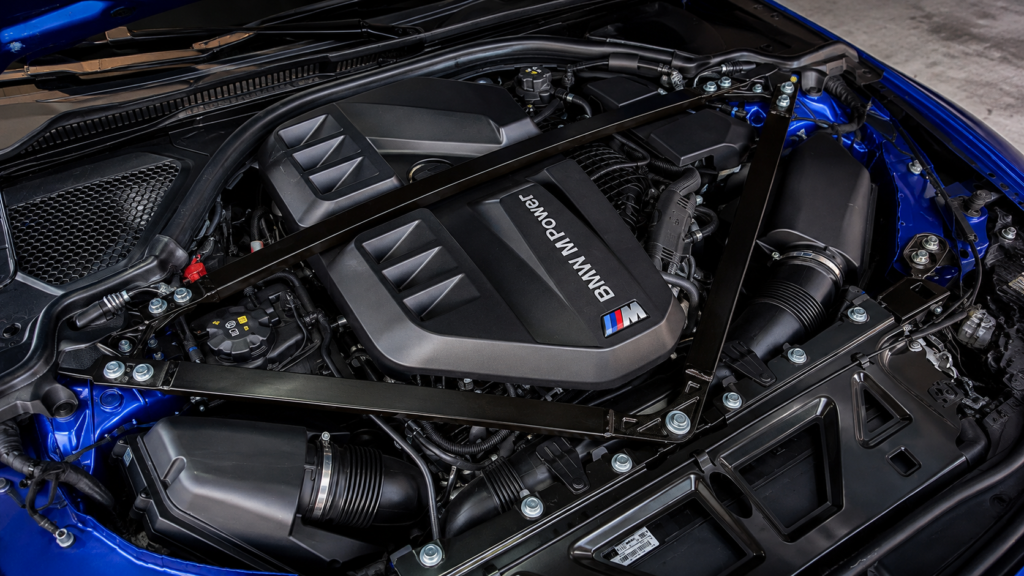
Specifications
| Category | Details |
|---|---|
| Engine | 3.0L twin-turbocharged inline-six (S58) |
| Horsepower | 473–523 hp (trim-dependent) |
| Torque | 406–479 lb-ft |
| Transmissions | 6-speed manual / 8-speed automatic |
| Drivetrain | RWD (standard) / xDrive AWD (Competition xDrive) |
| Fuel Economy | Roughly 16 city / 23 highway mpg |
| Curb Weight | Approximately 3,840–3,960 lbs |
| Seating Capacity | 5 |
| Brakes | M Sport brakes standard; carbon-ceramic optional |
| Body Style | 4-door sedan |
Top Speed and Acceleration
Numbers don’t always tell the full story, but with the M3, they help set expectations.
- Base M3 (manual): 0–60 mph in roughly 4.1 seconds
- M3 Competition: 0–60 mph in roughly 3.8 seconds
- M3 Competition xDrive: 0–60 mph in roughly 3.4 seconds, with some independent testing showing figures closer to the high-2-second range
Top speed is electronically limited to 155 mph, though opting for the M Driver’s Package raises that ceiling to 180 mph — worth considering only if you actually plan on track days.
For context, the all-wheel-drive Competition xDrive can sprint through the quarter-mile in around 11 seconds flat, numbers that put it in the same conversation as dedicated sports cars costing considerably more.
Price
Pricing for the 2026 BMW M3 starts around $78,400 for the base manual model before destination fees, taxes, and options — a modest increase from the previous year.
- M3 (manual, RWD): starting around $78,400
- M3 Competition (automatic, RWD): starting around $82,600
- M3 Competition xDrive (automatic, AWD): starting around $87,700
Once you start adding options — carbon bucket seats, the M Driver’s Package, upgraded audio, carbon-ceramic brakes — it’s easy to see a well-equipped M3 climbing well past $95,000. It’s worth building your exact configuration on BMW’s website before visiting a dealer, since packages vary by market and change from year to year.
Compared to the rest of BMW’s SUV-heavy lineup, like the BMW X5 or BMW X3, the M3 actually represents solid value for the performance on offer — you’re paying for genuine motorsport engineering, not just badge prestige.
Pros and Cons
Pros
- Genuinely engaging to drive, with communicative steering and a chassis that rewards skill
- Powerful, responsive turbocharged inline-six with a broad torque curve
- Manual transmission still available on the base trim — a rarity in this segment
- Everyday usability: comfortable enough for daily commuting
- Strong resale value compared to rivals
Cons
- Polarizing grille design that isn’t for everyone
- Firm ride quality, even in comfort mode
- Manual gearbox only available on the least powerful trim
- Options add up quickly, pushing the price well above the base MSRP
- Rear visibility isn’t great due to the sloped roofline
Comparison with Competitors
| Model | Horsepower | 0–60 mph | Starting Price | Best For |
|---|---|---|---|---|
| BMW M3 Competition | 503 hp | ~3.8 sec | ~$82,600 | Balanced daily/track performance |
| BMW M4 Competition | 503 hp | ~3.8 sec | ~$85,000 | Same thrills, two-door style |
| Mercedes-AMG C63 S E | 671 hp (hybrid) | ~3.3 sec | ~$88,000 | Straight-line speed, tech-heavy |
| Audi RS5 Sportback | 444 hp | ~3.9 sec | ~$80,000 | All-weather grip, understated looks |
| Cadillac CT5-V Blackwing | 668 hp | ~3.6 sec | ~$99,000 | Manual option, raw American muscle |
The BMW M4 Competition is essentially the M3’s twin under the skin, so the choice between them really comes down to whether you want two doors or four. Enthusiasts chasing pure driving feedback often still lean toward the M3’s sedan practicality without sacrificing performance.
The Mercedes-AMG C63 has taken a controversial turn with its hybrid four-cylinder setup — it’s astonishingly fast, but it’s traded some of the emotional character the old V8 had, and many journalists (myself included) still prefer the M3’s inline-six soundtrack.
The Audi RS5 leans toward comfort and all-weather composure over outright drama, making it the pick for buyers who want performance without the M3’s occasionally stiff ride.
Who Should Buy It?
The BMW M3 makes the most sense for drivers who genuinely care about how a car feels, not just how fast it is on paper.
If you want a car you can drive to work five days a week and then take to a track day on Saturday without missing a beat, this is close to the ideal package.
It’s also a strong pick for anyone comparing it against BMW’s growing SUV lineup — the BMW X6, BMW X4, or BMW iX — but who ultimately wants driving engagement over ride height and cargo space.
That said, if outright comfort, quietness, or maximum rear-seat room is your priority, you might be better served by something like a 330i or M340i, both of which offer a taste of M-inspired performance with a gentler daily driving experience.
Families or buyers wanting more interior space and a commanding driving position should look toward the BMW X5 or BMW X7 instead — the M3 is fundamentally a driver’s car first, everything else second.
Conclusion
After spending real time with the BMW M3, it’s easy to understand why it remains the reference point for the entire sports sedan segment. It manages a rare trick: being genuinely thrilling on a back road while still being practical enough to live with every day.
Is it perfect? No. The styling won’t win over everyone, the ride can feel stiff around town, and options can push the price higher than you’d expect. But few cars in this price range deliver the same blend of precision, power, and everyday usability.
Whether you’re cross-shopping it against the BMW M4, an Audi RS5, or even considering BMW’s SUV lineup like the X3 or X6, the M3 still stands out as the one built primarily for driving enjoyment.
If you want a car that rewards good driving rather than just moving you from point A to point B, the M3 remains one of the smartest performance purchases you can make in 2026 — and quite possibly your last chance to get one with a proper twin-turbo six and, if you choose, a manual gearbox.
For the latest official pricing, configurator options, and factory specs, visit the BMW M3 official website.
Frequently Asked Questions (FAQs)
Yes, with some caveats. The ride is firmer than a standard 3 Series, but the seats are comfortable and the tech is modern enough for daily use without feeling like a compromise.
Depending on trim, the current M3 ranges from 473 horsepower in base form up to 523 horsepower in the Competition xDrive model.
They share the same engine, chassis, and most performance components. The main difference is body style: the M3 is a four-door sedan, and the M4 is a two-door coupe.
Yes, but only on the base (non-Competition) trim. Competition and Competition xDrive models come exclusively with an eight-speed automatic.
The base and standard Competition trims are rear-wheel drive. The M3 Competition xDrive adds BMW’s xDrive all-wheel-drive system.
The base manual M3 does 0–60 mph in around 4.1 seconds, while the Competition xDrive can hit it in roughly 3.4 seconds or quicker in real-world testing.
Expect roughly 16 mpg city and 23 mpg highway, which is typical for a high-performance turbocharged sedan in this class.
The S58 engine has generally proven robust, though as with any high-performance turbocharged engine, regular maintenance and quality oil changes matter more than on a standard 330i.
The BMW M5 is larger, heavier, and more powerful, positioned as a grand tourer with serious pace. The M3 is smaller, sharper, and more focused on pure agility.
The 2026 model year marks the end of the current combustion-focused generation before BMW shifts the M3 nameplate to its next-generation electrified platform.