BMW X7 Review: Is BMW’s Flagship SUV Worth the Money in 2026?
Walk into any BMW showroom and ask the sales team which vehicle turns the most heads in the parking lot, and there’s a good chance they’ll point you toward the X7. It’s the biggest, boldest, and most unapologetically luxurious SUV that BMW builds, and after spending considerable time around this model — both behind the wheel and researching how it holds up over years of ownership — it’s clear the X7 occupies a strange but compelling space in BMW’s lineup.
This isn’t a car for people who want to blend in. The BMW X7 is a full-size, three-row luxury SUV built to compete with the Mercedes-Benz GLS and Range Rover, and it does so with a mix of genuine off-road capability, first-class cabin comfort, and BMW’s typical obsession with driving dynamics.
In this guide, we’ll break down everything worth knowing before you sign on the dotted line — from the engine lineup and real-world performance numbers to how it compares against siblings like the BMW X5, BMW X6, and even performance models like the BMW M5. Whether you’re cross-shopping SUVs or just curious what all the fuss is about, you’re in the right place. For a broader look at the entire lineup, check out our Complete BMW Guide 2026.
Quick Specifications
| Spec | Details |
|---|---|
| Body Style | Three-row, full-size luxury SUV |
| Engine Options | Turbocharged inline-6, twin-turbo V8, plug-in hybrid |
| Horsepower Range | ~375 hp to 650+ hp (Alpina/M60 variants) |
| 0–60 mph | Roughly 3.6 to 5.8 seconds, depending on trim |
| Top Speed | 130–155 mph (electronically limited) |
| Seating Capacity | 6 or 7 passengers |
| Drivetrain | xDrive all-wheel drive (standard) |
| Starting Price | Roughly $80,000–$90,000 (varies by year/trim) |
What is the BMW X7?
The BMW X7 is BMW’s flagship SUV — the biggest, roomiest, and most feature-loaded model in a lineup that also includes the compact BMW X1, the sportier BMW X3 and X4, and the mid-size BMW X5.
Think of it as the SUV BMW built when it decided the X5 simply wasn’t big enough for buyers who wanted three full rows of seating without sacrificing the brand’s driving character.
Unlike a lot of full-size SUVs that feel like they were designed purely for comfort, the BMW X7 still tries to drive like a BMW. That’s the whole point of it. It’s a vehicle aimed at families and executives who don’t want to give up handling and power just because they need more space.
It slots above the X5 and BMW X6 in size and price, and it’s available with a genuinely wide spread of powertrains — from a smooth inline-six to a growling V8, plus a plug-in hybrid variant for buyers who want to ease their fuel bill. You can see current trims, configurations, and factory details on BMW’s official X7 page.
History and Background
BMW didn’t always play in the full-size luxury SUV space. For years, the X5 was the top of the range, and it did the job well enough. But rivals like the Mercedes GLS and Range Rover kept eating into a segment BMW wasn’t seriously competing in.
The BMW X7 changed that. It debuted for the 2019 model year, built on BMW’s CLAR platform — the same architectural foundation shared with the X5 and several sedans in the lineup. This wasn’t a rebadged X5 with extra seats bolted on; it was a genuinely new, larger vehicle from the ground up.
Early reviews were mixed on styling — that oversized kidney grille was polarizing from day one — but the substance underneath won people over. Reviewers consistently praised how composed it felt for something so large, and BMW clearly listened to feedback in the years since.
A significant mid-cycle refresh brought updated styling, new tech, and expanded engine options, sharpening the X7’s appeal against increasingly aggressive competition. BMW has continued to fine-tune the formula every year, adding hybrid options and performance variants along the way.
Design and Exterior
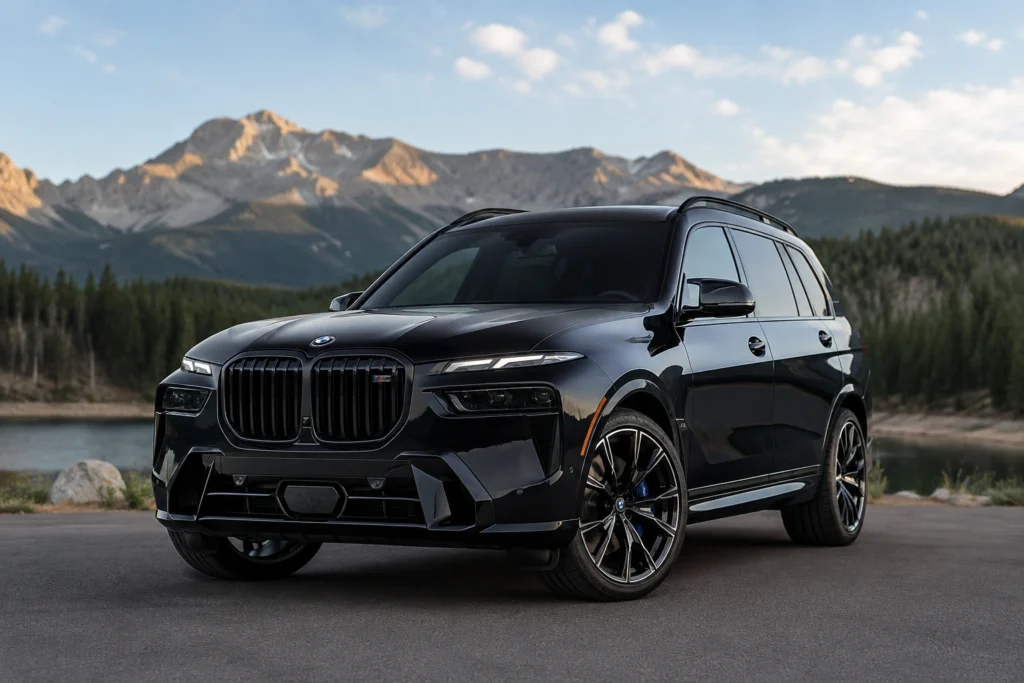
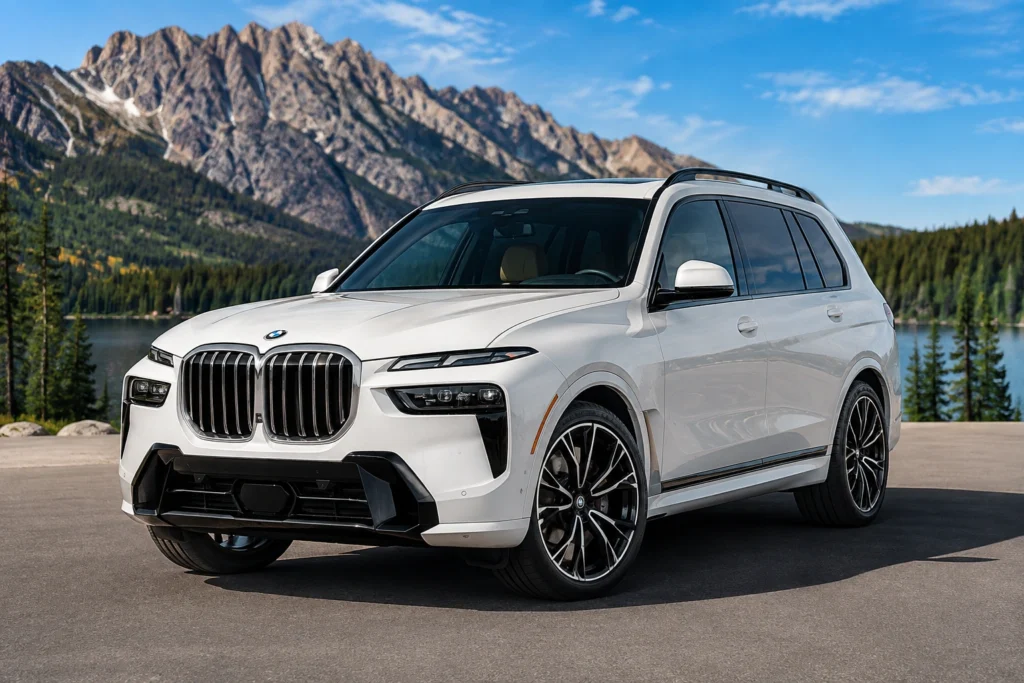
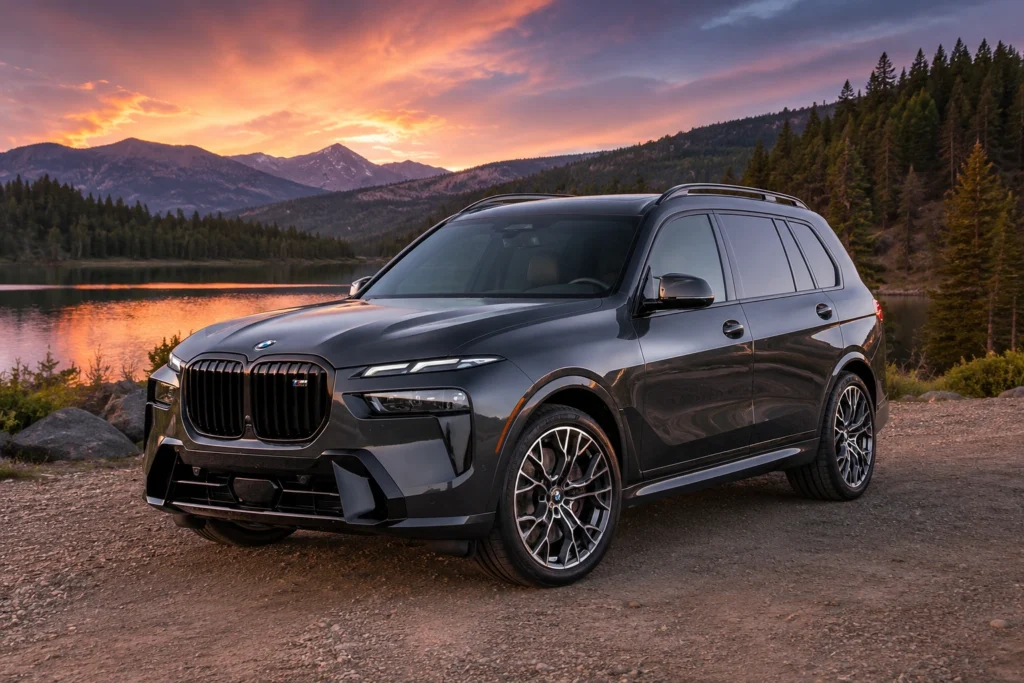
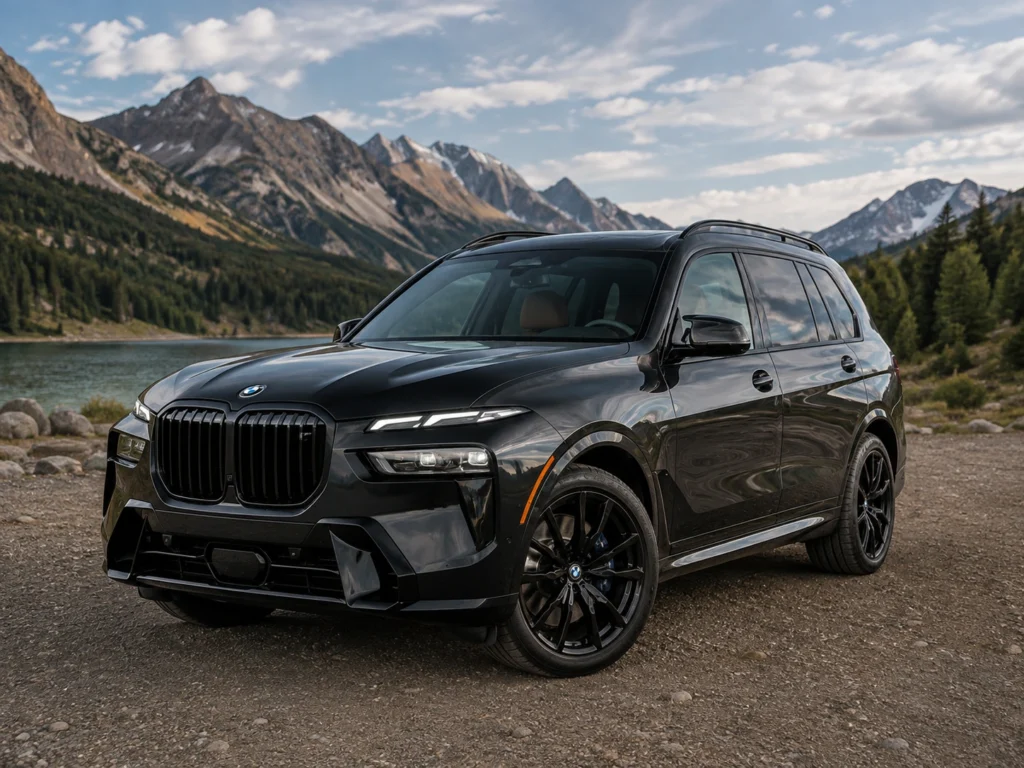
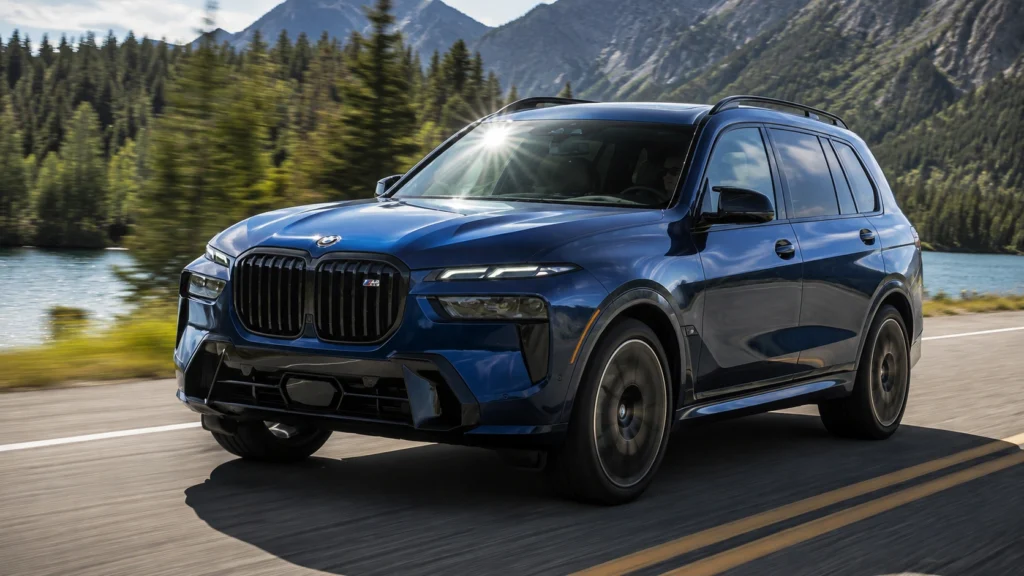
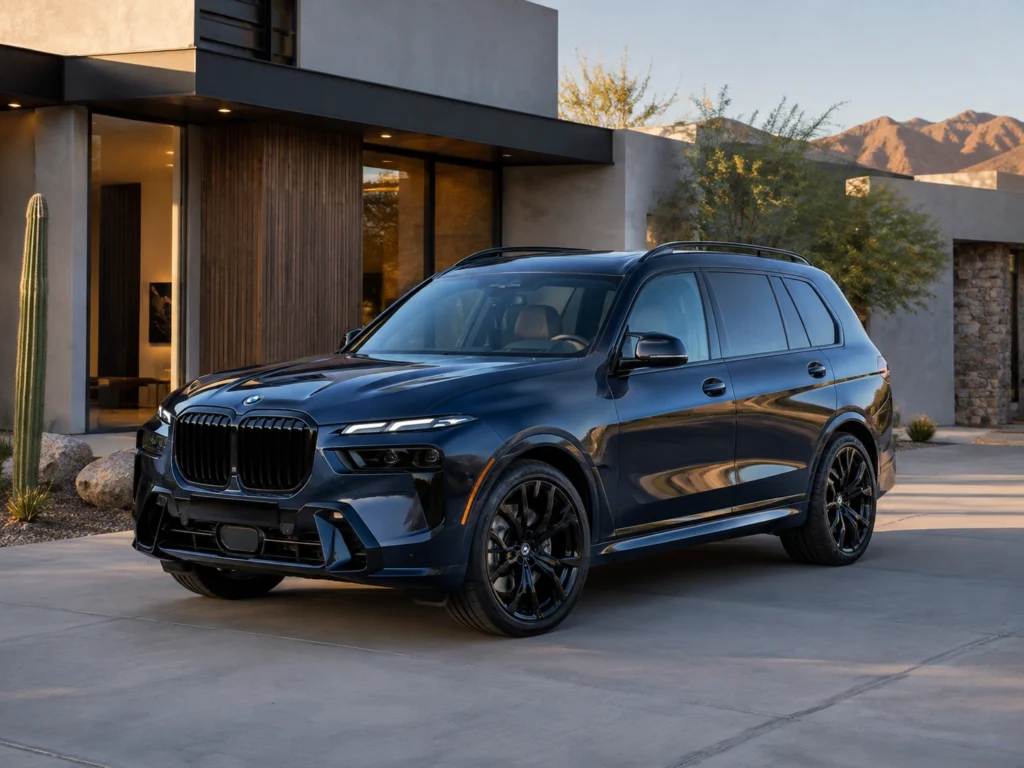
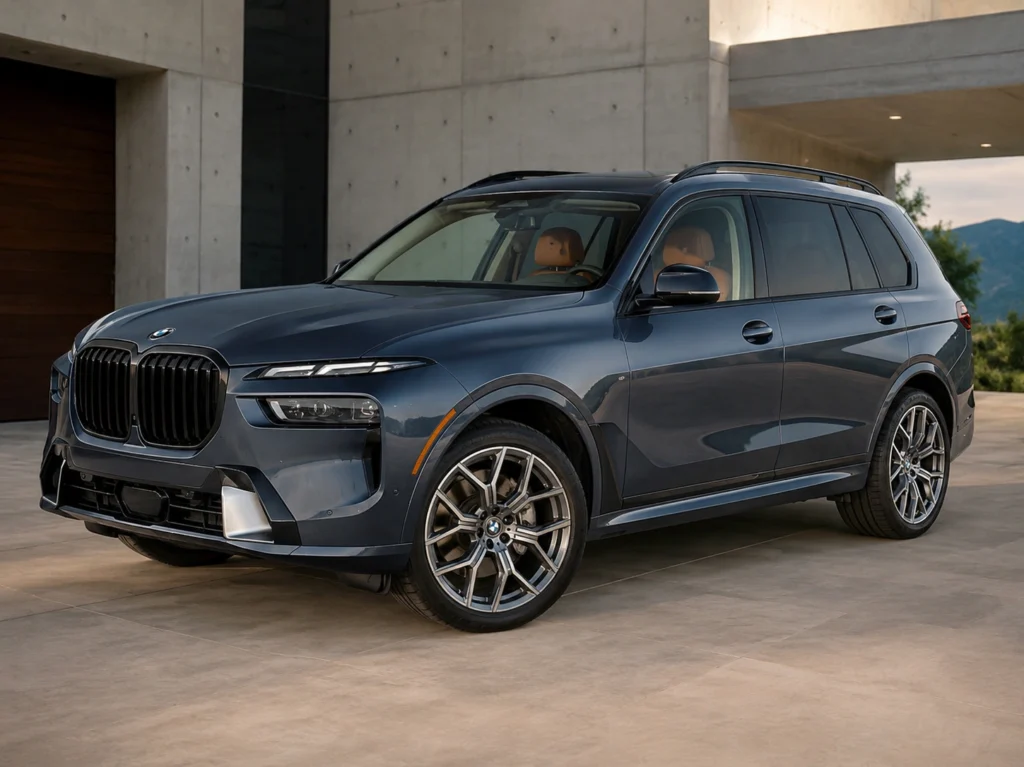
There’s no mistaking the BMW X7 for anything else on the road. It’s tall, wide, and long — genuinely one of the largest vehicles BMW has ever produced — and the styling leans into that scale rather than trying to hide it.
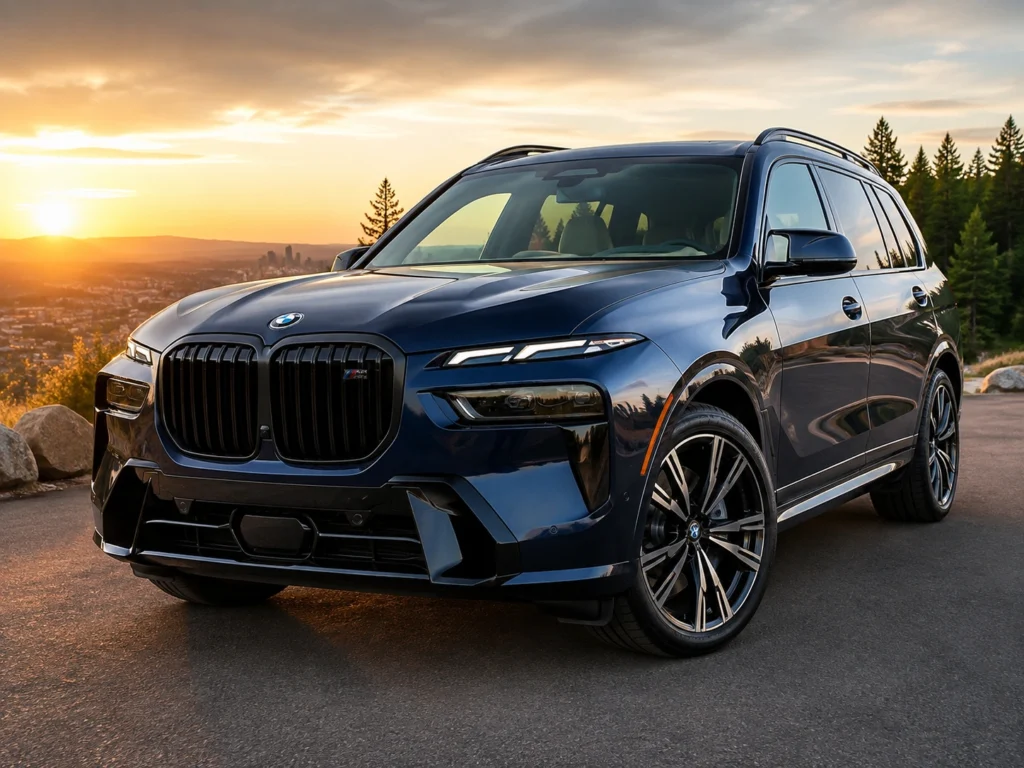
The front end is dominated by BMW’s signature kidney grille, which on the BMW X7 is noticeably larger and more upright than on any other model in the range. Love it or hate it, it’s a design decision meant to project presence, especially in the rearview mirror of other drivers.
Slim LED headlights sit above the grille, giving the front fascia a distinctive two-tier look that’s become a BMW styling trademark on recent models. Around back, full-width taillights and clean surfacing help balance out the aggressive front-end treatment.
Several things stand out about the exterior:
- Flush door handles on higher trims improve aerodynamics and give it a sleeker profile.
- Large wheel options (up to 22 or 23 inches) fill out the wheel arches nicely.
- Air suspension is available, letting the ride height adjust for loading or off-road situations.
- Panoramic sky lounge roof options bring in tons of natural light for rear passengers.
It’s a big vehicle, but BMW’s designers did a reasonable job keeping the proportions from looking clumsy — something not every full-size SUV manages.
Interior and Technology
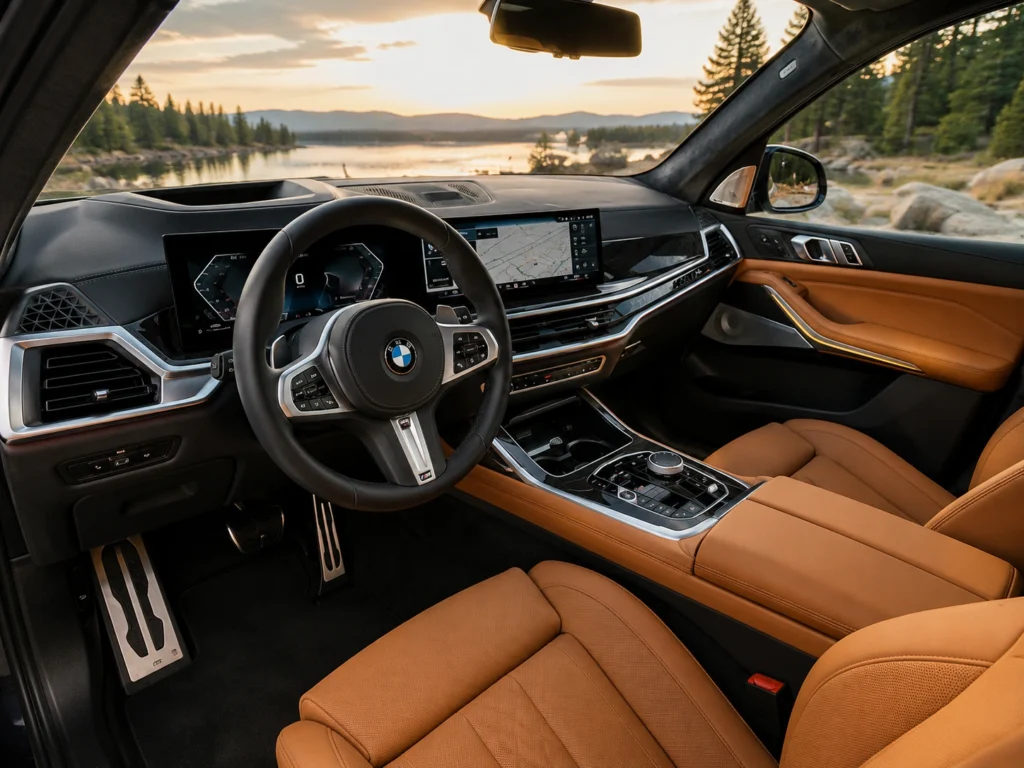
This is where the BMW X7 genuinely earns its price tag. Step inside and the cabin feels closer to a private lounge than a typical family hauler.
Materials are excellent throughout — soft leather, real wood or aluminum trim, and switchgear that feels substantial rather than cost-cut. BMW clearly wanted this cabin to compete directly with Range Rover and Mercedes-Benz on tactile quality, and for the most part, it succeeds.
Technology is centered around BMW’s curved display setup, which combines a digital instrument cluster with a large infotainment touchscreen into one sweeping piece of glass. It runs BMW’s latest iDrive software, controllable via touch, voice command, or the rotary dial on the center console — a nice bit of flexibility depending on your preference.
Notable interior features include:
- Available massaging front and second-row seats
- Four-zone (or more) climate control
- A crystal-look gear selector and iDrive controller on higher trims
- Optional captain’s chairs for the second row, dropping seating to six
- A surprisingly usable third row for adults on shorter trips
Cargo space behind the third row is modest, as it is in most three-row SUVs, but fold those seats down and the X7 opens up into a genuinely cavernous cargo hold — useful for anyone hauling gear, strollers, or luggage for a big family trip.
Engine and Performance
The BMW X7 lineup offers something for almost every kind of buyer, from those who want smooth and efficient to those who want genuinely quick.
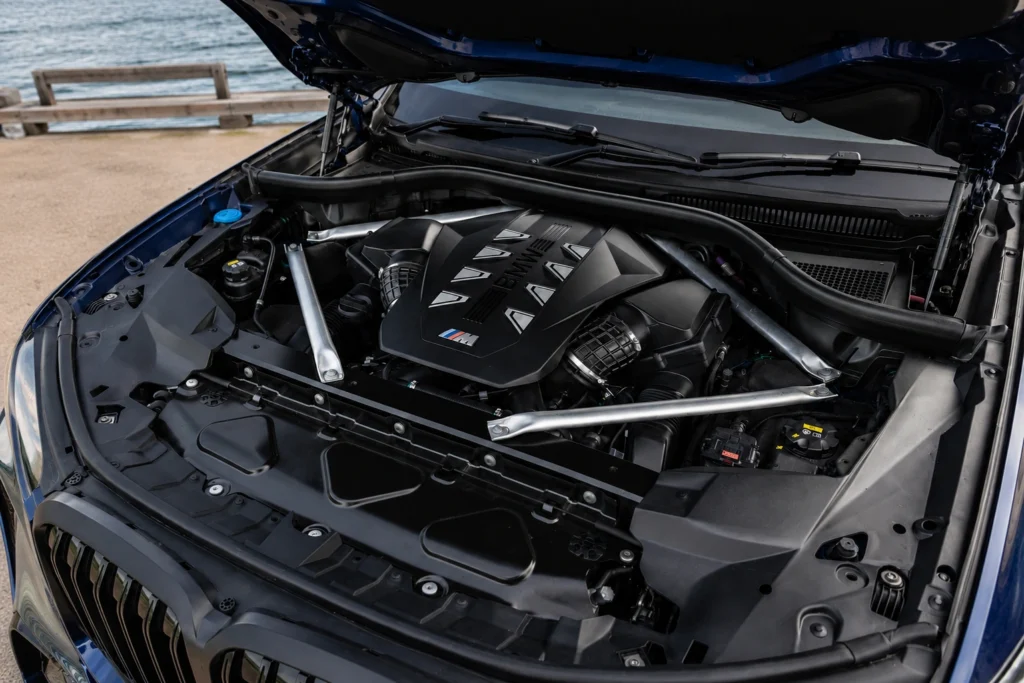
The base engine is a turbocharged 3.0-liter inline-six, producing somewhere in the 375-hp range depending on model year. It’s smooth, refined, and honestly enough power for most daily driving — this isn’t a slow SUV by any measure.
Step up and you’ll find a twin-turbo V8, which transforms the character of the vehicle entirely. It’s not just about the extra horsepower; the V8’s deeper exhaust note and stronger mid-range pull make the X7 feel genuinely quick for its size.
At the top sits the Alpina-tuned or M60 performance variant, which pushes output well past 600 horsepower. This is the version enthusiasts talk about — an SUV that can embarrass sports cars off the line while still hauling seven people in comfort.
There’s also a plug-in hybrid variant (the xDrive50e), pairing a turbocharged engine with an electric motor for a boost in efficiency and a useful amount of electric-only range for short trips or school runs.
All BMW X7 models come standard with xDrive all-wheel drive, BMW’s well-regarded system that sends power to whichever axle needs it most for grip. Air suspension is standard or optional depending on trim, and it does a genuinely impressive job soaking up rough pavement while still keeping body roll in check during faster cornering.
Specifications
| Category | Details |
|---|---|
| Engine (base) | 3.0L turbocharged inline-6, ~375 hp |
| Engine (V8) | 4.4L twin-turbo V8, ~530 hp |
| Engine (performance) | Alpina/M60 tune, 600+ hp |
| Hybrid Option | xDrive50e plug-in hybrid |
| Transmission | 8-speed automatic |
| Drivetrain | xDrive all-wheel drive |
| Suspension | Air suspension (standard/optional by trim) |
| Seating | 6 or 7 passengers |
| Curb Weight | Approximately 5,600–5,900 lbs |
| Towing Capacity | Up to 7,500 lbs |
| Fuel Economy | Roughly 19–23 mpg combined (gas models) |
Top Speed and Acceleration
Given its size, the X7’s acceleration figures genuinely surprise people who haven’t driven one.
The inline-six model gets from 0-60 mph in around 5.8 seconds — quick enough that it doesn’t feel outclassed by smaller, lighter SUVs. The V8 variant trims that down to roughly 4.6 seconds, which is properly quick for something this large and heavy.
The performance-tuned top variant is where things get genuinely wild. Depending on the exact configuration, 0-60 mph times drop into the mid-3-second range — territory usually reserved for dedicated sports sedans like the BMW M3 or BMW M5, not seven-seat family SUVs.
Top speed is electronically limited, typically to around 130 mph on standard models, with the performance variant capable of higher limited speeds depending on tire and package selection.
It’s worth noting that while these numbers are impressive on paper, the X7’s real strength is how effortlessly it delivers that performance. There’s very little drama involved — just a steady, confident surge of power whenever you need it.
Price
Pricing for the BMW X7 reflects its flagship positioning, and it climbs quickly once you start adding options.
- Base inline-six trim: typically starts in the low-to-mid $80,000s
- V8-powered trim: generally starts in the mid-$90,000s
- Performance/Alpina variants: can push past $130,000 before options
- Plug-in hybrid (xDrive50e): priced similarly to the V8 trim, depending on year
Once you start adding packages — massage seats, upgraded sound systems, larger wheels, rear-seat entertainment, and driver-assistance bundles — it’s easy to see a well-optioned X7 crossing the $100,000 mark even on a mid-range trim.
That said, compared to a similarly equipped Range Rover or Mercedes-Benz GLS, the BMW X7 is often competitively, if not favorably, priced for the amount of tech and performance you’re getting.
Pros and Cons
Pros:
- Genuinely impressive performance across the engine lineup
- Luxurious, tech-forward interior that rivals dedicated luxury brands
- Strong towing capacity for a vehicle this refined
- Air suspension delivers excellent ride comfort
- Third row is more usable than most competitors offer
Cons:
- Polarizing exterior styling, particularly the grille
- Fuel economy is unremarkable, especially on V8 models
- Options add up fast, inflating the final price significantly
- Third-row and cargo space trade-offs are noticeable when all seats are in use
- Some interior tech (like touch-based climate controls) has a learning curve
Comparison with Competitors
| Model | Body Style | Starting Price (approx.) | 0–60 mph | Standout Feature |
|---|---|---|---|---|
| BMW X7 | Full-size SUV, 3-row | ~$80,000+ | 3.6–5.8 sec | Performance + luxury balance |
| BMW X5 | Mid-size SUV | ~$65,000+ | 4.0–5.3 sec | Sharper handling, smaller footprint |
| BMW X6 | Mid-size SUV coupe | ~$70,000+ | 4.2–5.0 sec | Coupe-style roofline, sportier stance |
| Mercedes-Benz GLS | Full-size SUV, 3-row | ~$85,000+ | 4.5–6.0 sec | Smoother ride, slightly roomier third row |
| Range Rover | Full-size SUV | ~$95,000+ | 4.4–6.1 sec | Off-road pedigree, iconic prestige |
Compared to its closest sibling, the BMW X5, the BMW X7 trades some agility for space and presence — if you don’t need the third row, the X5 is the more engaging drive and easier to live with day-to-day.
Against the Mercedes-Benz GLS, it’s genuinely close. The GLS leans slightly more toward plush comfort, while the BMW X7 keeps a bit more of that BMW driving character even at this size.
The Range Rover remains the aspirational choice for buyers who want off-road credibility baked into the brand image, but the BMW X7 generally offers stronger performance and a more modern tech experience for similar money.
Who Should Buy It?
The X7 makes the most sense for a fairly specific type of buyer — and it’s worth being honest about who that is.
If you regularly need to carry six or seven people, want genuine luxury-level comfort, and don’t want to completely sacrifice driving enjoyment, this is one of the strongest options on the market right now.
It’s also a great fit for buyers cross-shopping other BMW performance models — someone who loves what the BMW M3, BMW M4, or BMW M5 offer in terms of engagement but needs something practical for a growing family won’t feel like they’ve given up entirely on driving fun.
On the other hand, if you’re mostly a solo or two-person household, models like the BMW X3, BMW X4, or even the BMW X1 will save you a significant amount of money without sacrificing much you’d actually use day-to-day.
Buyers considering electrification should also look at the BMW iX or BMW i4, which offer a very different but increasingly compelling ownership experience.
Conclusion
The BMW X7 isn’t a vehicle that tries to be everything to everyone, and that’s honestly part of its appeal. It’s built for buyers who need real space and genuine luxury but refuse to give up the driving character that made BMW’s reputation in the first place.
Is it perfect? The styling won’t win over everyone, fuel economy isn’t its strong suit, and the price climbs quickly once you start checking option boxes. But as a complete package, few full-size luxury SUVs manage to balance performance, comfort, and technology quite as well.
If you’re cross-shopping against the Mercedes-Benz GLS or Range Rover, the X7 deserves a serious look — and if you’re deciding between it and smaller siblings like the X5 or X6, it really comes down to how much space you genuinely need.
For families who want a flagship SUV that still feels like a BMW to drive, the X7 remains one of the most compelling options on the market today.
Frequently Asked Questions (FAQs)
Reliability has generally improved since launch, though as with any luxury SUV packed with tech, complexity means more potential points of failure. An extended warranty is worth considering once the factory coverage expires.
Depending on configuration, the X7 seats either six (with second-row captain’s chairs) or seven (with a second-row bench).
The X7 is larger overall, offers a genuine third row, and sits at a higher price point, while the X5 is more compact, sportier to drive, and easier to maneuver day-to-day.
Yes — Alpina-tuned and M60-badged variants push horsepower well past 600, offering acceleration that rivals dedicated performance cars.
Yes, properly equipped X7 models can tow up to 7,500 lbs, making it capable of handling boats, trailers, or campers.
Yes, the xDrive50e plug-in hybrid variant combines a gas engine with an electric motor for improved efficiency and short-range electric-only driving.
The X7 generally offers stronger performance and a more modern infotainment system, while the Range Rover carries stronger off-road heritage and brand prestige.
Combined fuel economy typically ranges from around 19 to 23 mpg on gas-powered models, with the hybrid variant offering notably better efficiency for shorter trips.