BMW X3 2026 Review: An Impressive Compact Luxury SUV
If you’ve spent any time cross-shopping compact luxury SUVs, you already know the BMW X3 sits near the top of most people’s lists — and for good reason. It’s the vehicle that quietly outsells nearly every other model in BMW’s lineup, and after driving the current generation extensively, it’s easy to see why. The BMW X3 blends genuine driving dynamics with a cabin that feels a full class above where it’s priced.
This isn’t a rehash of a spec sheet. I’ve spent real time behind the wheel of both the four-cylinder xDrive30 and the six-cylinder M50, through city traffic, backroads, and long highway stretches, and I want to walk you through what actually matters if you’re considering one. We’ll cover pricing, performance, interior quality, and how the X3 holds up against rivals like the Mercedes-Benz GLC and Audi Q5.
By the end, you’ll know exactly whether the BMW X3 deserves a spot on your test-drive list — and which trim makes the most sense for how you actually drive.
Quick Specifications
| Spec | BMW X3 xDrive30 | BMW X3 M50 |
|---|---|---|
| Engine | 2.0L turbo 4-cylinder, mild-hybrid | 3.0L turbo inline-six, mild-hybrid |
| Horsepower | 255 hp | 393 hp |
| Torque | 295 lb-ft | 428 lb-ft |
| 0-60 mph | 6.0 seconds | 4.4 seconds |
| Transmission | 8-speed automatic | 8-speed automatic |
| Drivetrain | xDrive AWD (standard) | xDrive AWD (standard) |
| Fuel Economy | Up to 27 city / 33 highway mpg | Slightly lower than base |
| Starting Price | Around $52,650 | Around $67,850 |
| Cargo Space | 67.1 cu ft (seats folded) | 67.1 cu ft (seats folded) |
| Seating | 5 passengers | 5 passengers |
What is the BMW X3?
The BMW X3 is a compact luxury SUV — or “Sports Activity Vehicle,” as BMW likes to call it — that sits between the smaller X1 and the larger X5 in BMW’s lineup. It’s built to compete in one of the most fiercely contested segments in the auto industry, going head-to-head with the Mercedes-Benz GLC, Audi Q5, and Lexus NX.
What sets the BMW X3 apart isn’t just badge prestige. It’s the way the SUV drives. Where a lot of luxury crossovers prioritize a cushy ride above all else, the X3 still feels like a BMW when you push it into a corner — tight, communicative steering, a well-controlled body, and enough power to make overtaking effortless.
It’s currently in its fourth generation, and it’s consistently BMW’s best-selling model in the United States. That’s not a small feat in a lineup that includes sedans, coupes, and full-size SUVs.
If you’re weighing it against BMW’s bigger SUV, our detailed BMW X5 review breaks down how the two compare in size, price, and personality.
History and Background
BMW introduced the X3 in 2003, and honestly, the first generation didn’t get universal praise. It was capable but a bit unrefined compared to the polished 3 Series it was based on. Still, it proved there was real demand for a smaller, more affordable BMW SUV.
The second generation, launched in 2010, fixed most of the early complaints. Ride quality improved, interior materials got a serious upgrade, and the X3 started to feel like a proper luxury vehicle rather than a jacked-up wagon.
By the third generation (2017), the X3 had matured into a genuine class leader, with the high-performance X3 M joining the lineup for the first time.
The current, fourth-generation X3 arrived for the 2025 model year with a full redesign — new platform, updated engines, and a completely reworked interior built around BMW’s latest curved display setup. The 2026 model carries that redesign forward with only minor changes, which is typical for a second year of a new generation.
For a broader look at how the X3 fits into BMW’s overall SUV strategy, our BMW complete guide 2026 covers the full lineup in detail.
Design and Exterior
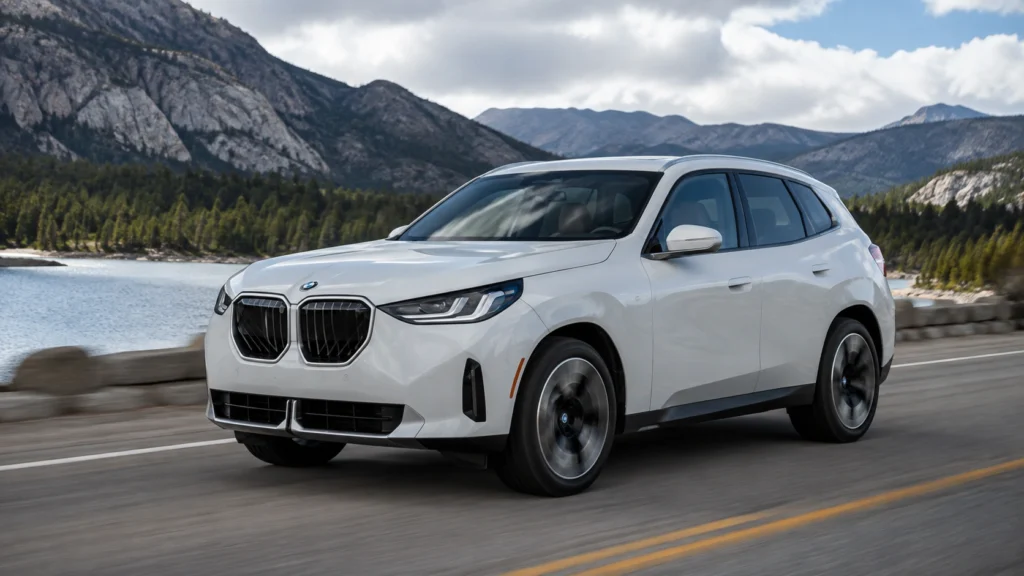
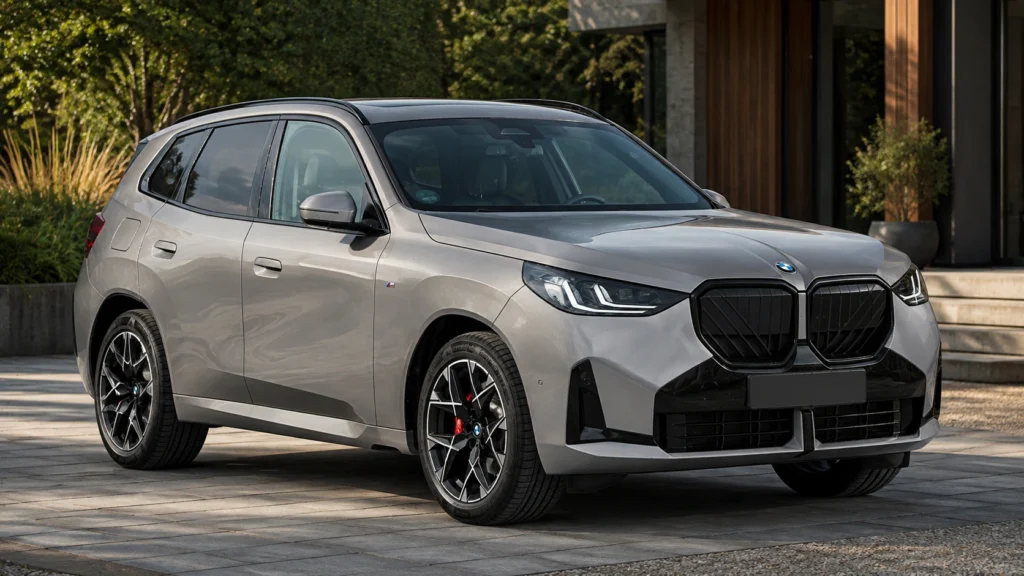
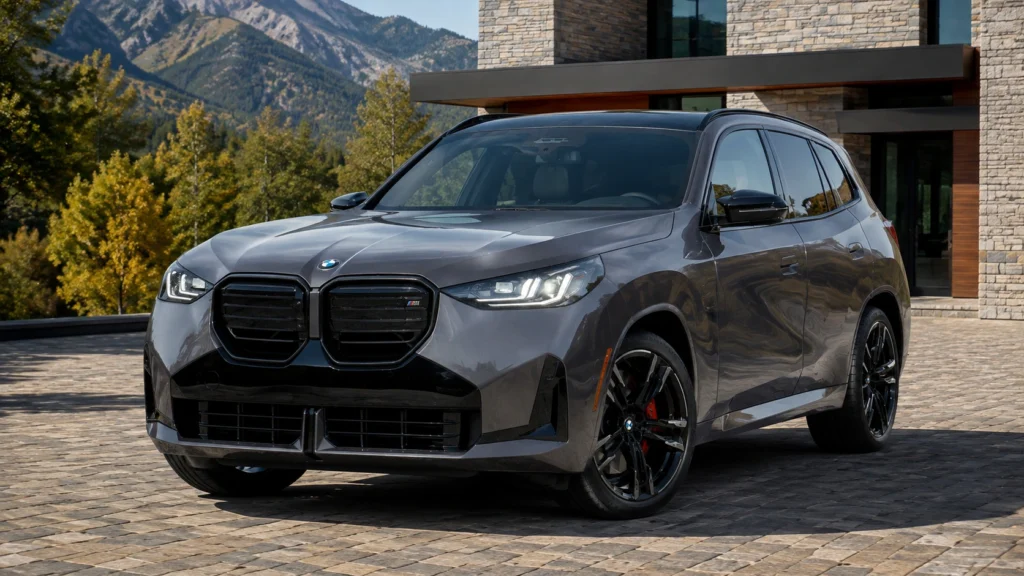
The BMW X3 exterior design leans into sharper, more angular lines than previous generations. The front end is dominated by BMW’s now-signature kidney grille, flanked by slim LED headlights that give the SUV a more assertive, almost predatory look compared to the softer styling of its predecessor.
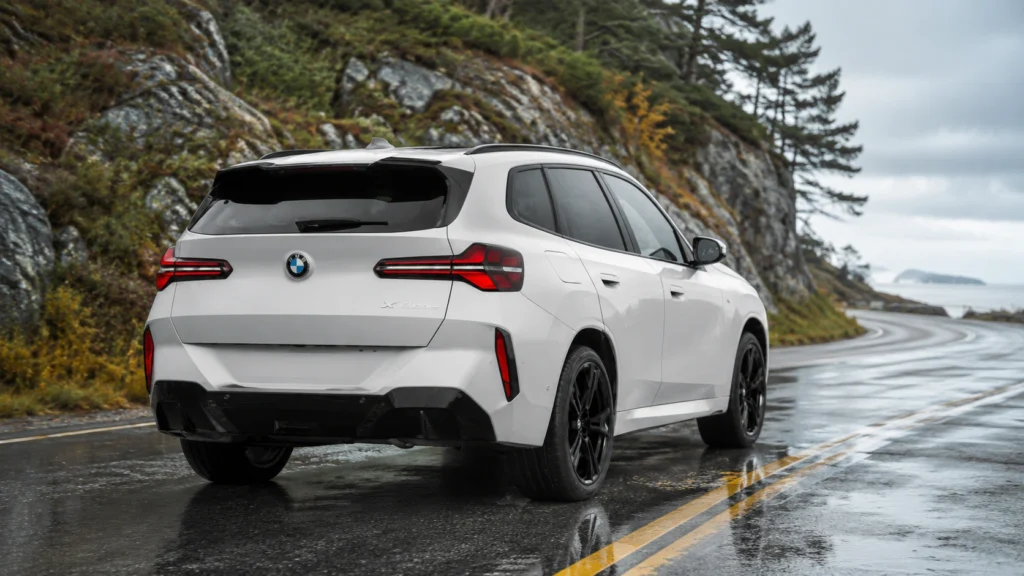
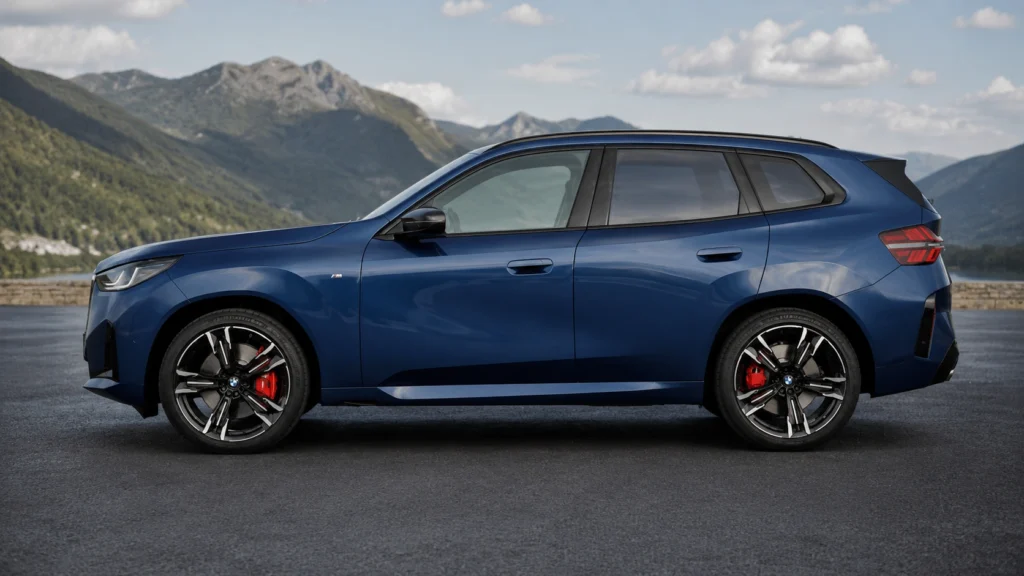
Down the side, the sheet metal is more sculpted, with a pronounced character line that runs from the front fender to the taillights. It’s not a dramatic departure from what BMW has done before, but it’s noticeably more expressive.
A few exterior highlights worth mentioning:
- Standard 19-inch wheels on the base xDrive30, with larger options available
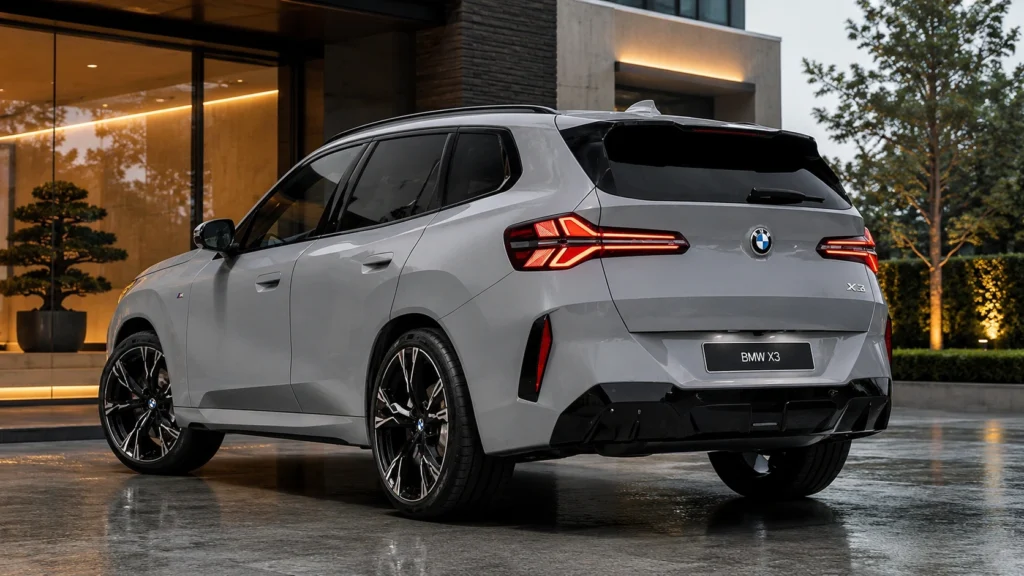
- LED headlights and taillights across the range
- A power liftgate as standard equipment
- Optional M Sport styling with more aggressive bumpers and larger wheels
- A panoramic glass sunroof available as an option
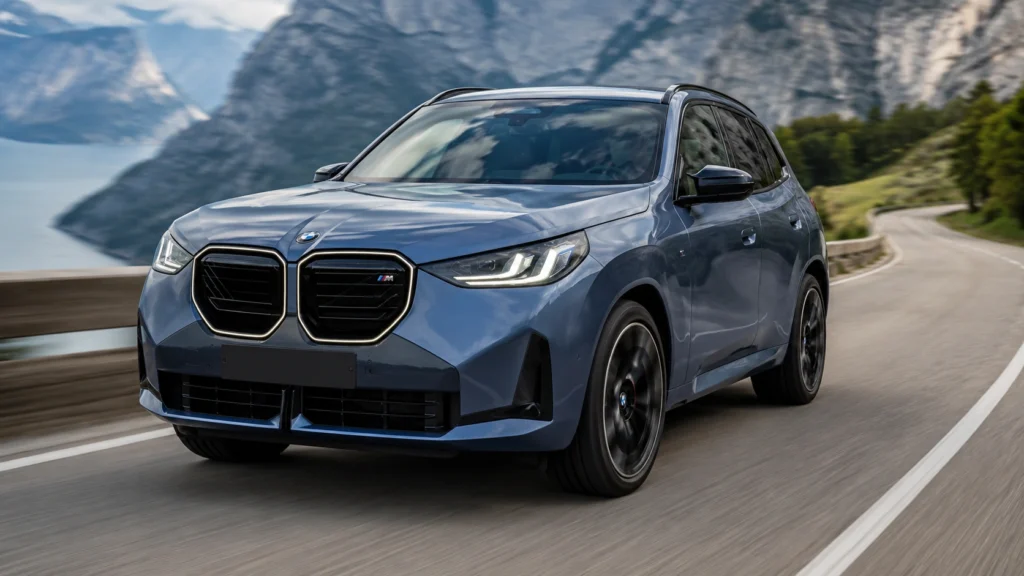
If you opt for the M Sport package, you get a lower-profile look with unique front and rear fascias, gloss-black trim, and a stance that genuinely looks like it belongs a segment above.
Interior and Technology
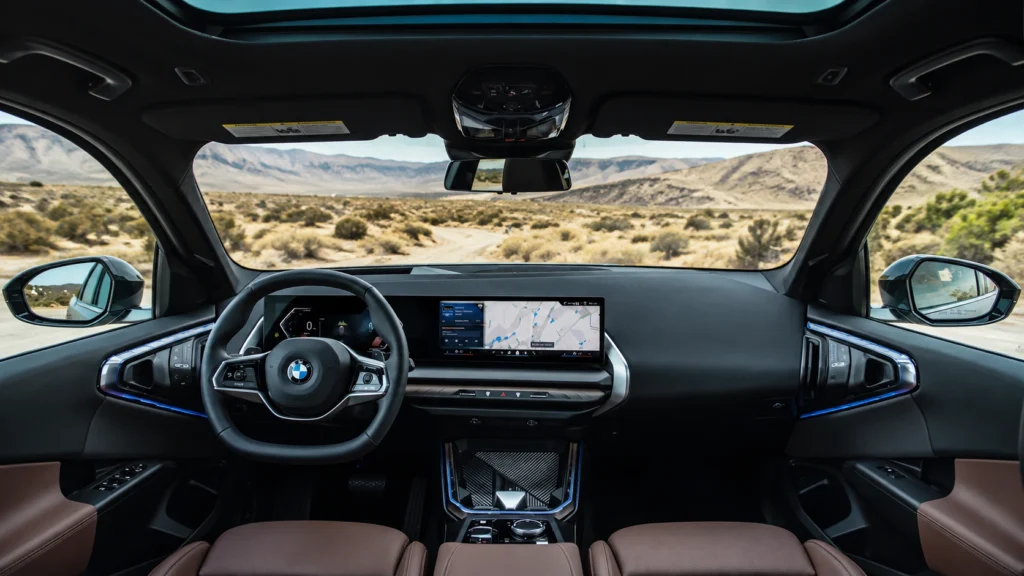
This is where the current BMW X3 makes its biggest leap forward. Step inside and the first thing you notice is the curved display — a single sweeping panel that houses both the digital instrument cluster and the central infotainment screen, angled slightly toward the driver.
It runs BMW’s latest operating system, and it’s genuinely one of the more intuitive infotainment setups in the segment. You get wireless Apple CarPlay and Android Auto standard, along with voice control that actually understands natural phrasing rather than rigid commands.
Interior highlights include:
- Curved digital display combining instrument cluster and infotainment
- BMW iDrive with touch, rotary dial, and voice control options
- Available leather upholstery with contrast stitching
- Heated front seats standard on most trims
- Ambient interior lighting with customizable color themes
- Digital key capability, letting you use your phone as a vehicle key
Material quality feels genuinely upscale — soft-touch surfaces where your hands actually rest, tasteful trim accents, and switchgear that feels solid rather than brittle. Rear seat space is competitive for the class, though taller adults in the back will notice the sloping roofline eats into headroom slightly.
Cargo space checks in at 67.1 cubic feet with the rear seats folded flat, which is genuinely useful for the class — enough for a couple of mountain bikes with wheels off, or a serious Costco run.
Engine and Performance
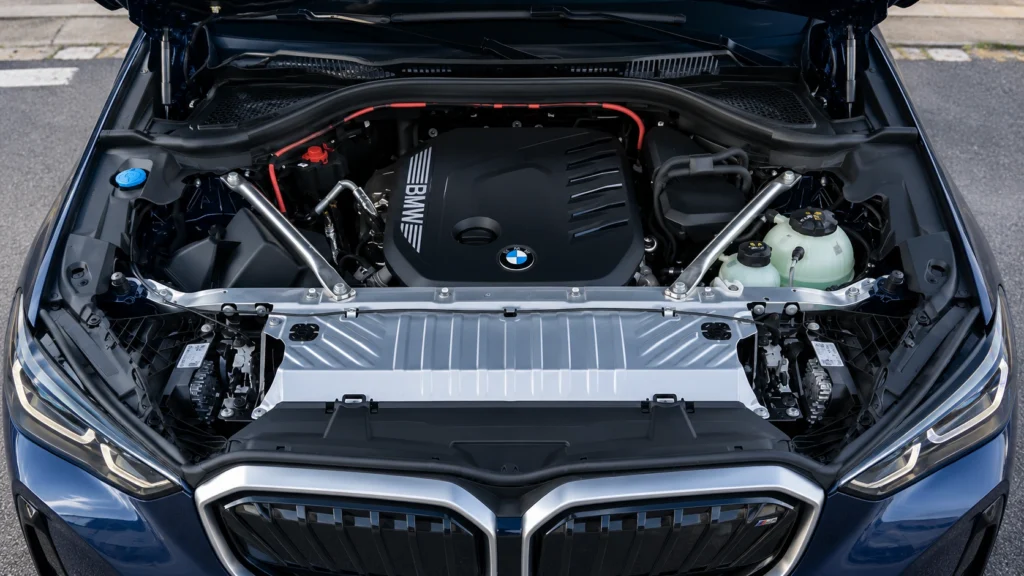
The BMW X3 engine lineup keeps things simple: two choices, both turbocharged, both paired with 48-volt mild-hybrid assistance that smooths out stop-start driving and adds a small boost of torque off the line.
xDrive30 (base engine): A turbocharged 2.0-liter four-cylinder producing 255 horsepower and 295 lb-ft of torque. It’s paired exclusively with xDrive all-wheel drive and an 8-speed automatic transmission.
M50 (performance engine): A turbocharged 3.0-liter inline-six making 393 horsepower and 428 lb-ft of torque — a genuinely serious powertrain that puts the X3 M50 within striking distance of dedicated performance SUVs costing considerably more.
Out on the road, the four-cylinder is more than adequate for daily driving. It doesn’t feel like the “budget” engine — passing on the highway is confident, and the mild-hybrid assistance fills in any turbo lag you might otherwise notice.
The inline-six in the M50, though, is where the X3 shows its enthusiast credentials. Throttle response is sharper, the exhaust note has real character, and the adaptive suspension keeps body roll impressively in check for a vehicle this size.
Both engines route power through xDrive, BMW’s all-wheel drive system, which biases power to the rear wheels under normal driving for that classic BMW feel, then shifts torque forward when it senses slip.
Specifications
| Category | xDrive30 | M50 |
|---|---|---|
| Engine | 2.0L turbo I4 | 3.0L turbo I6 |
| Horsepower | 255 hp @ 4,700 rpm | 393 hp @ 5,200 rpm |
| Torque | 295 lb-ft | 428 lb-ft |
| Transmission | 8-speed Steptronic automatic | 8-speed Steptronic Sport automatic |
| Drivetrain | xDrive AWD | xDrive AWD |
| 0-60 mph | 6.0 seconds | 4.4 seconds |
| Curb weight | Approx. 4,176 lbs | Approx. 4,535 lbs |
| Length | 187.2 in | 187.2 in |
| Width | 75.6 in | 75.6 in |
| Height | 65.4 in | 65.4 in |
| Wheelbase | 112.8 in | 112.8 in |
| Ground clearance | ~8.5 in | ~8.5 in |
| Cargo capacity | 67.1 cu ft (max) | 67.1 cu ft (max) |
| Towing capacity | Up to 4,850 lbs (with tow package) | Up to 4,850 lbs (with tow package) |
| Fuel economy | 27 city / 33 highway mpg | Lower, due to added power |
These BMW X3 dimensions put it firmly in “compact” territory on paper, but the cabin doesn’t feel cramped — clever packaging means it competes with some genuinely larger SUVs on outright interior space.
Top Speed and Acceleration
Acceleration is one area where the BMW X3 punches above its price point. The base xDrive30 hits 0-60 mph in about 6.0 seconds — quick enough that it never feels like the “entry-level” choice, even next to pricier rivals.
Step up to the M50, and that number drops to 4.4 seconds, which is genuinely quick for a compact SUV. For context, that’s roughly two-tenths quicker than the Porsche Macan’s base model in a similar 0-60 sprint, which says a lot about how seriously BMW took the M50’s tuning.
Top speed is electronically limited, as is standard across BMW’s lineup, though the M50 will pull harder and hold speed with more composure at highway pace thanks to its stiffer suspension tuning and larger brakes.
Price
BMW X3 pricing for 2026 starts at approximately $52,650 for the xDrive30, including destination charge. The X3 M50 starts around $67,850.
Here’s a rough breakdown of where your money goes:
| Trim | Starting Price | What You Get |
|---|---|---|
| xDrive30 | ~$52,650 | Core luxury features, 255-hp engine, standard AWD |
| xDrive30 with M Sport Package | ~$55,000-$58,000 | Sport styling, upgraded wheels, sport seats |
| M50 xDrive | ~$67,850 | 393-hp inline-six, adaptive suspension, M styling |
| M50 with options | $70,000-$76,000+ | Premium packages, larger wheels, driver assistance tech |
Most well-equipped X3 xDrive30 models land comfortably under $60,000, even with a handful of options added — which keeps it reasonably competitive against the Mercedes GLC and Audi Q5 once you match feature levels.
Pros and Cons
Pros:
- Strong, genuinely engaging driving dynamics for the segment
- Two capable engine choices, including a properly quick inline-six
- Excellent interior tech with the new curved display
- Standard all-wheel drive across the lineup
- Competitive fuel economy given the power on offer
- Solid resale value and strong reliability reputation among recent BMW SUVs
Cons:
- Exterior styling is a bit more polarizing than the previous generation
- Base infotainment features can require pricier packages to unlock fully
- Rear headroom is tight for taller passengers
- M50’s fuel economy takes a noticeable hit compared to the base engine
- Options add up quickly if you’re not careful configuring one
Comparison with Competitors
BMW X3 vs Mercedes-Benz GLC
| Feature | BMW X3 | Mercedes-Benz GLC |
|---|---|---|
| Base horsepower | 255 hp | 255 hp (turbo I4) |
| Base 0-60 | 6.0 sec | ~6.0 sec |
| Base price | ~$52,650 | Similar range |
| Interior tech | Curved display, iDrive | MBUX with large portrait screen |
| Driving feel | Sportier, more engaging | Smoother, more cushioned |
The GLC leans more toward comfort-first luxury, while the X3 keeps a sharper, more athletic edge — a meaningful distinction if you actually enjoy driving rather than just being driven.
BMW X3 vs Audi Q5
| Feature | BMW X3 | Audi Q5 |
|---|---|---|
| Drivetrain | xDrive AWD standard | Quattro AWD standard |
| Interior design | Curved display, driver-focused | Virtual cockpit, understated |
| Performance | 255-393 hp range | Comparable turbo four-cylinder range |
| Brand character | Sportier, driver-oriented | Quiet, refined confidence |
Both are excellent, but the X3 generally has the edge in outright driving engagement, while the Q5 counters with a calmer, more understated cabin.
BMW X3 vs BMW X1
The X1 is smaller and more affordable, making it a strong choice if budget matters more than outright space or power. The X3 offers more interior room, a stronger engine lineup, and a more substantial road presence, but at a real price premium.
BMW X3 vs BMW X4
The X4 is essentially the coupe-styled sibling to the X3, sharing most of its mechanical underpinnings. You lose some cargo space and rear headroom for the sleeker roofline, so it really comes down to how much you value styling over outright practicality.
BMW X3 vs BMW X5
The X5 is a full-size class up, with more interior space, a longer options list, and a higher starting price. If you regularly carry more passengers or cargo, or want the option of a third row, the X5 makes more sense.
Who Should Buy It?
The BMW X3 makes the most sense for buyers who want genuine driving engagement without stepping up to a full-size luxury SUV. If you value how a vehicle handles a curvy backroad as much as how it looks parked in your driveway, this is very much your kind of SUV.
It’s also a strong pick for:
- Small families who need real cargo space without going full-size
- Daily commuters who want AWD security without sacrificing driving fun
- Enthusiasts drawn to the M50’s inline-six performance
- Anyone cross-shopping the GLC or Q5 who prioritizes handling over outright cushiness
If your priority is maximum passenger space, a third-row seat, or the softest possible ride, you’re probably better served by something like the X5 or a full-size three-row SUV instead.
Conclusion
The BMW X3 remains one of the most well-rounded options in the compact luxury SUV class, and after spending real time with both the xDrive30 and M50, it’s clear why it’s BMW’s best-selling model in the U.S. It manages a rare balance — genuinely engaging to drive, packed with useful technology, and practical enough for everyday family duty.
Whether you go with the efficient four-cylinder or the properly quick inline-six in the M50, you’re getting an SUV that doesn’t ask you to choose between comfort and driving enjoyment. That’s a harder balance to strike than it sounds, and it’s the reason the X3 keeps outselling nearly everything else BMW builds.
If you’re cross-shopping the segment, the BMW X3 deserves a spot on your test-drive list — and once you’re behind the wheel, you’ll understand exactly why it has remained one of BMW’s most popular models. For official specifications, features, and configurations, visit BMW’s official X3 page.
Frequently Asked Questions (FAQs)
The 2026 BMW X3 starts at approximately $52,650 for the xDrive30, with the M50 starting around $67,850, both including destination charge.
Yes. It combines strong driving dynamics, a genuinely upscale interior, and two capable engine options, making it one of the standout choices in the compact luxury SUV segment.
Recent generations of the X3 have generally posted solid reliability results, though as with any luxury vehicle, maintenance costs after the warranty period run higher than mainstream brands.
The base xDrive30 hits 0-60 mph in about 6.0 seconds, while the M50 does it in roughly 4.4 seconds thanks to its 393-horsepower inline-six.
The xDrive30 produces 255 horsepower, while the M50 delivers 393 horsepower from its turbocharged six-cylinder engine.
The BMW X3 seats five passengers across two rows.
Cargo capacity measures up to 67.1 cubic feet with the rear seats folded flat.
For buyers who want a genuinely engaging drive alongside luxury-level interior quality, the X3 is absolutely worth considering — particularly against rivals like the GLC and Q5 that prioritize comfort over dynamics.