Rolls-Royce Cullinan: The Complete 2026 Guide to Price, Performance and Ownership
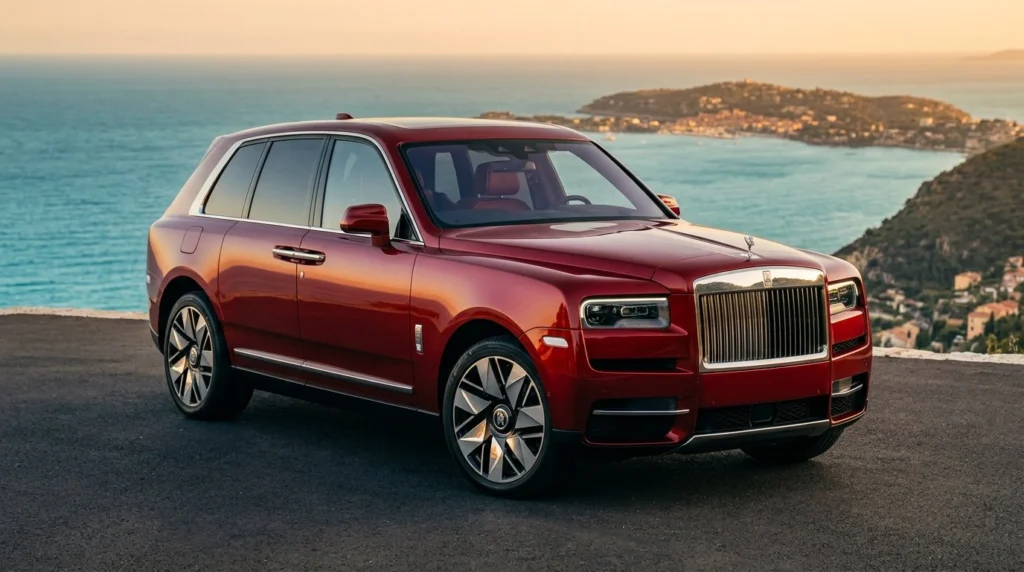
No other SUV occupies quite the same space as the Rolls-Royce Cullinan. It is tall, imposing, and built on the same “Architecture of Luxury” platform that underpins the Phantom, yet it drives like nothing else wearing a set of five-door bodywork. For 2026, the Cullinan carries forward as a Series II model, refined rather than reinvented, still powered by a twin-turbocharged V12 and still priced well beyond six figures before a single option is ticked.
This guide covers what actually matters to someone researching the Rolls-Royce Cullinan 2026 lineup: real pricing, verified specifications, how the V12 feels on the road, what separates the standard car from the Black Badge, and how it stacks up against the Bentley Bentayga and Ferrari Purosangue. Along the way, we’ll explain not just what the numbers are, but what they mean once you’re actually behind the wheel — or, more likely for this car, in the back seat.
Quick Specifications
| Specification | Rolls Royce Cullinan Series II |
|---|---|
| Model | Cullinan Series II / Black Badge Series II |
| Engine | 6.75L twin-turbocharged V12 |
| Horsepower | 563 hp (Black Badge: 591 hp) |
| Torque | 627 lb-ft (Black Badge: 664 lb-ft) |
| Transmission | 8-speed automatic |
| Drivetrain | All-wheel drive |
| Seating Capacity | 4 or 5, depending on configuration |
| 0–60 mph | Approximately 5.0 seconds (Black Badge: as low as 4.5–4.9 sec, per Rolls-Royce dealer and third-party testing) |
| Top Speed | 155 mph (electronically limited) |
| Fuel Economy | 12 mpg city / 19 mpg highway (EPA) |
| Starting Price | From roughly $432,000 (Black Badge from roughly $502,000), before options |
Pricing and performance figures vary by market, model year, and configuration. Rolls-Royce does not always publish official 0–60 mph times; several figures above are independently tested or dealer-estimated rather than factory-guaranteed.
What Is the Rolls-Royce Cullinan?
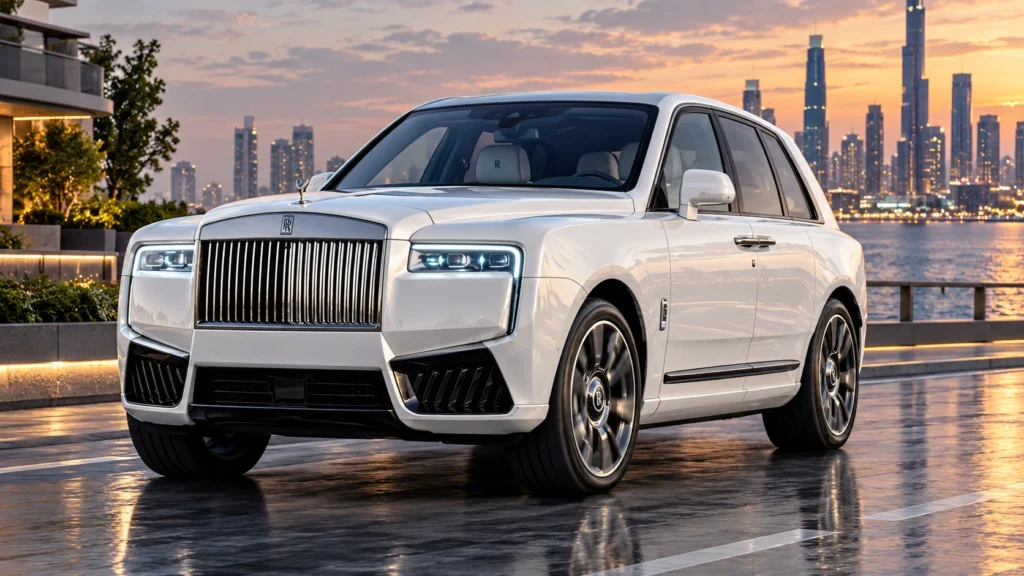
The Rolls-Royce Cullinan is the marque’s first SUV, sitting alongside the Phantom, Ghost, Spectre, and Wraith-successor Cullinan in a lineup built almost entirely around chauffeured comfort. Rolls-Royce didn’t enter the SUV segment to chase trends — it entered because clients kept asking for a Rolls-Royce that could handle a gravel driveway, a ski chalet access road, or simply sit higher in traffic without sacrificing the marque’s signature ride quality.
What separates it from a conventional luxury SUV isn’t outright capability. It’s the way everything from the door mechanisms to the air suspension has been engineered around isolating occupants from the outside world. A Range Rover or Bentayga is trying to balance off-road ability with comfort. The Cullinan is trying to be a Rolls-Royce that happens to be tall.
This makes it a curious hybrid: genuinely useful ground clearance and all-wheel drive, paired with an interior and ride philosophy borrowed straight from the Phantom limousine. It’s aimed at owners who already have — or could have — a Phantom, but want something they can drive themselves, or send off-property without a second thought about rough tarmac.
History and Background
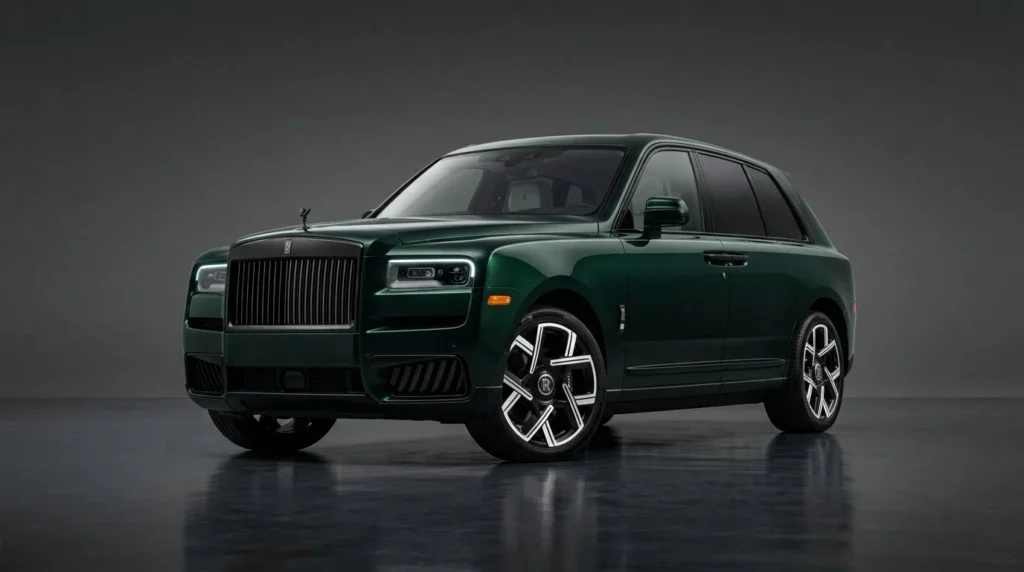
Rolls-Royce resisted the SUV category for years before conceding that its own clients were already buying rival luxury SUVs to complement their sedans. The Cullinan arrived for the 2019 model year, named after the Cullinan Diamond — the largest gem-quality rough diamond ever discovered, unearthed in South Africa in 1905 and later cut into stones that form part of the British Crown Jewels. The name was chosen to signal rarity and scale rather than any literal connection to the stone.
The original Cullinan established the formula: a V12, coach doors at the rear, and an interior that mirrored Rolls-Royce sedans rather than copying other SUVs. A Black Badge version followed in 2019, aimed at a younger, more assertive clientele who wanted darker styling and sharper responses without abandoning the badge’s comfort-first character.
The bigger shift came with the Series II update, introduced for the 2024 model year. It brought a redesigned front end with an illuminated Pantheon grille, new headlight graphics, and a reworked dashboard built around Rolls-Royce’s SPIRIT digital architecture. The Black Badge Series II followed shortly after, with its own styling language and a further bump in output. The 2026 Cullinan carries this Series II package forward largely unchanged, continuing to expand Bespoke paint and material options rather than introducing mechanical revisions.
Design and Exterior
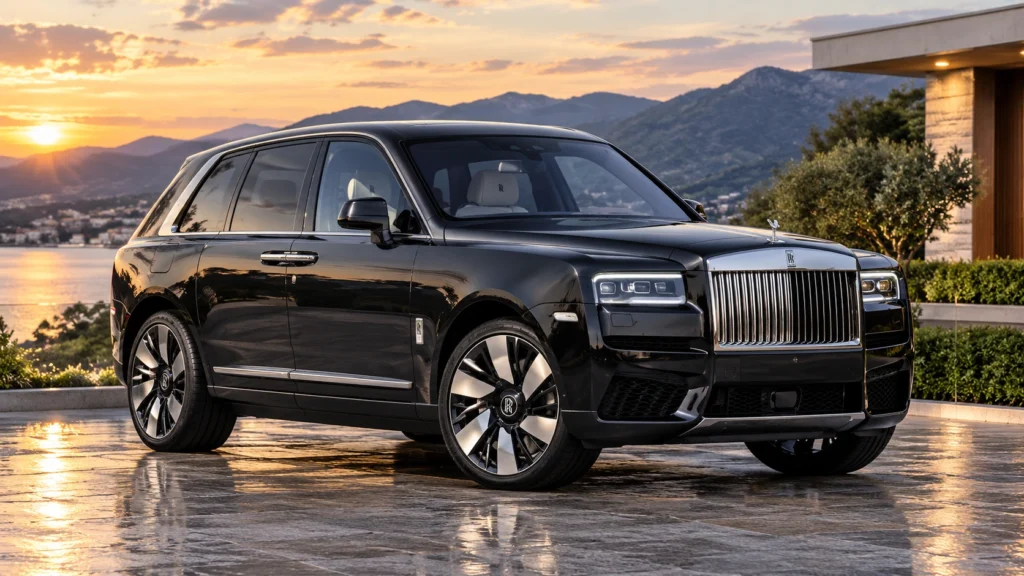
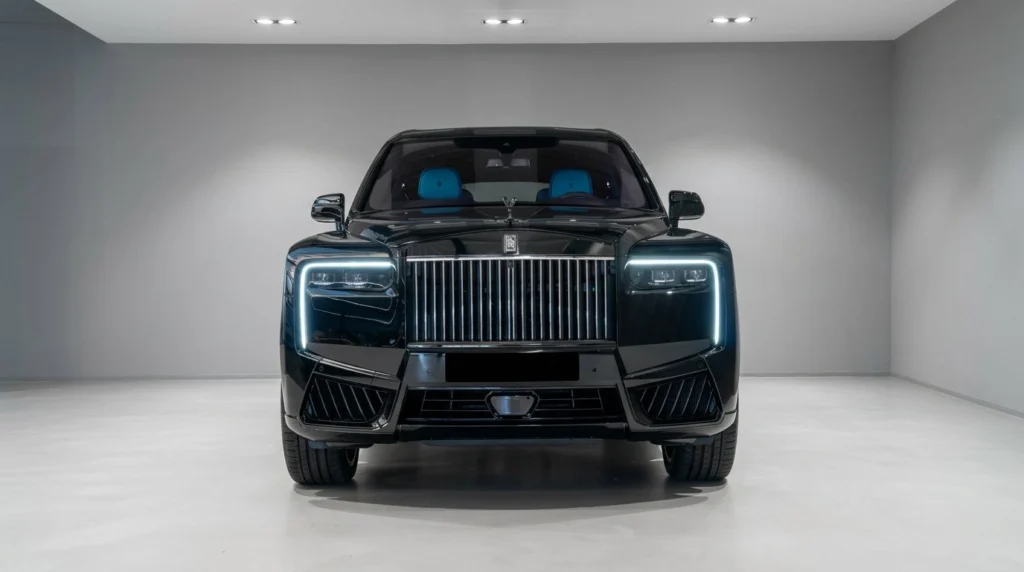
The Cullinan’s front end is dominated by the Pantheon grille, which on the Series II is illuminated for the first time — a subtle backlit treatment rather than anything garish. Vertical LED daytime running lights flank it, giving the face a more angular, deliberate look than the softer original Cullinan. The Spirit of Ecstasy still sits proudly on the hood, retracting for protection when parked.
Viewed from the side, the Cullinan reads as tall and slab-sided rather than curvaceous, with a nearly unbroken waistline running from headlight to taillight. That flat surface isn’t an accident — Rolls-Royce designers wanted the body panels to read as a single, unbroken expanse of metal, the same philosophy applied to the Phantom’s doors. Rear coach doors, hinged at the back, open wide for easier entry and reinforce the sense of occasion getting in or out.
At the back, vertical taillights mirror the front lighting signature, and the two-piece tailgate splits horizontally — the lower section forming a usable bench when open, a detail lifted from the marque’s shooting-brake heritage. Ground clearance is generous enough for gravel drives and modest inclines, though this remains a road car first.
Black Badge models darken nearly every exterior element: grille surrounds, badging, and the Spirit of Ecstasy itself take on a high-gloss black or dark chrome finish, paired with distinct wheel designs, including an optional 23-inch forged wheel introduced with the Series II update. The overall effect is a more aggressive, nightclub-ready version of the same silhouette rather than a different car entirely.
Interior and Technology
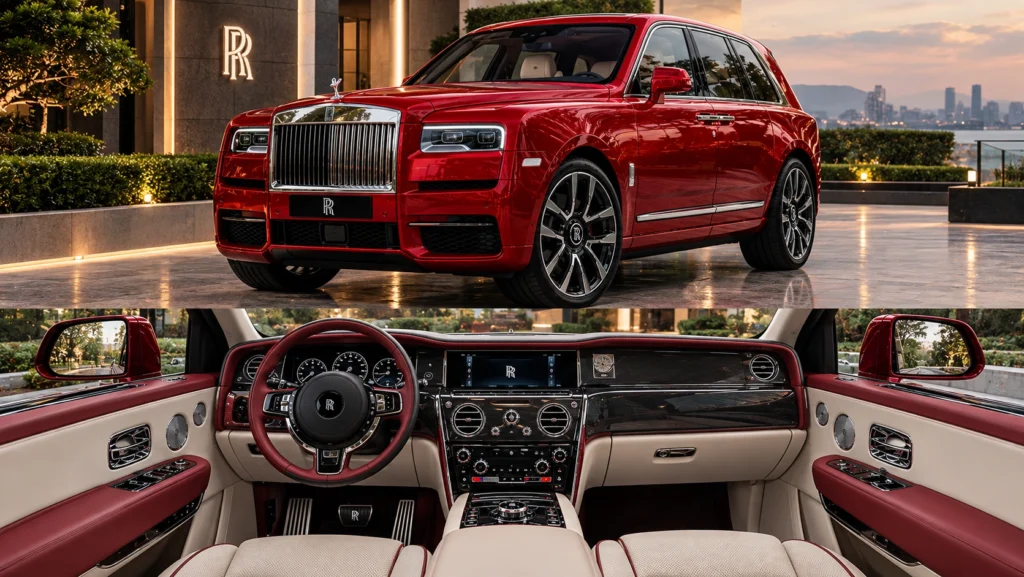
Step inside and the Rolls-Royce Cullinan interior immediately signals its price point through material choice rather than gadgetry. Leather is sourced and finished to Rolls-Royce’s own standard, hides are hand-selected, and the wood veneers — when specified — are bookmatched across the dashboard for a mirrored grain pattern that few manufacturers attempt. Metal trim elements are solid rather than plated wherever possible.
The Series II dashboard introduces a full-width glass panel that houses the driver display and passenger-side ambient lighting, along with a laser-etched illuminated fascia that can be personalized with a chosen design or pattern. It’s a meaningful step up from the previous generation’s more conventional gauge cluster, though the change is more about ambiance than added functionality.
Rear-seat comfort remains the Cullinan’s strongest selling point. Buyers can choose a traditional three-across bench or the four-seat “Individual” configuration with two powered reclining rear chairs, complete with a center console, picnic tables, and — depending on options — a small refrigerated compartment. Rear legroom is generous by any SUV standard, helped by a wheelbase just under 130 inches.
Climate control is split into multiple zones, and Rolls-Royce’s air suspension works with a forward-facing camera system, marketed as Flagbearer, to read the road ahead and adjust damping before the car even reaches a bump. Passengers in the back seat often notice the difference before the driver does — surface imperfections are absorbed with a softness that few competitors match, luxury SUV or otherwise.
Infotainment runs on Rolls-Royce’s own software layered over BMW-sourced hardware, with wireless smartphone connectivity, a head-up display, and a Bowers & Wilkins-tuned audio system among the available options. Driver-assistance features include adaptive cruise control, lane-keeping assistance, and a 360-degree camera system, all fairly standard for the segment but executed with less visual clutter than most rivals.
Cargo space benefits from that split tailgate: with the rear seats up, there’s usable luggage room for a long weekend’s worth of bags, and folding the second row (where configuration allows) opens up considerably more volume for those treating the Cullinan as an actual daily-use SUV rather than a chauffeured city car.
Engine and Performance
Every Cullinan Series II uses the same basic architecture: a 6.75-liter twin-turbocharged V12, sending power through an 8-speed automatic transmission to all four wheels. In standard form, it produces 563 horsepower and 627 lb-ft of torque. The Black Badge variant raises that to roughly 591 horsepower and 664 lb-ft, achieved primarily through recalibrated turbocharging and engine management rather than any structural changes to the block.
What matters more than the peak numbers is where that torque arrives. Nearly all of it is available from just above idle, which means the Rolls-Royce Cullinan doesn’t need to build revs to deliver its power. Put your foot down at highway speed and the nose doesn’t dive for a lower gear the way a smaller-displacement turbo engine might — it simply gathers pace, smoothly and almost silently, with the tachometer barely registering the effort. Rolls-Royce reinforces this philosophy by fitting a “power reserve” gauge instead of a conventional rev counter, showing how much of the engine’s capability remains unused rather than how hard it’s currently working.
The air suspension, tied into that forward-scanning camera system, is arguably as important to the driving character as the engine itself. It reads the road surface ahead and adjusts damping in real time, which is why the Rolls-Royce Cullinan can weigh close to three tons and still feel like it’s gliding rather than lumbering over broken pavement. Steering is deliberately light and slow to load up, prioritizing effortless low-speed maneuvering over the sense of connection you’d want in a sports sedan.
Black Badge models add a firmer suspension tune and a Low mode that sharpens throttle response and steering weight for a more engaged feel, along with a revised all-wheel-drive torque split that sends more power rearward under hard acceleration. It’s a meaningfully different personality — still comfortable, but with a bit more urgency when asked for it.
Braking comes from large discs at all four corners, tuned for smooth, progressive stops rather than outright track performance — appropriate for a vehicle whose primary brief is refinement, not lap times.
Specifications
| Specification | Details |
|---|---|
| Engine | 6.75L twin-turbocharged V12 (N74B68) |
| Displacement | 6,749 cc |
| Cylinders | 12 |
| Induction | Twin-turbocharged |
| Horsepower | 563 hp (Black Badge: ~591 hp) |
| Torque | 627 lb-ft (Black Badge: ~664 lb-ft) |
| Transmission | 8-speed automatic |
| Drivetrain | All-wheel drive |
| Seating | 4 or 5 |
| Length | Approximately 210.3–210.8 in |
| Width | 78.7 in (85.2 in with mirrors) |
| Height | Approximately 72.2 in |
| Wheelbase | Approximately 129.7 in |
| Cargo Capacity | Roughly 21–22 cu ft with rear seats in place; considerably more with seats folded, where configuration allows |
| Curb Weight | Approximately 5,860–6,000 lbs, depending on configuration |
| Fuel Type | Premium unleaded |
| Fuel Economy | 12 mpg city / 19 mpg highway (EPA, standard Cullinan) |
Dimensions and weights are drawn from independent automotive databases and dealer listings rather than a single official Rolls-Royce spec sheet, and can vary slightly depending on wheel size, seating configuration, and market.
Top Speed and Acceleration
The standard Rolls-Royce Cullinan reaches 60 mph in roughly 5.0 seconds, according to independent testing, and is electronically limited to a top speed of 155 mph — the same self-imposed ceiling Rolls-Royce applies across its lineup, regardless of how much more the engine could theoretically deliver. The Black Badge Series II is quicker off the line, with figures ranging from about 4.5 to 4.9 seconds depending on the source and testing conditions, though top speed remains capped at the same 155 mph.
For context, that puts the standard Cullinan roughly in line with the entry-level Bentley Bentayga V8 and meaningfully behind the Bentayga Speed or the Ferrari Purosangue, both of which are engineered with outright pace as a core selling point.
That gap is intentional. Rolls-Royce has never chased 0–60 headlines the way performance-focused rivals do. The brand’s long-standing description of its own output as “sufficient” rather than a specific horsepower figure reflects a philosophy where acceleration exists to be effortless and unremarkable from inside the cabin, not something the driver is meant to chase or showcase. The Rolls-Royce Cullinan will comfortably out-accelerate almost anything on a public road that isn’t a dedicated performance car — it just won’t remind you of that fact while doing it.
Price
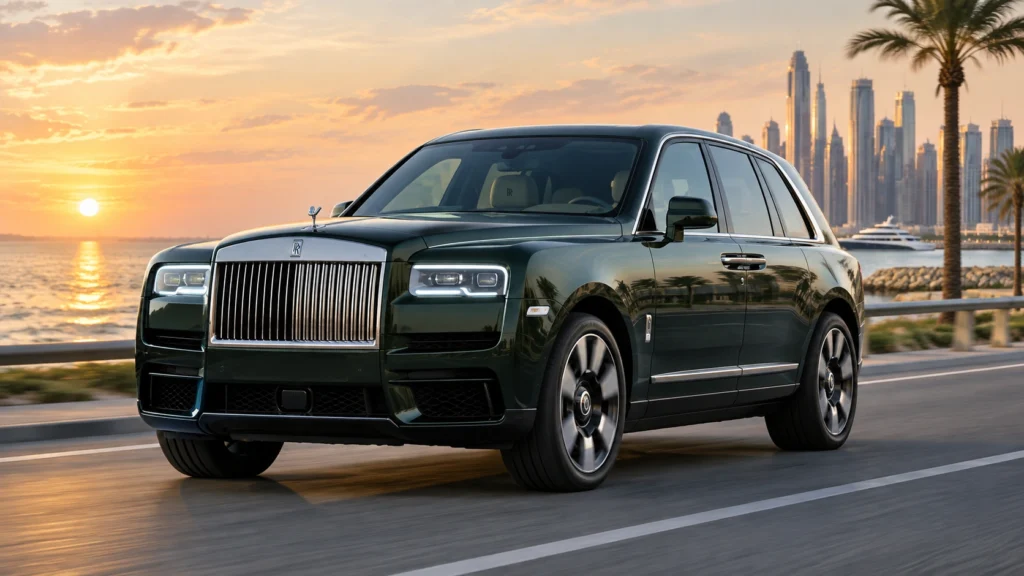
Rolls-Royce Cullinan price for the 2026 model year starts at approximately $432,000 for the Series II, with the Black Badge Series II beginning closer to $502,000, based on current U.S. market data. Those are base figures before destination charges, regional taxes, or a single option box ticked — and virtually no Cullinan leaves the factory at that starting number.
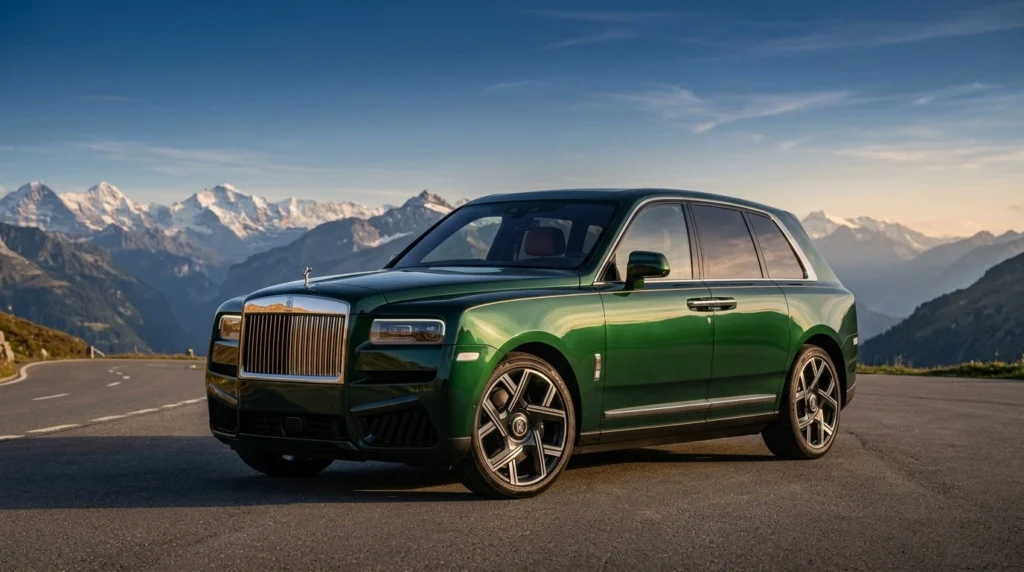
Rolls-Royce’s Bespoke program is where the real price variation happens. Paint alone can run from standard colors to fully custom hand-mixed finishes that take weeks to prepare. Interior options include embroidered artwork, illuminated starlight headliners, and materials sourced specifically for one client’s commission. It’s entirely realistic for a heavily personalized Cullinan to land $100,000 to $200,000 above its starting MSRP, and genuinely bespoke commissions can go considerably further.
Regional pricing varies substantially outside the U.S. as well, shaped by import duties, luxury taxes, and local market positioning — a Cullinan in parts of Asia or the Middle East can carry a significantly different sticker than the same specification sold in North America or the UK.
Ownership costs extend well beyond the purchase price. Maintenance on a V12 Rolls-Royce is specialized work, typically handled exclusively through Rolls-Royce dealer networks, and routine service intervals carry premium labor and parts costs to match. Insurance follows a similar pattern, priced closer to a supercar than a mainstream luxury SUV given the vehicle’s replacement value. Depreciation tends to be steep in the first few years, as is common across the ultra-luxury segment, though heavily optioned or particularly rare examples can hold value better than base configurations.
The honest takeaway: the advertised starting price is a real number, but it’s rarely the number an actual buyer pays.
Pros and Cons
Pros
- Exceptional ride comfort, aided by camera-scanning air suspension
- Interior materials and craftsmanship among the best in the industry
- Nearly limitless Bespoke customization
- Effortless, refined V12 power delivery
- Strong rear-seat experience, including reclining Individual seats
- Genuine road presence and exclusivity
- Usable ground clearance and all-wheel drive for real-world versatility
Cons
- Among the most expensive SUVs on the market, before options
- Bespoke personalization can add six figures to the final price
- Large exterior footprint that can be cumbersome in tight urban environments
- Fuel consumption is high, even by luxury SUV standards
- Maintenance and insurance costs are significant and ongoing
- Cargo space with rear seats in place trails some rivals in its price bracket
- Depreciation can be steep on less desirable configurations
Rolls-Royce Cullinan vs Competitors
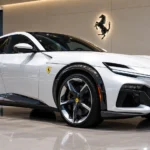
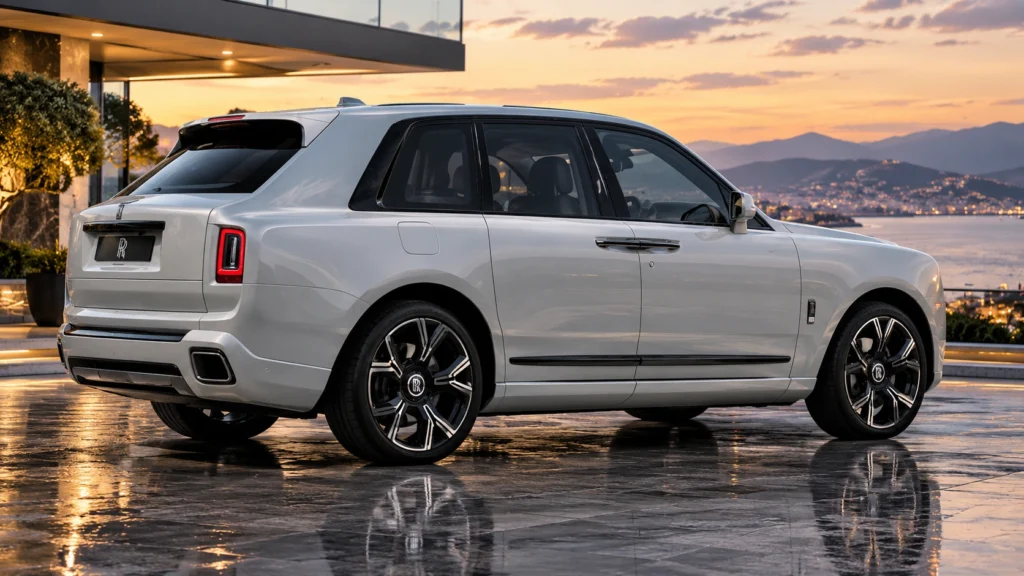
The Cullinan’s closest rival on paper is the Bentley Bentayga, though the two take noticeably different approaches. The Ferrari Purosangue occupies a stranger position — nominally a rival, but built with a completely different mission in mind.
| Feature | Rolls Royce Cullinan | Bentley Bentayga | Ferrari Purosangue |
|---|---|---|---|
| Positioning | Ultra-luxury flagship SUV | Luxury performance SUV | Four-seat performance car, not marketed as an SUV |
| Engine | 6.75L twin-turbo V12 | 4.0L twin-turbo V8 (Speed: same, tuned higher) | 6.5L naturally aspirated V12 |
| Power | 563–591 hp | 542–641 hp, depending on trim | 715 hp |
| Performance | 0–60 in ~5.0 sec (Black Badge quicker) | 0–60 in 3.4 sec (Speed) | 0–60 in ~3.2–3.3 sec |
| Luxury Focus | Maximum comfort and isolation | Blends comfort with driver engagement | Driver-focused, sports-car character |
| Rear-Seat Experience | Best-in-class, reclining Individual seats available | Strong, especially in Extended Wheelbase form | Limited; rear seats are tighter, four-seat only |
| Customization | Extensive Bespoke program | Strong Mulliner personalization program | Atelier customization, less extensive than Rolls-Royce |
| Starting Price | ~$432,000 | ~$210,000–$227,000 (V8 trims) | ~$440,000+ |
The Bentayga makes a stronger case for buyers who want genuine driver engagement alongside luxury — its Speed variant is dramatically quicker than any Cullinan and considerably cheaper to acquire, even if it doesn’t match the Rolls-Royce’s rear-seat theater or interior exclusivity. The Purosangue, meanwhile, isn’t really chasing the same buyer at all; it’s a Ferrari first, with an SUV-adjacent body, four seats, and a driving experience built around engagement rather than isolation.
Neither rival beats the Rolls-Royce Cullinan at what it’s actually trying to do, which is make the back seat the best seat in the vehicle. But neither is trying to.
Who Should Buy the Rolls-Royce Cullinan?
The Cullinan makes the most sense for buyers who already value what Rolls-Royce sedans offer — quiet, isolation, and craftsmanship — but need the added practicality of ground clearance, all-wheel drive, or genuine cargo capacity. It particularly suits owners who spend significant time in the back seat, whether driven by a chauffeur or simply prioritizing rear-passenger comfort over driver involvement.
Buyers drawn to Bespoke personalization will get the most out of the ownership experience, since so much of the Cullinan’s appeal lives in details that can’t be fully appreciated on a standard-specification test drive. Those who want a daily driver that can also handle a gravel estate road, a snowy mountain drive, or simply sit higher in city traffic will find real, non-superficial utility here too.
It’s a less natural fit for anyone prioritizing outright performance or driver feedback — the Bentayga Speed or Purosangue will satisfy that appetite far more directly, and for considerably less money in the Bentley’s case. Buyers focused primarily on efficiency, everyday practicality, or value retention are also better served elsewhere in the luxury SUV segment.
Is the Rolls-Royce Cullinan worth it? That depends entirely on what “worth it” means to the buyer. Measured purely against specifications per dollar, no. Measured against the specific experience of Rolls-Royce craftsmanship, isolation, and exclusivity delivered in SUV form, it remains genuinely without direct equal — which is precisely why buyers who can afford one rarely cross-shop it against anything but another Rolls-Royce.
Conclusion
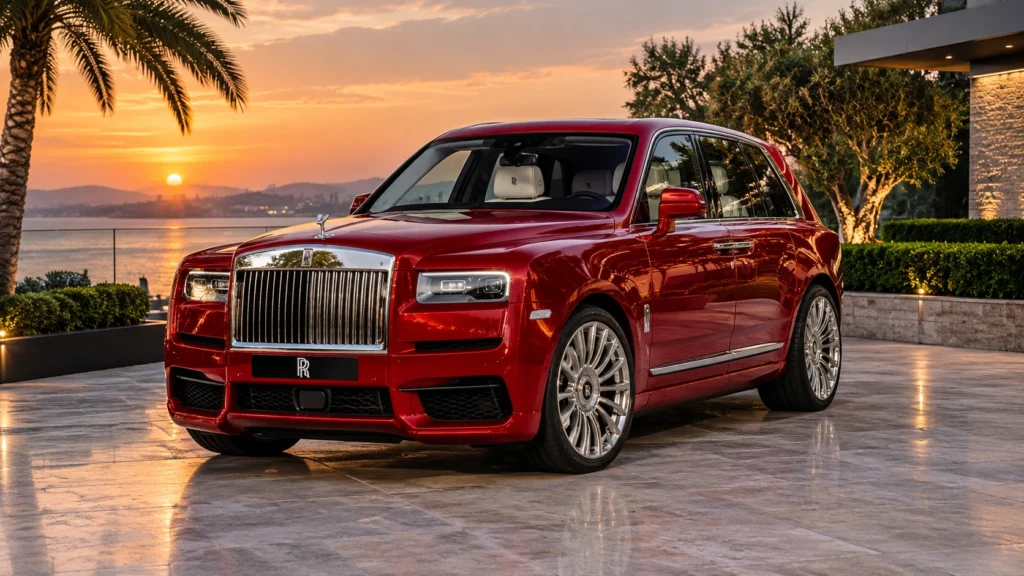
The Rolls-Royce Cullinan remains a genuinely unusual proposition: an SUV built less around capability than around isolating its occupants from everything an SUV normally has to compromise on. Its V12 delivers power with an effortlessness few engines can match, the interior sets a benchmark few rivals even attempt to chase, and the Bespoke program means no two examples ever need feel quite the same.
It isn’t the quickest ultra-luxury SUV, and it was never designed to be — the Bentayga Speed and Ferrari Purosangue both outrun it in a straight line. What the Rolls-Royce Cullinan offers instead is a driving and riding experience built entirely around comfort, craftsmanship, and presence, at a price that reflects exactly how rare that combination remains.
For buyers who value that specific mix over raw performance or practicality-per-dollar, the Rolls-Royce Cullinan continues to justify its position at the top of the luxury SUV market — not because it does everything best, but because nothing else quite does what it does at all.
Frequently Asked Questions (FAQs)
The 2026 Cullinan Series II starts at approximately $432,000, with the Black Badge Series II starting around $502,000. Bespoke options frequently push the final price well beyond these figures.
The standard Cullinan produces 563 horsepower, while the Black Badge version increases that to approximately 591 horsepower.
Yes. Every Cullinan, including the Black Badge, uses a 6.75-liter twin-turbocharged V12 engine paired with an 8-speed automatic transmission.
Independent testing places the standard Cullinan at roughly 5.0 seconds, with the Black Badge Series II capable of figures in the 4.5-to-4.9-second range depending on the source.
Top speed is electronically limited to 155 mph across the lineup, including the Black Badge, consistent with Rolls-Royce’s approach across all its models.
For buyers prioritizing craftsmanship, rear-seat comfort, and exclusivity, most owners would say yes. Judged purely on performance or practicality per dollar, less expensive luxury SUVs offer stronger value.
The Black Badge adds more power and torque, a firmer suspension tune, darkened exterior trim, unique wheel options, and a more assertive interior design, while retaining the same core V12 platform.
Maintenance costs are significantly higher than mainstream luxury SUVs, reflecting specialized V12 servicing, dealer-exclusive parts, and premium labor rates. Exact costs vary by region and how the vehicle is driven.