Mercedes-Benz GLC Review: Worth Buying in 2027?
Few compact luxury SUVs carry as much weight in their segment as the Mercedes-Benz GLC. It’s the brand’s best-selling model in the United States, and for good reason: it blends a genuinely upscale cabin with a powertrain lineup that stretches from an efficient mild-hybrid four-cylinder to a newly revived turbocharged inline-six AMG performance model.
This guide walks through what the Mercedes-Benz GLC actually is, how the current second-generation model drives, what it costs, and how it holds up against the BMW X3, Audi Q5, Volvo XC60, and Lexus NX. Pricing and specifications referenced here reflect the U.S. market as the lineup transitions to the 2027 model year, since equipment, engines, and figures do vary by country and by year.
Quick Specifications
| Specification | Mercedes-Benz GLC (U.S., 2027 lineup) |
|---|---|
| Vehicle Type | Compact luxury SUV (also offered as a GLC Coupe fastback) |
| Seating Capacity | 5 |
| Engine Options | 2.0L turbo I4 mild hybrid (GLC 300); 2.0L turbo I4 plug-in hybrid (GLC 350e); AMG 3.0L turbo I6 mild hybrid (AMG GLC 53) |
| Transmission | 9-speed automatic (9G-TRONIC or AMG SPEEDSHIFT TCT) |
| Drivetrain | Rear-wheel drive standard on GLC 300; 4MATIC all-wheel drive standard or optional depending on trim |
| Horsepower | 255 hp (GLC 300) up to 443 hp (AMG GLC 53) |
| Torque | 295 lb-ft (GLC 300) up to 443 lb-ft, briefly 472 lb-ft with overboost (AMG GLC 53) |
| 0–60 mph | Approximately 5.9–6.3 sec (GLC 300 / GLC 350e) to 4.0 sec (AMG GLC 53) |
| Fuel Economy | 24 city / 32 hwy mpg (GLC 300 RWD, EPA-estimated) |
| Cargo Capacity | 19.4 cu ft behind the rear seats, up to 56.3 cu ft with seats folded (SUV body style) |
Depending on the market and configuration, engine offerings, output figures, and equipment can differ. European buyers, for example, have access to diesel and additional four-cylinder variants not sold in North America.
What Is the Mercedes-Benz GLC?
The Mercedes-Benz GLC is a compact luxury SUV that sits between the smaller GLA and the larger GLE in the brand’s utility lineup. Mercedes positions it as the SUV counterpart to the C-Class sedan, sharing much of its underlying architecture, cabin technology, and general size class.
Buyers cross-shop the Mercedes-Benz GLC against other German and Japanese luxury compact SUVs looking for a comfortable daily driver that doesn’t feel like a compromise. It’s offered in two distinct body styles: the traditional GLC SUV, with its upright roofline and maximum practicality, and the GLC Coupe, a sportier fastback-roofed version that sacrifices some cargo room for style.
What separates the Mercedes-Benz GLC from rivals is the breadth of its lineup. A single buyer shopping the GLC can choose between a value-focused mild-hybrid four-cylinder, a plug-in hybrid with genuine electric-only range, and an AMG performance variant — all within one nameplate, and all available in both SUV and Coupe form.
History and Background
The Mercedes-Benz GLC nameplate dates back to 2015, when Mercedes-Benz retired the GLK-Class and replaced it with a smoother, more C-Class-aligned SUV called the GLC. That first generation, internally known as the X253, moved away from the GLK’s boxy proportions in favor of rounded, aerodynamic styling, and it later spawned the GLC Coupe to compete with the BMW X4. A mid-cycle facelift arrived for the 2020 model year, bringing updated styling, more power, and the beginnings of mild-hybrid technology.
The current, second-generation GLC (codenamed X254) launched for the 2023 model year. It grew slightly in every dimension, adopted Mercedes’ third-generation MBUX infotainment system, and made 48-volt mild-hybrid assistance standard across the range.
The AMG side of the lineup has changed significantly since that 2023 launch, and buyers researching the GLC should be aware of the timeline. From 2023 through the 2026 model year, the performance range consisted of the AMG GLC 43 (a turbocharged 2.0-liter four-cylinder with an electric-assisted turbocharger, producing 416 horsepower) and the range-topping AMG GLC 63 S E Performance (a hybridized four-cylinder borrowing technology from Mercedes-AMG’s Formula 1 program, producing 671 combined horsepower).
Mercedes-Benz has confirmed that both of those four-cylinder AMG models are being discontinued, with GLC 43 production ending in early 2026 and GLC 63 S E Performance production ending in mid-2026. In their place, the automaker introduced the new AMG GLC 53, powered by a 3.0-liter turbocharged inline-six borrowed from the CLE 53, arriving at U.S. dealerships in the second half of 2026 as a 2027 model. Shoppers looking at used or leftover-inventory GLC 43 and GLC 63 S E Performance models will still find them at dealers during this transition, but they are no longer part of the current production lineup.
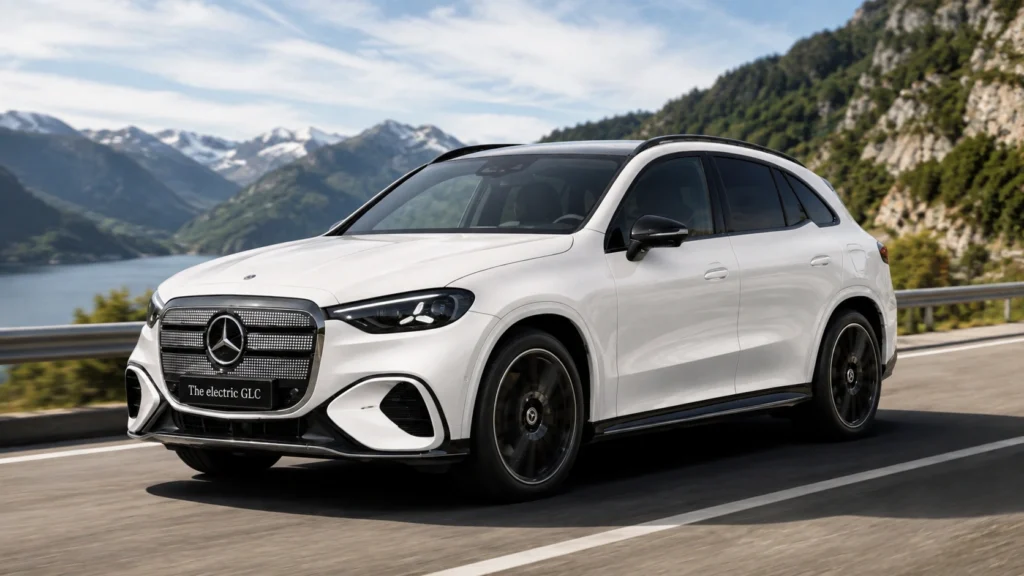
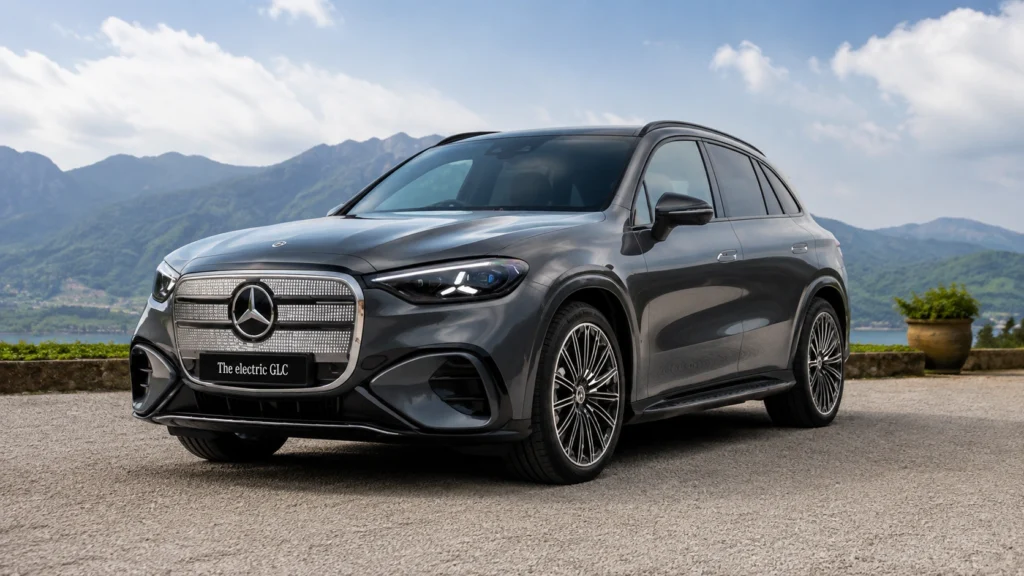
Looking further ahead, Mercedes-Benz has also confirmed a fully electric Mercedes-Benz GLC, built on a dedicated EV platform rather than as a battery-powered version of the current gasoline and hybrid GLC. In other words, today’s gasoline/hybrid GLC and the electric Mercedes-Benz GLCare, mechanically, two separate vehicles that happen to share a name.
Design and Exterior
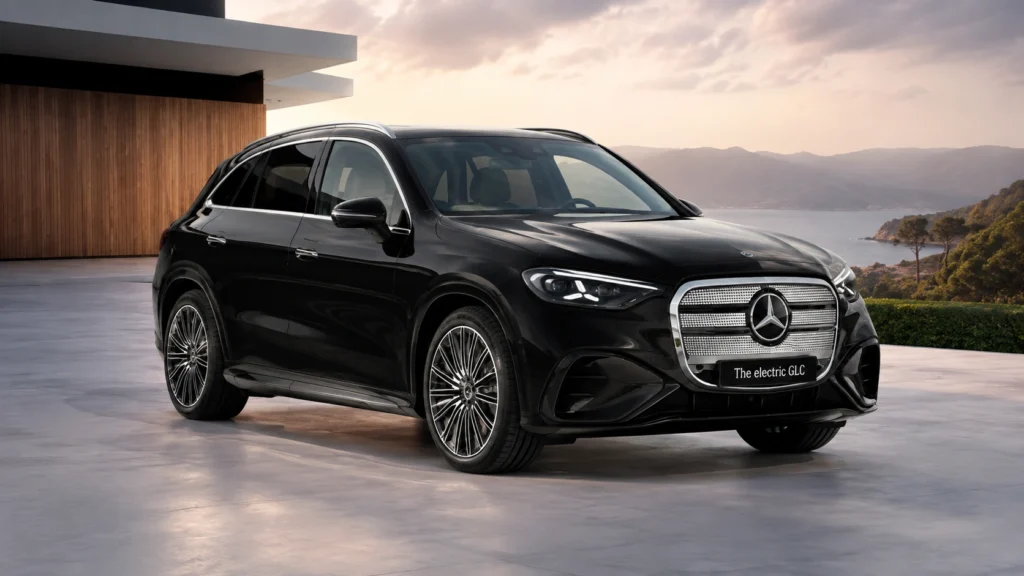
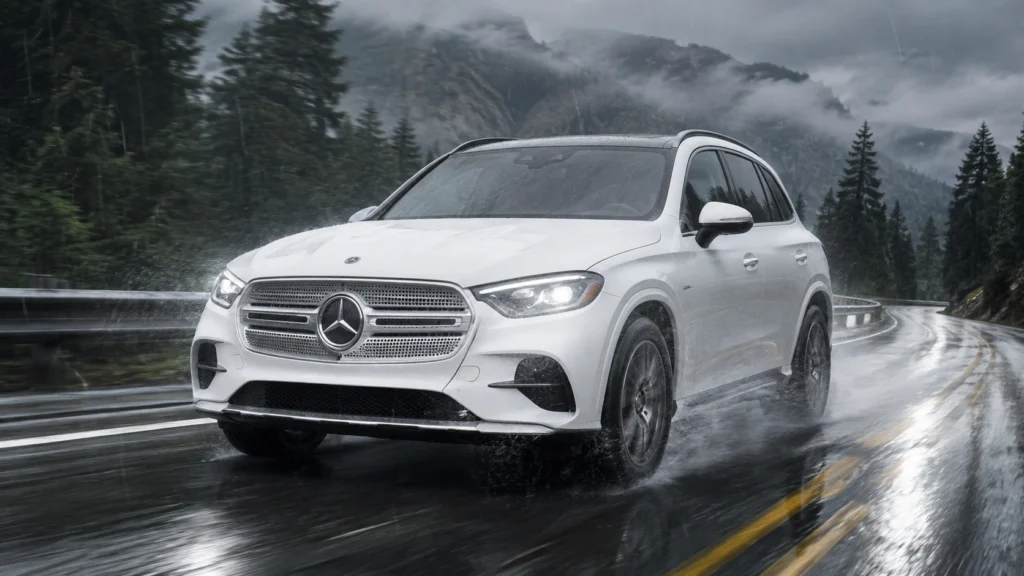
The current Mercedes-Benz GLC front end centers on a wide, low grille flanked by angular LED headlights, giving the SUV a planted, confident stance rather than the softer look of the previous generation. Standard LED lighting is bright and crisp, while higher trims add more elaborate light signatures and adaptive high-beam functionality, including available DIGITAL LIGHT projection technology.
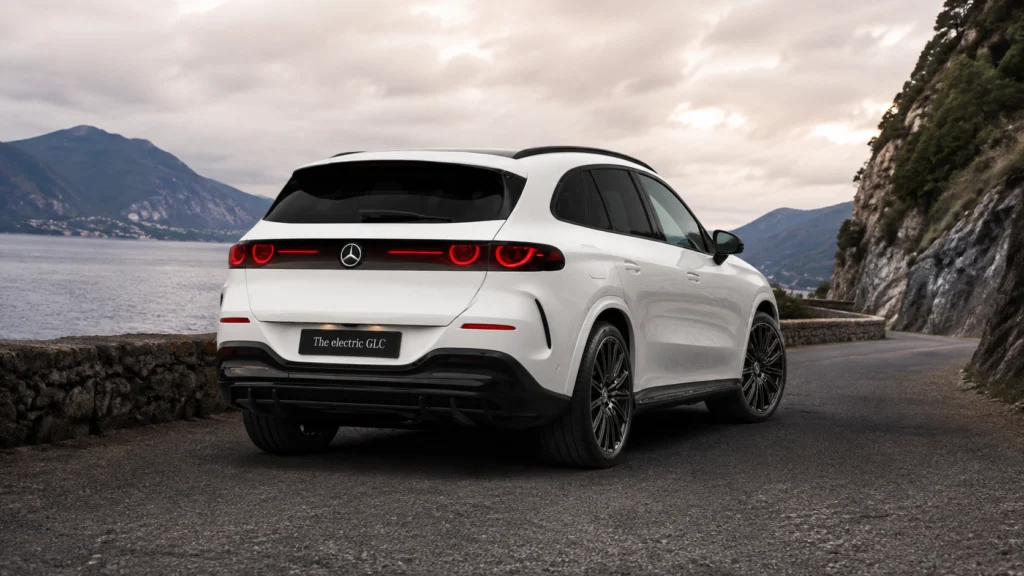
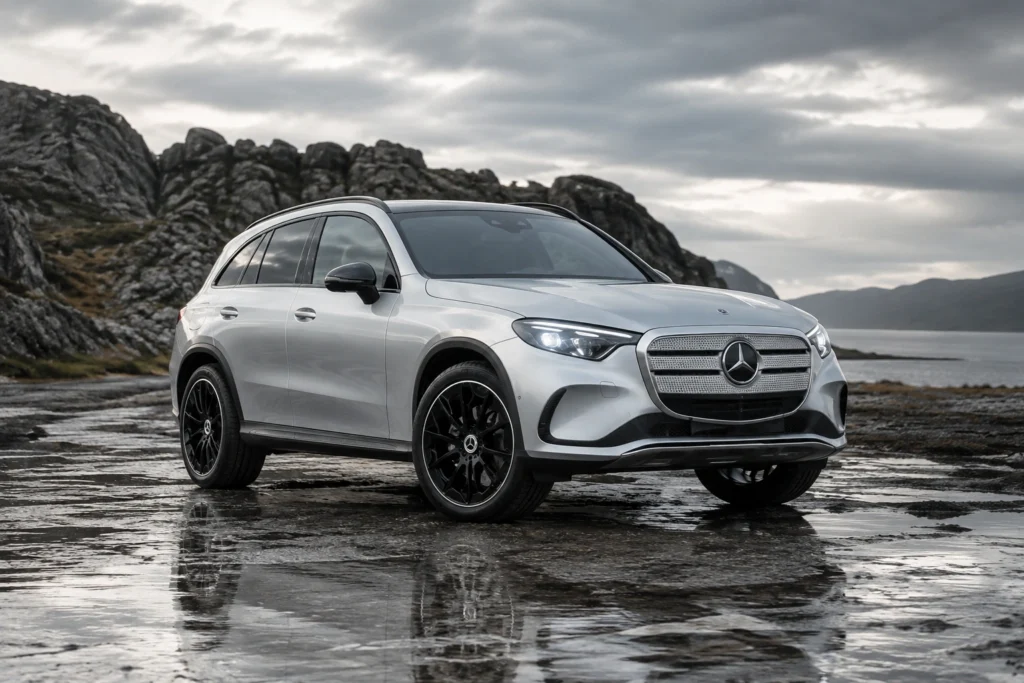
In profile, the Mercedes-Benz GLC SUV reads as a scaled-up C-Class wagon with a taller ride height — a clean, uncluttered shape without unnecessary character lines. Wheel sizes range from a standard 19-inch AMG design up to 20-inch and 21-inch options on performance-focused packages, and larger wheels visibly sharpen the SUV’s stance at the expense of some ride comfort. Around back, slim LED taillights and a body-color lower valance keep the design restrained rather than flashy.
The Mercedes-Benz GLC Coupe uses the same front-end design but adopts a sloping fastback roofline and a more pronounced rear haunch, trading some rear headroom and cargo space for a sportier silhouette. It’s a legitimate style choice rather than a compromised version of the SUV, and buyers should pick based on which proportions they prefer rather than assuming one is simply “better.”
The new AMG GLC 53 goes further with a more aggressive front apron, a distinctive vertical-strut AMG grille, quad exhaust tips, and unique wheel designs — visual cues that separate it from a standard GLC 300 at a glance. A limited-run Golden Accents appearance package, exclusive to the 2027 model year, adds techgold trim details for buyers who want the AMG 53 to stand out even further. Aerodynamically, the shape isn’t chasing extreme efficiency numbers; it’s tuned for a balance of wind noise, stability, and everyday usability.
Interior and Technology
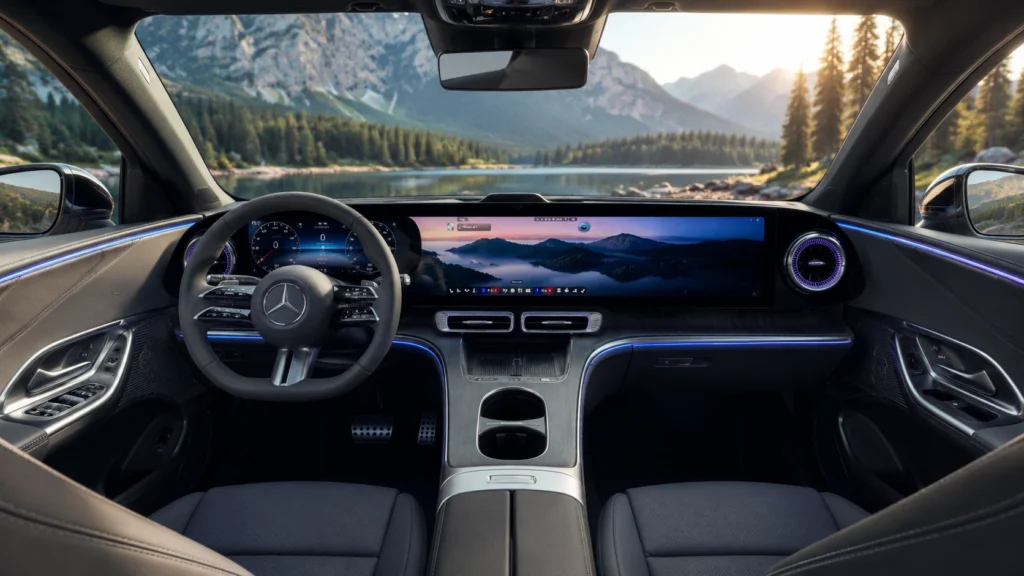
Step inside and the Mercedes-Benz GLC cabin immediately signals its price point. Materials feel dense and well-assembled, with metal-look trim, tightly stitched upholstery, and a dashboard design borrowed almost directly from the C-Class. The driving position is more car-like than truck-like, which suits buyers coming from a sedan rather than a traditional SUV.
The centerpiece is Mercedes’ third-generation MBUX system, running on an 11.9-inch center touchscreen paired with a 12.3-inch digital instrument cluster. It supports wireless Apple CarPlay and Android Auto, and its voice assistant has grown more capable, understanding more natural phrasing than earlier MBUX generations. A feature called MBUX Routines lets owners automate small daily tasks, like adjusting the interior temperature or seat position based on time of day. A fingerprint reader lets drivers call up saved profiles without pairing a phone first.
Front seats offer plenty of adjustment and, on higher trims, ventilation and massage functions. Rear-seat space is competitive for the segment, with headroom and legroom that generally beat rivals like the Lexus NX, though this advantage shrinks in the sloped-roof Mercedes-Benz GLC Coupe. Cargo space, on the other hand, trails several key rivals — a genuine trade-off buyers should weigh if hauling capacity matters more than outright polish.
Ambient lighting is configurable across dozens of colors and adds a premium feel at night, and a panoramic sunroof is standard across the lineup. An optional Burmester 3D surround sound system, upgraded navigation, a surround-view camera (standard on some trims), and enhanced ambient lighting round out the option sheet on non-AMG models — worth considering, since Mercedes doesn’t make all of this standard even on a car in this price range. Buyers cross-shopping trims can find a broader breakdown of Mercedes-Benz SUV technology and options in our Mercedes-Benz guide.
Engine and Performance
Every current Mercedes-Benz GLC starts life with the same basic four-cylinder architecture, though the AMG range has recently switched to a six-cylinder engine — a meaningful change buyers should understand before comparing trims.
The entry-level GLC 300 pairs a turbocharged 2.0-liter four-cylinder with a 48-volt mild-hybrid system, producing 255 horsepower and 295 lb-ft of torque, with the electric motor adding supplemental power during acceleration to smooth out turbo lag. It’s available with rear-wheel drive or 4MATIC all-wheel drive, and both route power through a 9-speed automatic transmission. In everyday driving, this is the version most buyers should consider first — it never feels underpowered, and the mild-hybrid assistance genuinely improves low-speed responsiveness.
The GLC 350e adds a plug-in hybrid system built around the same 2.0-liter engine, combining for 313 horsepower and 406 lb-ft of torque, along with an EPA-estimated 54 miles of all-electric range — one of the longest figures in the compact luxury SUV class. It comes standard with 4MATIC all-wheel drive and feels noticeably heavier than the GLC 300 from behind the wheel, though most drivers won’t find that intrusive in daily use.
The AMG GLC 53, new for the 2027 model year, replaces both the previous GLC 43 and GLC 63 S E Performance as the sole AMG variant. It uses a 3.0-liter turbocharged inline-six — shared with the CLE 53 — fitted with an electric auxiliary compressor and 48-volt hybrid assistance, producing 443 horsepower and 443 lb-ft of torque on its own, with a 10-second overboost function briefly raising torque to 472 lb-ft. It pairs with AMG Performance 4MATIC+ all-wheel drive and a 9-speed AMG SPEEDSHIFT transmission, and it’s available with an optional AMG DYNAMIC PLUS package that adds an electronically controlled limited-slip rear differential, a dedicated “RACE” drive program, and a Drift Mode.
Mercedes-AMG has been candid that the switch back to six-cylinder power is a direct response to customer feedback — the previous four-cylinder AMG models sold below expectations, and the inline-six is intended to deliver a smoother, more emotive driving experience even though it gives up some peak horsepower compared with the old plug-in hybrid GLC 63.
Ride quality across the lineup favors comfort over outright body control, particularly on the GLC 300 and GLC 350e, both of which soak up broken pavement well. The AMG GLC 53 firms things up considerably with its AMG RIDE CONTROL suspension and active rear-axle steering, and steering feel sharpens noticeably in Sport and Sport+ modes without becoming hyperactive at low speeds.
Specifications
The table below reflects the GLC 300 SUV, the volume model in the U.S. lineup, alongside the new AMG GLC 53 for comparison. Figures come from Mercedes-Benz USA’s official specifications for the current model-year lineup.
| Spec | GLC 300 SUV (RWD) | GLC 300 4MATIC SUV | AMG GLC 53 4MATIC+ SUV |
|---|---|---|---|
| Engine | 2.0L turbo I4, mild hybrid | 2.0L turbo I4, mild hybrid | 3.0L turbo I6, mild hybrid |
| Horsepower | 255 hp @ 5,800 rpm | 255 hp @ 5,800 rpm | 443 hp @ 5,800–6,100 rpm |
| Torque | 295 lb-ft @ 2,000–3,200 rpm | 295 lb-ft @ 2,000–3,200 rpm | 443 lb-ft (472 lb-ft overboost) |
| Transmission | 9-speed automatic | 9-speed automatic | 9-speed AMG SPEEDSHIFT |
| Drivetrain | Rear-wheel drive | 4MATIC all-wheel drive | AMG Performance 4MATIC+ |
| Seating | 5 | 5 | 5 |
| Overall Length | 185.7 in | 185.7 in | ~187 in |
| Wheelbase | 113.1 in | 113.1 in | 113.7 in |
| Cargo Capacity | 19.4–56.3 cu ft | 19.4–56.3 cu ft | Similar, slightly reduced by AMG hardware |
| Fuel Economy (EPA) | 24 city / 32 hwy mpg | 23 city / 31 hwy mpg | Not yet published at time of writing |
| Towing Capacity | Up to 3,500 lbs (properly equipped) | Up to 3,500 lbs (properly equipped) | Not typically rated for towing |
The Mercedes-Benz GLC Coupe shares its powertrains with the SUV but measures slightly longer overall and sits somewhat lower, with maximum cargo capacity dropping due to its sloped roofline.
Top Speed and Acceleration
Acceleration figures vary noticeably by variant, and it’s worth keeping the standard and AMG models separate rather than treating the Mercedes-Benz GLC as a single performance story.
The GLC 300 runs 0–60 mph in about 5.9 seconds in rear-wheel-drive form and roughly 6.0 seconds with 4MATIC, per Mercedes-Benz’s own figures, with a top speed electronically limited to around 130 mph. The GLC 350e plug-in hybrid is slightly slower off the line, at approximately 6.3 seconds, largely due to the added weight of its battery pack — a trade-off for its electric-only range rather than a flaw in the powertrain itself.
The new AMG GLC 53 reaches 60 mph in about 4.0 seconds according to Mercedes-AMG, a clear step up from the standard GLC thanks to its turbocharged inline-six and AMG-tuned all-wheel-drive system. That’s a bit behind the old plug-in hybrid GLC 63 S E Performance’s roughly 3.4-to-3.5-second claim, since the inline-six prioritizes smoothness and everyday driveability over outright peak output — a deliberate trade-off Mercedes-AMG made in response to customer feedback about the previous four-cylinder AMG models.
None of these figures should be mistaken for track-day precision; they represent manufacturer-quoted estimates and can shift slightly based on conditions, options, and testing methodology.
Price
U.S. pricing for the Mercedes-Benz GLC, per Mercedes-Benz USA’s official build-and-price tool, spans a wide range for a single nameplate:
- GLC 300 (RWD SUV): starting at $52,400
- GLC 300 4MATIC (SUV): starting at $54,400
- GLC 350e 4MATIC (plug-in hybrid SUV): starting at $62,700
- GLC 300 4MATIC Coupe: starting at $62,950
- AMG GLC 53 4MATIC+ (SUV): starting at $69,900
- AMG GLC 53 4MATIC+ (Coupe): starting at $75,900
These figures come directly from Mercedes-Benz USA and typically include destination charge, though some third-party pricing guides list a slightly lower base MSRP before destination is added — always confirm the exact breakdown with a dealer. Optional equipment packages, such as the Exclusive trim bundle that adds Burmester audio and additional ambient lighting, or the AMG GLC 53’s limited-run Golden Accents package, can add several thousand dollars to a build. Pricing, available trims, and equipment vary by country, and readers outside the U.S. should confirm current figures through their local Mercedes-Benz dealer or the official Mercedes-Benz GLC page.
Pros and Cons
| Pros | Cons |
|---|---|
| Wide range of powertrains, from efficient mild hybrid to a genuinely quick AMG six-cylinder | Cargo space trails several key rivals |
| Genuinely upscale interior materials and third-gen MBUX tech | Some desirable features cost extra rather than coming standard |
| Strong IIHS Top Safety Pick+ crash-test results | Luxury-brand maintenance and repair costs run higher than mainstream SUVs |
| Class-leading electric-only range on the GLC 350e plug-in hybrid | The former 671-hp GLC 63 flagship is gone; the new AMG 53 trades some peak power for smoothness |
| Distinct SUV and Coupe body styles to suit different tastes | Base engine, while smooth, isn’t the most exciting in the segment |
Mercedes-Benz GLC vs Competitors
The compact luxury SUV segment is unusually competitive right now, with several rivals recently redesigned. Here’s how the Mercedes-Benz GLC compares on paper to its closest rivals in the U.S. market.
| Model | Starting Price (approx.) | Base Horsepower | Standard AWD? | Notable Strength |
|---|---|---|---|---|
| Mercedes-Benz GLC 300 | $52,400 (incl. destination) | 255 hp | No (available) | Powertrain breadth, cabin quality |
| BMW X3 (30 xDrive) | ~$52,650 | 255 hp | Yes | Sharper handling, tech-forward cabin |
| Audi Q5 | ~$52,800 | 261 hp | Yes (quattro) | Refined ride, understated design |
| Volvo XC60 | ~$49,700 | 247 hp | Yes | Seat comfort, Scandinavian design, safety focus |
| Lexus NX | ~$45,175 | 203–304 hp (by trim) | Optional/standard by trim | Reliability reputation, hybrid efficiency |
Mercedes-Benz GLC vs BMW X3: The X3 leans sportier out of the box, with standard all-wheel drive and a punchy inline-six option in the M50 trim. The GLC counters with a broader powertrain spread, including its plug-in hybrid and the newly revived inline-six AMG 53, plus a slightly plusher ride in non-AMG form.
Mercedes-Benz GLC vs Audi Q5: The Q5 is arguably the quieter, more understated choice of the two, with a composed ride and Audi’s typically clean interior design. The GLC generally offers more outright cabin polish and a wider spread of performance variants.
Mercedes-Benz GLC vs Volvo XC60: The XC60 prioritizes comfort and safety technology above all else, with some of the most supportive seats in the class, though it trails the GLC on cargo space and outright performance range. Buyers who value a calmer, less flashy cabin may prefer the Volvo; those who want more powertrain choice will lean toward the GLC.
Mercedes-Benz GLC vs Lexus NX: The NX undercuts the GLC on price and generally posts a stronger reliability reputation, with efficient hybrid options. It can’t match the GLC’s AMG performance ceiling or outright interior richness, making it a better fit for buyers prioritizing value and dependability over outright luxury feel.
Mercedes-Benz GLC vs Porsche Macan: Worth a mention for shoppers considering both — the gasoline-powered Macan has been phased out, with Porsche shifting the nameplate to an all-electric platform. Buyers who specifically want a combustion or hybrid powertrain, as the GLC offers, should factor that transition into their decision.
No single SUV in this group “wins” outright. The right choice depends heavily on whether a buyer prioritizes handling sharpness, interior richness, comfort, efficiency, or outright performance.
Who Should Buy the Mercedes-Benz GLC?
The Mercedes-Benz GLC suits buyers who want a genuinely premium cabin experience without stepping up to a larger, pricier SUV. It’s a strong fit for drivers who value technology, configurable ambient lighting, and Mercedes styling cues, and who appreciate having a clear upgrade path — from an efficient GLC 300, to the electrified GLC 350e, up to the AMG GLC 53 — without switching nameplates.
Performance-minded buyers will find real appeal in the new AMG GLC 53, which trades some outright horsepower versus the discontinued GLC 63 S E Performance for a smoother, more characterful inline-six experience that many enthusiasts specifically asked for. Buyers chasing the single highest horsepower number in the segment should know that the previous 671-hp GLC 63 is no longer in production, so expectations should be set around the AMG 53’s 443 horsepower instead.
Buyers who prioritize maximum cargo space, the lowest possible ownership costs, or a stronger predicted-reliability track record may be better served by a Lexus NX or Volvo XC60. Those who want the sharpest handling in the segment might prefer a BMW X3. The Mercedes-Benz GLC strength lies less in dominating any single category and more in offering a broad, well-rounded package across nearly all of them.
Ownership Considerations
Reliability perceptions for Mercedes-Benz as a brand have historically trailed mainstream manufacturers in outlets like Consumer Reports, and the Mercedes-Benz GLC is not entirely immune to that reputation — some owners report software glitches tied to the MBUX infotainment system and sensor calibration. That said, independent reliability trackers have scored recent Mercedes-Benz GLC model years reasonably well within the compact luxury SUV segment, and the platform has matured since its 2023 redesign.
Annual maintenance costs commonly cited by owners and independent trackers fall in the $800–$1,200 range, which is broadly in line with rivals like the BMW X3 and Audi Q5, though still meaningfully higher than a mainstream non-luxury SUV. Mercedes-Benz uses an alternating “Service A” and “Service B” schedule, covering oil changes, filters, and fluid replacement at defined mileage intervals, with more involved services (spark plugs, transmission fluid) added periodically.
Mercedes-Benz backs the GLC with a 4-year/50,000-mile basic warranty that also covers the powertrain, in line with the segment norm rather than exceeding it. Fuel costs depend heavily on which variant a buyer chooses: the GLC 300 requires premium unleaded and returns solidly competitive mpg for the class, while the GLC 350e’s plug-in hybrid system can meaningfully cut fuel spending for owners who charge regularly and cover shorter daily distances within its electric range.
Resale value for the Mercedes-Benz GLC tends to be reasonably competitive for a German luxury SUV, particularly for well-documented, well-maintained examples, though depreciation curves vary by trim, region, and market conditions, so shoppers should check current used-market data before assuming a specific resale figure.
Conclusion
The Mercedes-Benz GLC earns its position as the brand’s best-selling SUV by covering an unusually wide range of buyer needs within one nameplate. It offers a genuinely upscale cabin, strong safety credentials, and a powertrain lineup that now runs from an efficient mild-hybrid four-cylinder to a newly introduced turbocharged inline-six AMG model, all without forcing buyers to switch models.
That breadth comes with real trade-offs. Cargo space lags some rivals, certain desirable features cost extra, long-term ownership costs sit above mainstream SUVs in line with the luxury segment generally, and the outright horsepower ceiling has actually dropped now that the 671-hp GLC 63 S E Performance is gone. Buyers chasing the sharpest handling might prefer a BMW X3, and those prioritizing dependability metrics might lean toward a Lexus NX.
For shoppers who want one nameplate that can flex from a sensible daily commuter to a genuinely quick, characterful performance SUV, the Mercedes-Benz GLC remains one of the more compelling choices in its class — a vehicle built to reward buyers who take the time to match the right variant to their actual needs, rather than assuming any one configuration fits everyone.
Frequently Asked Questions (FAQs)
The Mercedes-Benz GLC is a compact luxury SUV positioned between the smaller GLA and larger GLE in Mercedes’ lineup. It’s offered as both a traditional SUV and a sportier GLC Coupe, with powertrains ranging from a mild-hybrid four-cylinder to a plug-in hybrid and an AMG inline-six performance variant.
Per Mercedes-Benz USA’s official pricing, the GLC starts at $52,400 for the base GLC 300 SUV and climbs to around $75,900 for the AMG GLC 53 Coupe. Pricing varies by market and trim, so buyers should confirm current figures locally.
The GLC is a strong choice for buyers who want a genuinely upscale cabin, a wide range of powertrain options, and strong crash-test results. It trades some cargo space and top-tier reliability scores for that broader powertrain lineup and cabin polish.
The base GLC 300 makes 255 horsepower. The GLC 350e plug-in hybrid produces 313 combined horsepower, and the new AMG GLC 53 makes 443 horsepower. Note that the previous AMG GLC 63 S E Performance, which made 671 combined horsepower, has been discontinued as of the 2027 model year.
The GLC 300 is EPA-rated around 24 mpg city and 32 mpg highway in rear-wheel-drive form. The GLC 350e plug-in hybrid can travel an EPA-estimated 54 miles on electricity alone, making it considerably more efficient for owners who charge regularly.
Reliability perceptions are mixed. Mercedes-Benz as a brand has historically scored below mainstream automakers in some predicted-reliability studies, though the current-generation GLC has performed reasonably well in several independent trackers since its 2023 redesign.
The GLC 300 uses a mild-hybrid 2.0-liter four-cylinder engine producing 255 horsepower, tuned for comfort and efficiency. The AMG GLC 53, new for 2027, uses a turbocharged 3.0-liter inline-six with mild-hybrid assistance, producing 443 horsepower, along with sport-tuned suspension and braking hardware. It replaces the previous four-cylinder AMG GLC 43 and GLC 63 S E Performance models, both of which have been discontinued.
Neither is definitively “better” — the X3 offers standard all-wheel drive and sharper base handling, while the GLC offers a broader spread of powertrains, including a plug-in hybrid and a newly revived inline-six AMG model. The right choice depends on whether a buyer prioritizes driving dynamics or powertrain variety and interior polish.