Mercedes-Benz GLE 2026 Review: Price, Specs, and Verdict
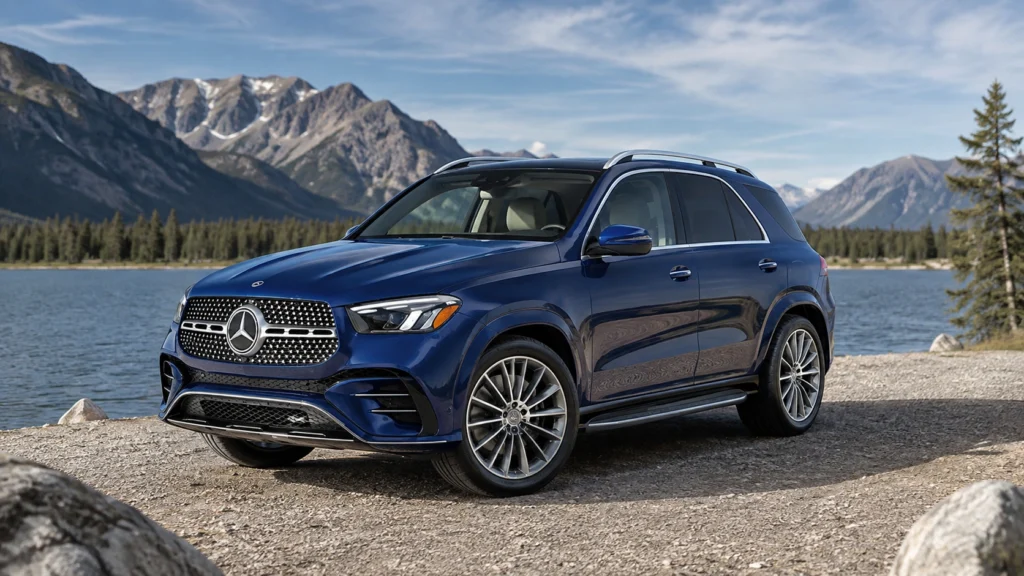
Few nameplates carry as much weight in the luxury SUV world as the Mercedes-Benz GLE. It’s the vehicle most people picture when they think of a three-pointed star on a family-sized SUV, and for 2026 it continues to span everything from a composed, efficient daily driver to a 603-horsepower AMG performance machine. That range is exactly what makes the GLE interesting: few competitors offer this much spread under one nameplate.
This guide walks through what the 2026 Mercedes-Benz GLE actually is, how it has evolved, what it’s like to sit in and look at, and how its seven available powertrains stack up. We’ll also get into pricing, real ownership trade-offs, and how the GLE compares against the BMW X5 and Audi Q7, so you can decide whether it fits your driveway.
Quick Specifications
| Specification | 2026 Mercedes-Benz GLE |
|---|---|
| Body Style | Midsize luxury SUV (Coupe body style also offered on AMG trims) |
| Seating | 5 standard; 7 optional on most SUV trims (AMG GLE 63 S is 5-only) |
| Engine Options | 2.0L turbo I4, 3.0L turbo I6, 2.0L turbo I4 PHEV, 4.0L twin-turbo V8 |
| Transmission | 9-speed automatic (9G-TRONIC or AMG SPEEDSHIFT TCT) |
| Drivetrain | RWD on base GLE 350; 4MATIC AWD standard elsewhere |
| Horsepower | 255 hp to 603 hp, depending on trim |
| 0–60 mph | 3.7 to 7.0 seconds, depending on trim |
| Towing Capacity | Up to 7,700 lbs when properly equipped |
| Fuel Economy | 15–26 mpg city/highway, depending on powertrain |
| Starting Price | $62,250 MSRP (GLE 350 SUV), plus $1,150 destination charge |
What Is the Mercedes-Benz GLE?
The Mercedes-Benz GLE sits right in the middle of the brand’s SUV family. It’s larger and more powerful than the compact GLC, yet smaller, lighter, and less expensive than the three-row GLS flagship.
Mercedes builds the Mercedes-Benz GLE as both a traditional SUV and a swoopier GLE Coupe, the latter trading some cargo room for a faster-sloping roofline. Buyers can choose from seven distinct models: GLE 350, GLE 350 4MATIC, GLE 450 4MATIC, GLE 450e 4MATIC (a plug-in hybrid), GLE 580 4MATIC, AMG GLE 53, and AMG GLE 63 S.
That spread means the GLE serves two very different audiences at once. Comfort-focused buyers gravitate toward the GLE 350 or GLE 450, while performance shoppers step up to the AMG-tuned GLE 53 and GLE 63 S without ever leaving the same basic body structure.
If you’re trying to figure out where the Mercedes-Benz GLE fits against other Mercedes SUVs, or want to see how the whole lineup connects, our complete Mercedes-Benz model guide breaks down every current model side by side.
History and Background
The GLE’s story starts in 1997, when Mercedes-Benz introduced the M-Class at the Atlanta Summer Olympics. It was the brand’s first real mid-size SUV, built specifically for the American market at a new plant in Tuscaloosa, Alabama — a factory that still builds the GLE today.
The M-Class went through three generations (W163, W164, and W166) before Mercedes renamed it GLE in 2015, aligning it with the brand’s current E-Class-based naming convention. The rename wasn’t just cosmetic; it coincided with sharper handling, more advanced infotainment, and the beginning of the AMG performance variants that now anchor the top of the lineup.
The current-generation GLE (internally known as W167) arrived for the 2020 model year with air suspension, a twin-screen MBUX cockpit, and — for the first time — an optional third-row seat. A mid-cycle refresh brought updated styling and tech for 2023, and the 2026 model year carries that refined formula forward with only incremental changes.
Design and Exterior
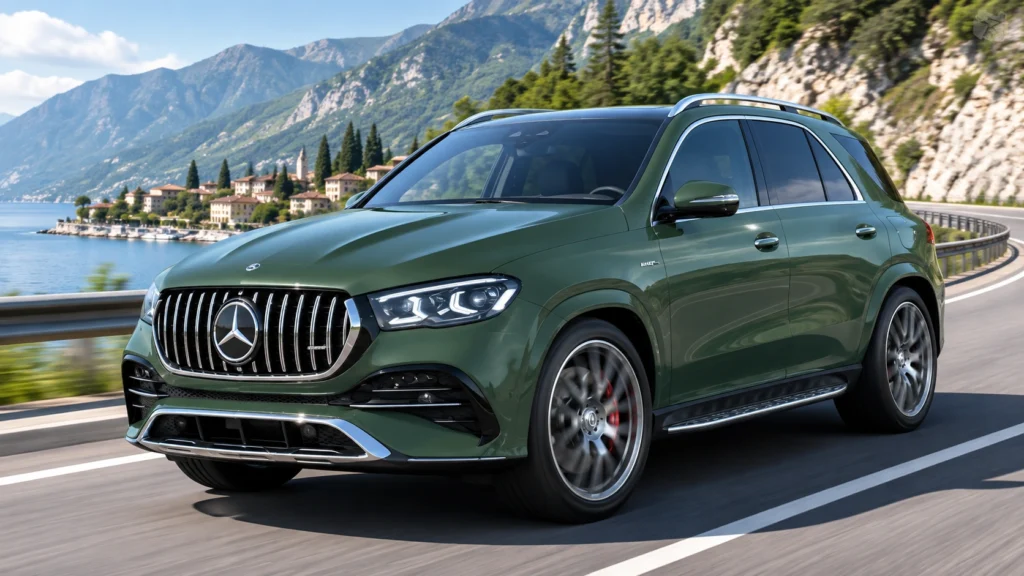
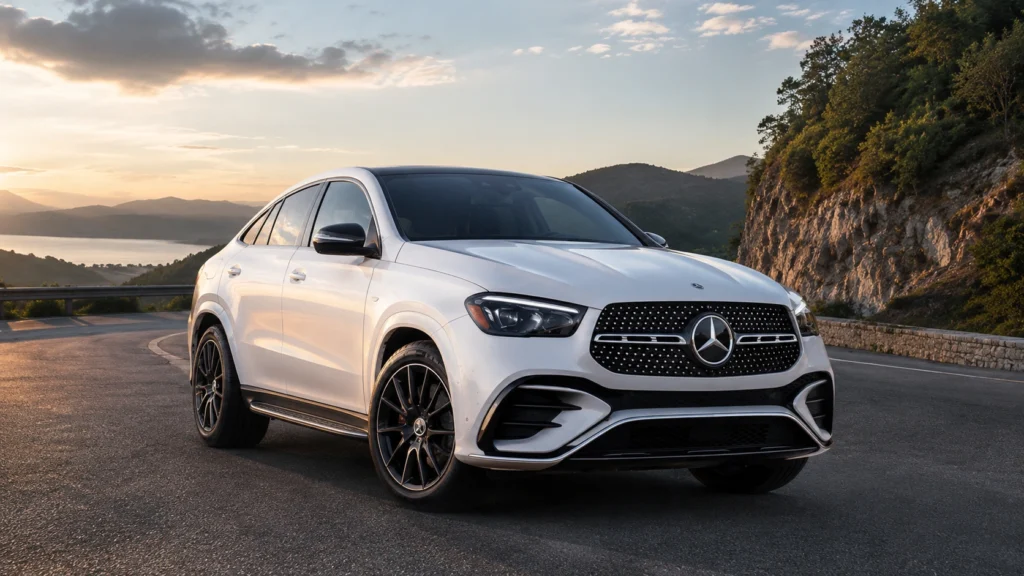
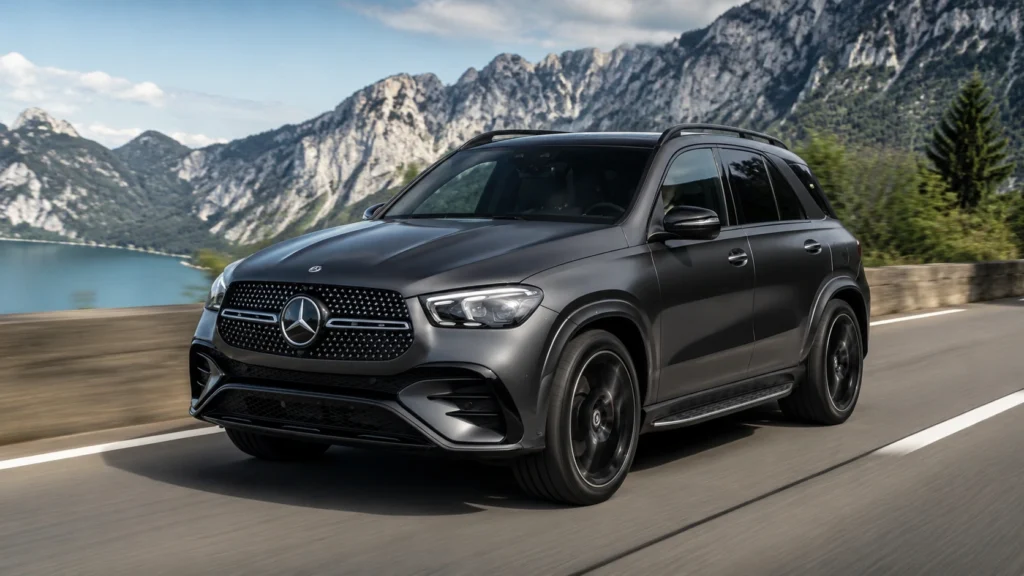
The Mercedes-Benz GLE front end leans on a wide, upright grille flanked by multi-beam LED headlights, giving it a confident, squared-off face rather than the softer look of older Mercedes SUVs. Non-AMG models get a cleaner grille treatment, while AMG trims add a deeper front apron and larger, louvered outer grilles for a more aggressive stance.
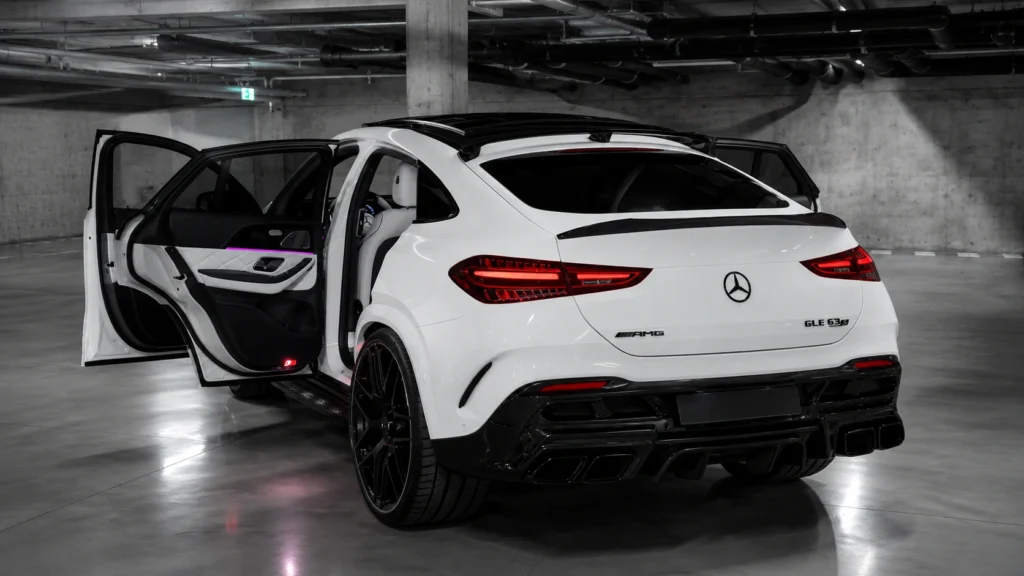
Its side profile keeps a fairly traditional SUV silhouette on standard models, with a long hood, upright greenhouse, and minimal visual drama. The Mercedes-Benz GLE Coupe body style trades that upright roofline for a faster, more sculpted rear section, at some cost to headroom and cargo space.
Wheel sizes range from 19 inches on the base GLE 350 up to 20-, 21-, and 22-inch AMG designs on performance trims, all of which noticeably change the vehicle’s stance. Around back, slim LED taillights and a body-color lower bumper section keep the design cohesive with the rest of the current Mercedes SUV family.
AMG models go further with a specific grille pattern featuring a field of small Mercedes stars, a chrome insert in the rear bumper, and color-matched fender flares. The GLE’s coefficient of drag comes in around 0.29 on standard models, a genuinely good figure for a boxy SUV that helps both wind noise and highway fuel economy.
Interior and Technology
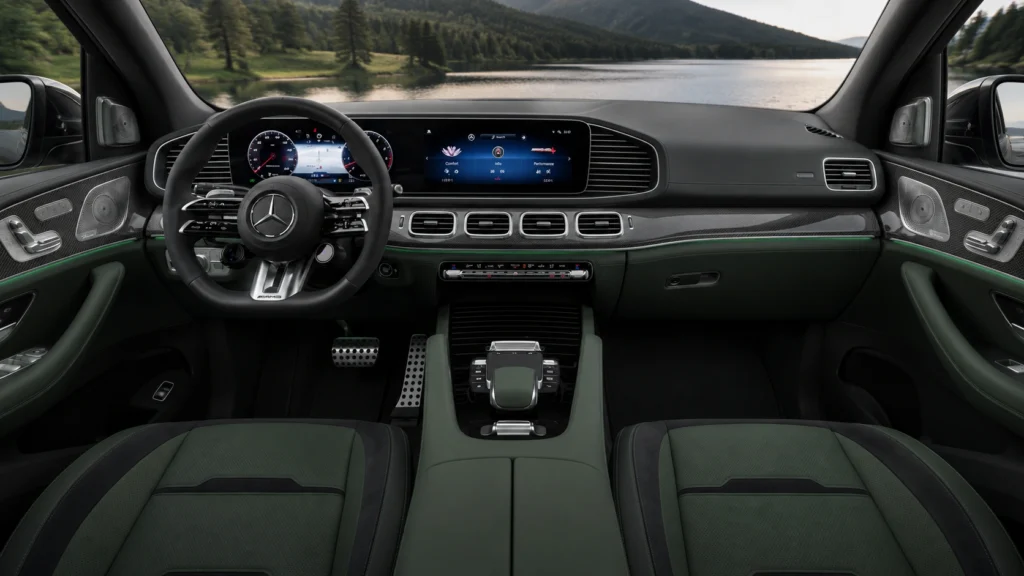
Step inside any 2026 Mercedes-Benz GLE and the first thing you notice is how solid everything feels. Soft-touch materials cover the dash and upper doors, and even lower-priced trims get real leather seating rather than a synthetic substitute.
Front-seat space is genuinely generous, with roughly 40.5 inches of headroom and 40.3 inches of legroom on standard SUV models — enough for taller drivers to sit comfortably without brushing the headliner. Rear-seat passengers get 36.9 inches of headroom and nearly 41 inches of legroom, which is competitive for the class.
Cargo capacity runs from 33.3 cubic feet behind the rear seats up to 74.9 cubic feet with them folded flat, figures that hold across most SUV trims. The optional third-row seat is best reserved for kids or short trips; like most vehicles in this segment, it isn’t really built for adult-length rides.
Every 2026 GLE uses the Mercedes-Benz User Experience (MBUX) system, which pairs a digital instrument cluster with a central touchscreen and natural-language voice control triggered by saying “Hey, Mercedes.” Wireless Apple CarPlay and Android Auto come standard, along with over-the-air software updates that let Mercedes push new features without a dealer visit.
Available extras include a Burmester surround-sound system, four-zone climate control, massaging front seats, and a suite of driver-assistance features such as Active Distance Assist DISTRONIC, Active Steering Assist, and a 360-degree Surround View camera system. These features genuinely reduce fatigue on long highway drives and make tight parking situations far less stressful.
Engine and Performance
Mercedes-Benz spreads seven distinct powertrains across the 2026 GLE lineup, and each one changes the character of the vehicle considerably. Understanding these differences matters more here than in most SUVs, because the gap between the mildest and wildest GLE is enormous.
GLE 350 uses a 2.0-liter turbocharged inline-four with 48-volt mild-hybrid assistance, producing 255 horsepower and 295 lb-ft of torque through a 9G-TRONIC nine-speed automatic. It’s available with rear-wheel drive or 4MATIC all-wheel drive, and it’s the version most buyers will find perfectly adequate for daily commuting and highway trips, even if it’s not going to feel quick.
GLE 450 steps up to a 3.0-liter turbocharged inline-six, also with mild-hybrid support, making 375 horsepower and 369 lb-ft of torque. This is the volume seller in the lineup, and for good reason — the extra two cylinders bring a noticeably smoother, more refined feel along with a meaningful jump in real-world acceleration. A plug-in hybrid version, the GLE 450e, pairs a 2.0-liter turbo four with an electric motor for a combined 381 horsepower, 479 lb-ft of torque, and roughly 49 miles of electric-only range.
GLE 580 brings V8 power to the non-AMG lineup, using a 4.0-liter twin-turbo engine with mild-hybrid assistance to produce 510 horsepower and 538 lb-ft of torque. It’s the quickest way into a “regular” GLE without stepping into AMG territory, and the extra torque is especially noticeable when towing or merging onto a fast-moving highway.
Mercedes-AMG GLE 53 uses an AMG-enhanced 3.0-liter turbocharged inline-six with hybrid assistance, rated at 429 horsepower and 413 lb-ft of torque, paired with AMG Performance 4MATIC+ all-wheel drive and an AMG SPEEDSHIFT nine-speed transmission. It sits as the entry point into AMG ownership, and it lets buyers get much of the AMG driving experience without the V8’s fuel and insurance costs.
Mercedes-AMG GLE 63 S sits at the top of the range with a handcrafted 4.0-liter twin-turbo V8, delivering 603 horsepower and 627 lb-ft of torque through the same nine-speed AMG transmission. Everything about this version — the suspension tuning, the exhaust note, the steering weight — is dialed up for driving enthusiasm rather than comfort-first cruising, though it still retains genuine everyday usability.
Specifications
| Specification | GLE 350 | GLE 450 | GLE 580 |
|---|---|---|---|
| Engine | 2.0L turbo I4, mild hybrid | 3.0L turbo I6, mild hybrid | 4.0L twin-turbo V8, mild hybrid |
| Horsepower | 255 hp | 375 hp | 510 hp |
| Torque | 295 lb-ft | 369 lb-ft | 538 lb-ft |
| Transmission | 9G-TRONIC 9-speed | 9G-TRONIC 9-speed | 9-speed automatic |
| Drivetrain | RWD or 4MATIC AWD | 4MATIC AWD | 4MATIC AWD |
| 0–60 mph | 7.0 sec | 5.3 sec | 4.3 sec |
| Towing Capacity | 7,700 lbs | 7,700 lbs | 7,700 lbs |
| Fuel Economy | 19/26 mpg | 19/25 mpg | 15/21 mpg |
These figures come directly from Mercedes-Benz USA and reflect properly equipped, factory-standard configurations; optional wheels, tow packages, and other equipment can shift real-world fuel economy slightly. For the most current, trim-specific numbers, the official Mercedes-Benz GLE specifications page is the most reliable source, since figures can be revised during the model year.
The AMG GLE 53 and AMG GLE 63 S sit outside this table because Mercedes markets and equips them differently. The GLE 53 produces 429 hp and 413 lb-ft with a 4.9-second 0–60 time, while the GLE 63 S produces 603 hp and 627 lb-ft with a 3.7-second 0–60 time — both figures verified directly from Mercedes-Benz USA’s specification pages.
Top Speed and Acceleration
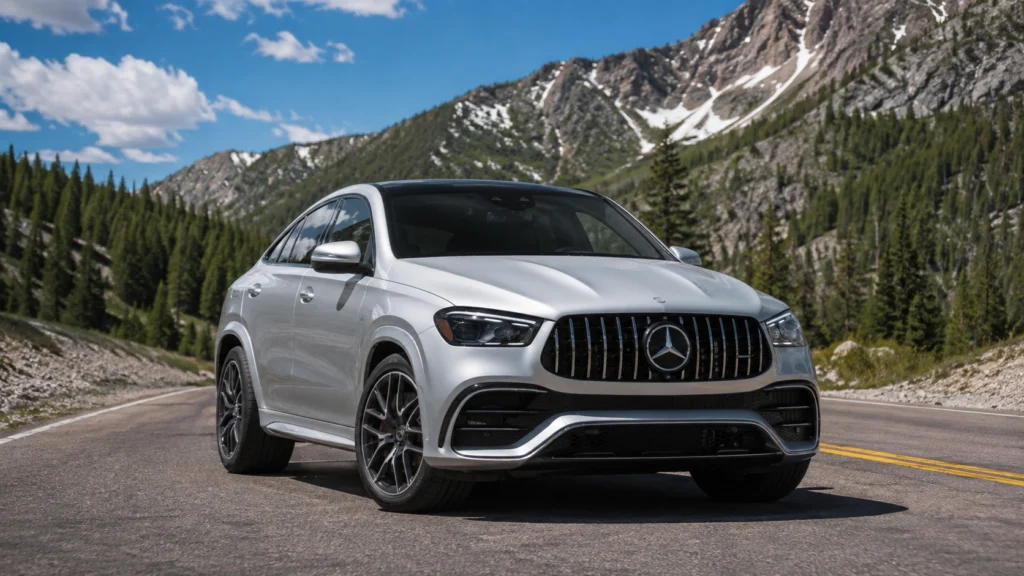
Acceleration across the Mercedes-Benz GLE range tells you almost everything about how each version will feel day to day. The Mercedes-Benz GLE 350’s 7.0-second 0–60 time is unremarkable on paper, but the mild-hybrid assist fills in low-end throttle response nicely, so it doesn’t feel sluggish pulling away from a stoplight.
The GLE 450 drops that time to 5.3 seconds, which is genuinely quick for a family SUV and more than sufficient for confident highway merging or passing on a two-lane road. Step up to the GLE 580, and 4.3 seconds puts it solidly in performance-SUV territory, backed by a factory-listed top speed around 130 mph.
The AMG GLE 53 splits the difference at 4.9 seconds, a slightly unusual result given its output sits between the GLE 450 and GLE 580 — largely a function of its added weight from AMG-specific hardware. The AMG GLE 63 S is the outlier of the lineup, hitting 60 mph in just 3.7 seconds, a time that few three-row-capable SUVs from any brand can match.
None of these are numbers to obsess over in everyday driving, since even the “slow” GLE 350 will keep up with highway traffic without effort. Where the spread matters most is in passing maneuvers and merging onto fast-moving freeways, where the Mercedes-Benz GLE 450 and above have noticeably more reserve power on tap.
Mercedes-Benz GLE Price
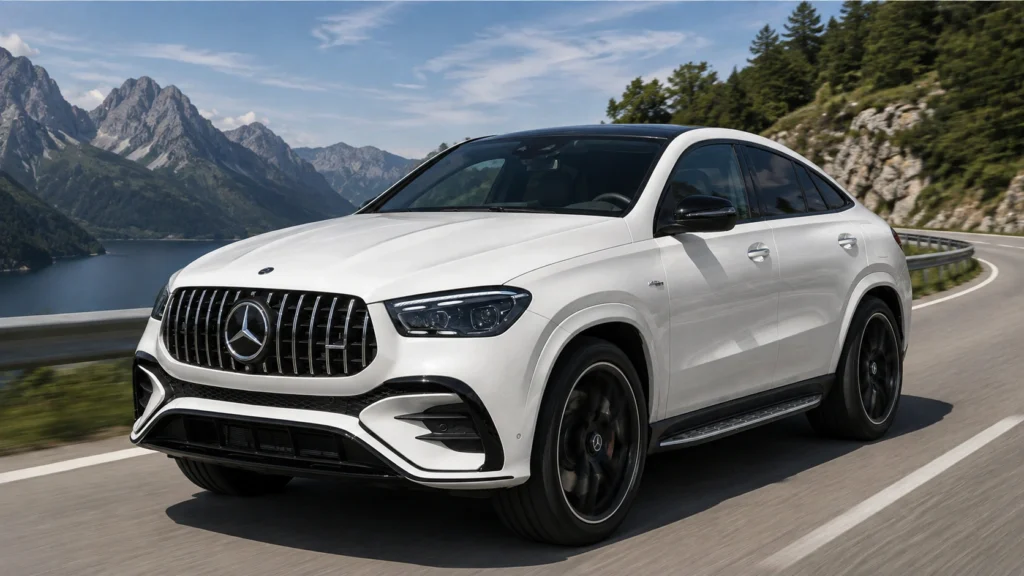
Mercedes-Benz GLE price 2026 figures start at $62,250 MSRP for the rear-wheel-drive GLE 350, before a $1,150 destination charge that applies across the Mercedes-Benz lineup. Adding 4MATIC all-wheel drive to the GLE 350 brings the price to $64,750.
From there, pricing climbs quickly with each step up in power:
- GLE 450 4MATIC: $72,250 MSRP
- GLE 450e 4MATIC (plug-in hybrid): $72,250 MSRP
- GLE 580 4MATIC: $90,000 MSRP
- AMG GLE 53 4MATIC+: $90,000 MSRP
- AMG GLE 63 S 4MATIC+: $131,800 MSRP
These are base figures before options. Popular add-ons like the Driver Assistance Package, upgraded wheels, Nappa leather, and multicontour massaging seats can add several thousand dollars, and a heavily optioned GLE 580 or AMG GLE 53 can approach six figures before ever touching the GLE 63 S’s starting price. Buyers should treat the MSRP as a starting point rather than the number they’ll actually pay at signing.
Pros and Cons
Pros
- Unusually wide engine lineup, from an efficient four-cylinder to a 603-hp AMG V8
- Genuinely upscale interior materials and build quality, even on base trims
- MBUX infotainment remains one of the easier big-screen systems to operate on the road
- Strong towing capacity (7,700 lbs) across nearly every trim, including the base model
- Smooth, comfort-oriented ride quality that holds up well on long trips
- Available third-row seat adds flexibility that some rivals don’t offer at all
Cons
- Options and packages add up fast, and a well-equipped GLE costs noticeably more than the advertised MSRP
- Fuel economy is mid-pack for the segment rather than class-leading, especially on V8-powered trims
- The optional third row is tight for adult passengers and best suited to occasional use
- AMG GLE 63 S drops third-row availability entirely, limiting it to five seats
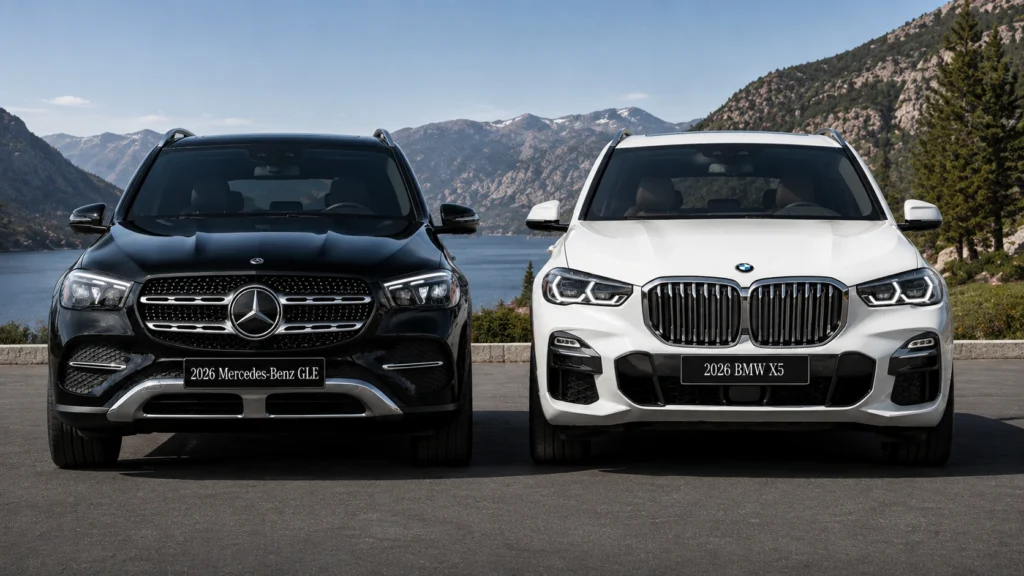
Mercedes-Benz GLE vs BMW X5
| Category | Mercedes-Benz GLE | BMW X5 |
|---|---|---|
| Starting Price | $62,250 MSRP (GLE 350 RWD) | $68,300 MSRP (sDrive40i) |
| Engine Options | 5 distinct powertrains, 255–603 hp | 4 distinct powertrains, 375–617 hp |
| Performance | Broad spread from efficient to AMG-quick; strong low-end torque throughout | Sportier suspension tuning; quick steering; M60i and M Competition lean hard into performance |
| Interior | Traditional luxury materials, large dual-screen MBUX layout | Driver-focused curved display, firmer sport-style seating |
| Technology | MBUX with natural-language voice control | iDrive 8.5 with a similarly capable but differently styled interface |
| Cargo Space | 33.3–74.9 cu ft | Roughly comparable maximum capacity, slightly smaller in most published figures |
| Towing | Up to 7,700 lbs | Up to 7,200 lbs |
| Comfort | Plusher, more isolated ride | Firmer, more engaging on winding roads |
| Best For | Buyers who prioritize comfort, cabin luxury, and towing | Buyers who want sportier dynamics and don’t mind a stiffer ride |
Neither SUV is a clear overall winner here — it genuinely comes down to priorities. The Mercedes-Benz GLE has the broader model range and stronger towing figures, while the X5 leans into driving engagement with quicker, more direct steering. Buyers cross-shopping both should take each on a back-to-back test drive, since the difference in ride character is more noticeable behind the wheel than on a spec sheet.
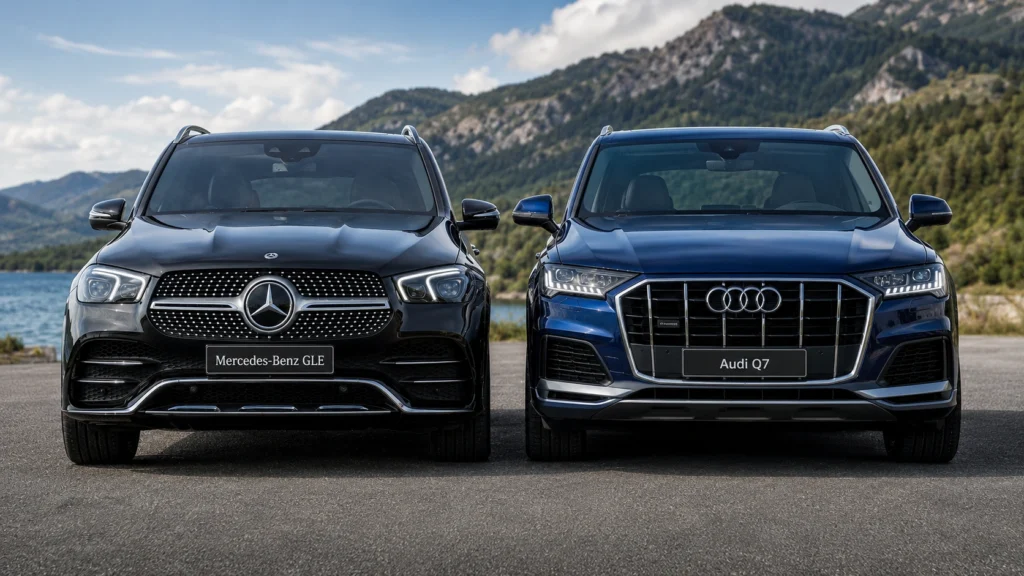
Mercedes-Benz GLE vs Audi Q7
The Audi Q7 takes a different approach than either the Mercedes-Benz GLE or X5: it comes standard with three rows of seating rather than treating the third row as an option. Pricing starts around $62,000 MSRP for the Q7 45, which uses a 261-horsepower 2.0-liter turbo four, while the Q7 55’s 3.0-liter turbo V6 makes 335 horsepower.
That means the Q7 doesn’t chase outright performance the way the GLE does with its AMG variants — there’s no Q7 equivalent to the GLE 63 S’s 603 horsepower. What it does offer is genuinely useful family practicality: seven seats standard, a cargo area that expands from 14.2 cubic feet behind the third row to 69.6 cubic feet with both rear rows folded, and a dual-screen MMI interior that feels tidy and driver-focused.
Towing capacity on the Q7 55 with the available trailer package reaches 7,700 lbs, matching the Mercedes-Benz GLE, though the base Q7 45 tops out at a much lower 4,400 lbs. Interior comfort is a close call between the two — the GLE edges ahead in front and rear headroom and legroom on most trims, while the Q7’s third row, though snug, comes standard rather than as a costly option.
For families who know they’ll regularly use a third row, the Q7’s standard seven-seat layout is the more practical starting point. For buyers who want a wider spread of power levels, including genuine AMG performance, the GLE offers something the Q7 simply doesn’t provide.
Who Should Buy the Mercedes-Benz GLE?
The Mercedes-Benz GLE makes the most sense for buyers who want one nameplate to cover several different needs. Families who occasionally need a third seating row, commuters who want a comfortable and quiet daily driver, and long-distance travelers who value a settled highway ride are all well served by the GLE 350 or GLE 450.
Buyers who tow trailers, boats, or campers regularly will appreciate that even the base GLE 350 is rated for 7,700 lbs, a figure that many competitors reserve for their higher-priced trims. The GLE 580 adds meaningful extra power for those who tow often or simply want more reserve capability without stepping into AMG ownership.
Performance-minded shoppers considering the AMG GLE 53 or AMG GLE 63 S get genuine sports-sedan-like acceleration in an SUV body, though they should be aware the GLE 63 S drops the optional third row entirely. Technology-focused buyers will appreciate MBUX’s voice control and over-the-air update capability, regardless of which trim they choose.
Buyers who need genuine adult-friendly third-row seating as a daily requirement, rather than an occasional-use feature, may be better served looking at the larger GLS or a competitor like the Audi Q7, which builds its cabin around three rows from the start.
Conclusion
The Mercedes-Benz GLE earns its place at the top of the luxury SUV conversation by covering more ground than almost any rival. Few competitors let you choose between a fuel-conscious four-cylinder, a smooth inline-six, a plug-in hybrid, a V8, and a pair of genuine AMG performance variants, all wearing the same badge and built on the same core platform.
That range comes with real strengths: a comfortable, well-isolated ride, an interior that feels genuinely upscale rather than merely branded as luxury, strong towing capacity even on the base model, and an infotainment system that’s actually pleasant to use daily. The trade-offs are real too — options inflate the price quickly, and the third row won’t satisfy families who need adult-friendly seating every day.
For buyers who want one SUV that can handle daily commuting, occasional towing, and long highway trips without feeling like a compromise, the GLE remains one of the strongest choices in its class. Those with a firm need for standard three-row seating should look closely at the Audi Q7 before signing, but for nearly everyone else, the GLE delivers exactly the blend of comfort, capability, and quiet confidence that’s made it a benchmark in this segment for years.
Frequently Asked Questions (FAQs)
The 2026 GLE starts at $62,250 MSRP for the rear-wheel-drive GLE 350, plus a $1,150 destination charge. Pricing climbs to $131,800 MSRP for the top AMG GLE 63 S, before any optional equipment.
Yes, for most buyers. It combines a comfortable ride, upscale materials, and an unusually wide range of powertrains, though shoppers who need a roomy standard third row may prefer a dedicated three-row SUV instead.
Most GLE trims seat 5 people standard, with an optional third row bringing capacity to 7. The AMG GLE 63 S is the exception, offered only with 5-passenger seating.
It depends on trim: a 2.0L turbo four (GLE 350), a 3.0L turbo six (GLE 450 and AMG GLE 53), a 2.0L turbo four plug-in hybrid (GLE 450e), and a 4.0L twin-turbo V8 (GLE 580 and AMG GLE 63 S).
Most GLE trims are rated for up to 7,700 lbs when properly equipped with a factory tow package, a figure that’s consistent across nearly the entire lineup, including the base GLE 350.
Yes. 4MATIC all-wheel drive is standard on every GLE trim except the base GLE 350 SUV, which offers rear-wheel drive with 4MATIC available as an option.
The GLE 350 uses a 255-horsepower turbo four-cylinder, while the GLE 450 steps up to a smoother 375-horsepower turbo inline-six. That extra power drops the 0–60 time from 7.0 seconds to 5.3 seconds, at roughly a $10,000 price difference.
For buyers who value comfort, interior quality, and flexibility across power levels, yes. Those who need a standard three-row layout or the absolute best fuel economy in the segment may want to cross-shop the Audi Q7 or a hybrid-focused competitor before deciding.