Porsche Explained: Best Models, Prices, Specs & Performance
Few car brands carry as much weight in a single word as Porsche. Say it to a car enthusiast and you’ll likely get an opinion about the 911’s rear-engine layout, or a story about a Cayenne that doubled as a family hauler and a track-day toy. Porsche has spent nearly a century turning that kind of loyalty into one of the most recognizable names in the automotive world.
What sets Porsche apart from most premium automakers is that it never really left its sports-car roots, even as it expanded into SUVs, sedans, and electric models. This guide covers what Porsche is today, how it got here, what each current model line offers, and what owning one actually involves — whether you’re considering a first Porsche or just want to understand why the badge commands the prices it does.
Quick Porsche Overview
| Category | Porsche |
|---|---|
| Brand | Porsche AG |
| Founded | 1931, in Stuttgart, Germany, by Ferdinand Porsche |
| Headquarters | Stuttgart-Zuffenhausen, Germany |
| Known For | Sports-car engineering, the 911, motorsport heritage, driver-focused performance |
| Major Models | 911, 718 Boxster/Cayman, Taycan, Panamera, Macan, Cayenne |
| Powertrains | Turbocharged gasoline engines, T-Hybrid and E-Hybrid systems, fully electric drivetrains |
| Performance Focus | Precise handling and driver engagement across sports cars, sedans, and SUVs |
What Is Porsche?
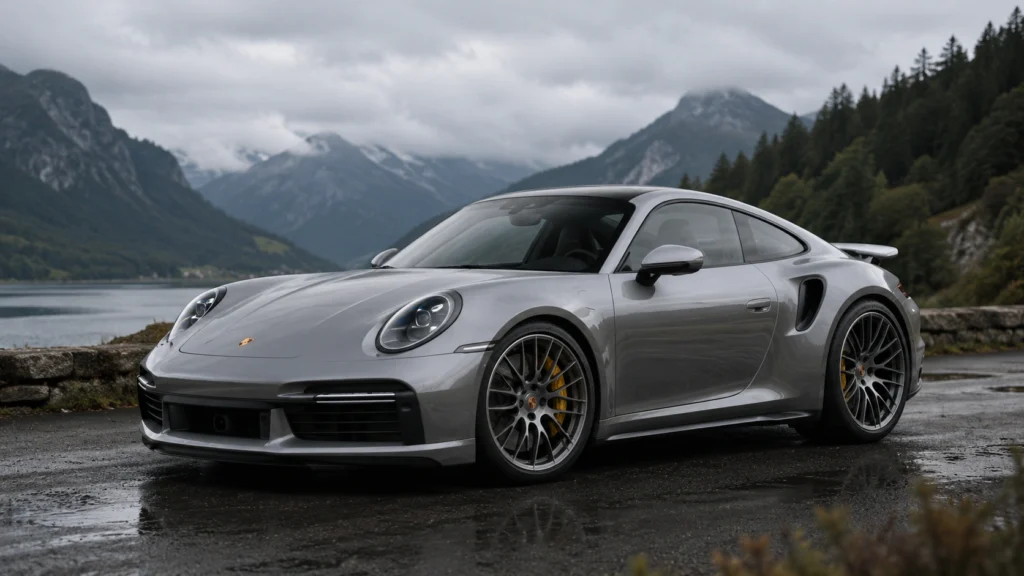
Porsche is a German manufacturer of sports cars, luxury SUVs, sedans, and electric vehicles, owned by the Volkswagen Group but run as its own distinct engineering operation. It sits between mainstream luxury brands and pure performance manufacturers: more driver-focused than a typical luxury automaker, but still built for everyday use.
What separates Porsche from most competitors is how much of its identity still traces back to a single car. The 911 has been in continuous production since the 1960s, and its rear-engine layout and driving feel still shape how every other Porsche is engineered — even the SUVs.
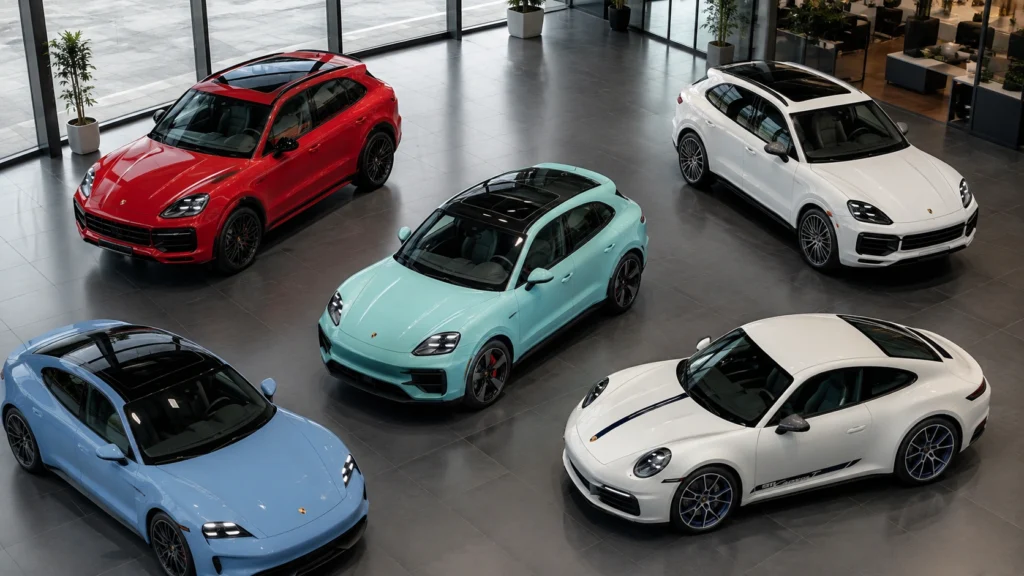
You can browse the full current range on the official Porsche models overview. Broadly, the brand spans four areas today: two-door sports cars, four-door performance sedans, luxury SUVs, and an expanding electric lineup led by the Taycan.
Porsche History and Background
Porsche’s story starts with an engineering consultancy, not a car. Ferdinand Porsche founded the company in Stuttgart in 1931, initially designing vehicles for other manufacturers; his work also shaped the original Volkswagen Beetle, which influenced his taste for lightweight, rear-engine layouts. The first car to wear the Porsche name arrived in 1948: the 356, a small sports car built using components borrowed from Volkswagen. It set the formula the brand has followed since — modest size and weight, with a focus on driving feel over raw numbers.
The 911 replaced the 356 in the 1960s and remains the most important product decision in the company’s history. Rather than reinventing it every generation, Porsche has continually refined the same basic concept: rear-mounted flat-six engine, compact two-door body, evolutionary styling. The lineup stayed narrow for decades until the Cayenne arrived in the early 2000s as Porsche’s first SUV — controversial among enthusiasts at the time, but the financial engine behind much of the brand’s later sports-car development. The Panamera sedan followed in 2009, and the smaller Macan SUV arrived in 2014.
The most recent shift has been electrification, starting with the Taycan in 2019 and later an electric Macan. Porsche has since taken a more flexible approach than originally planned, continuing gasoline and hybrid development alongside electric models rather than committing to an all-electric lineup on a fixed timeline.
Porsche Models and Lineup
Because “Porsche” covers such a wide range of vehicles, it’s more useful to think of the lineup as several distinct families. Check the official Porsche model overview for the most current configurations in your market.
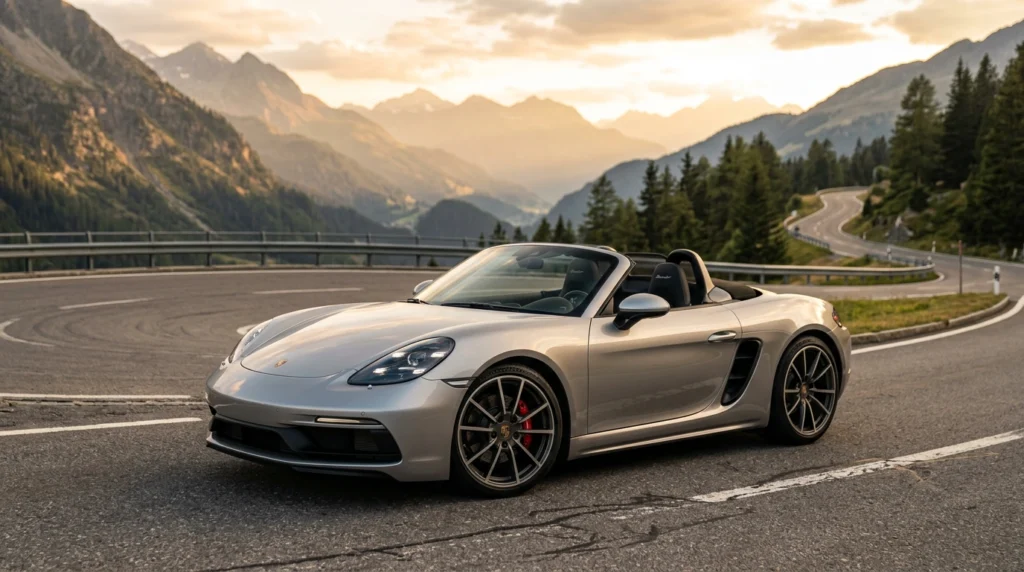
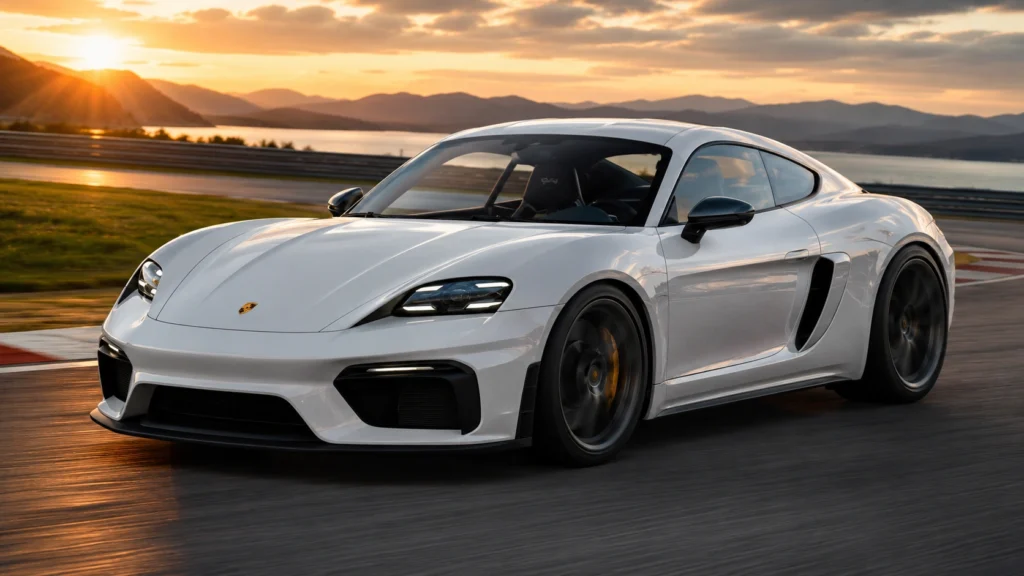
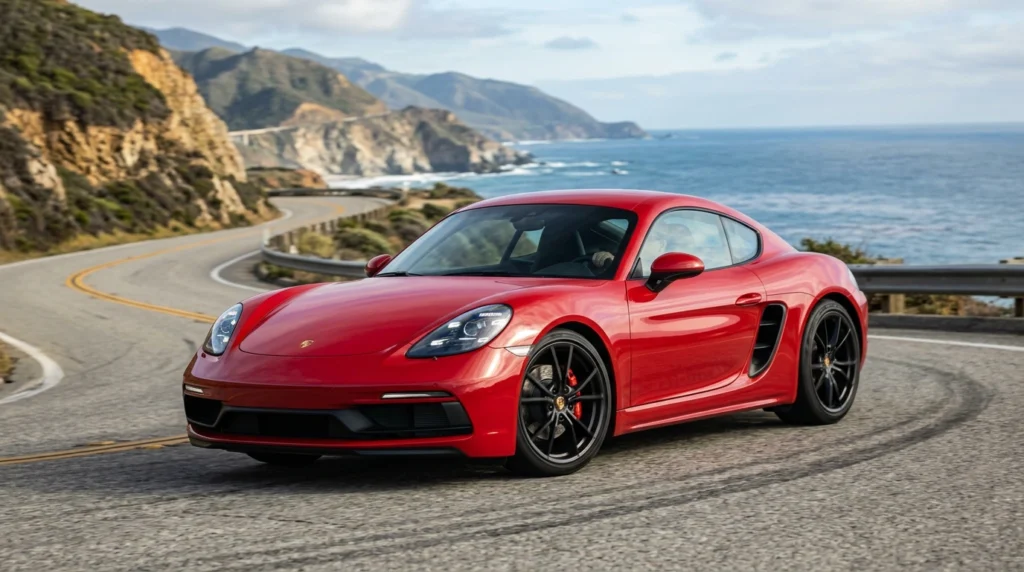
718 Boxster and 718 Cayman. Entry-level, mid-engine two-seat sports cars — Boxster roadster, Cayman coupe — prized for near-perfect weight balance. As of 2026, order books are closed globally for the current gasoline generation ahead of an all-electric successor, so availability may be limited to existing dealer stock.
911. The rear-engine sports coupe (also offered as cabriolet and targa) that anchors the brand’s identity, spanning the everyday Carrera to the track-focused GT3 and all-wheel-drive Turbo S.
Taycan. Porsche’s fully electric sports sedan, also offered as Cross Turismo and Sport Turismo wagon variants.
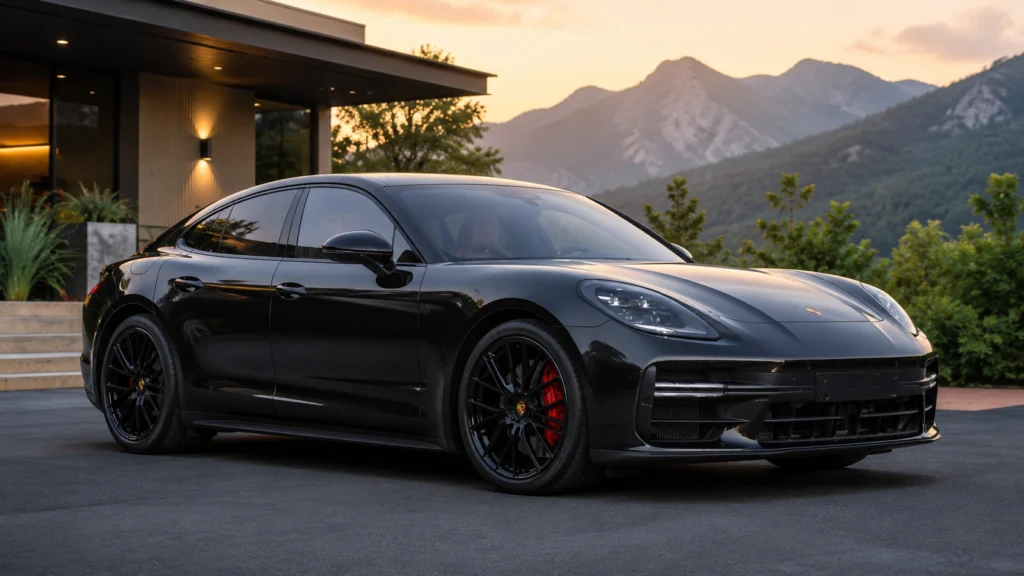
Panamera. A four-door luxury sedan and Sport Turismo wagon combining sports-car dynamics with real rear-seat comfort, available with gasoline and plug-in E-Hybrid powertrains.
Macan. Porsche’s compact luxury SUV, currently in transition: the long-running gasoline version is in its final production run, alongside a new-generation, fully electric Macan already on sale in most markets.
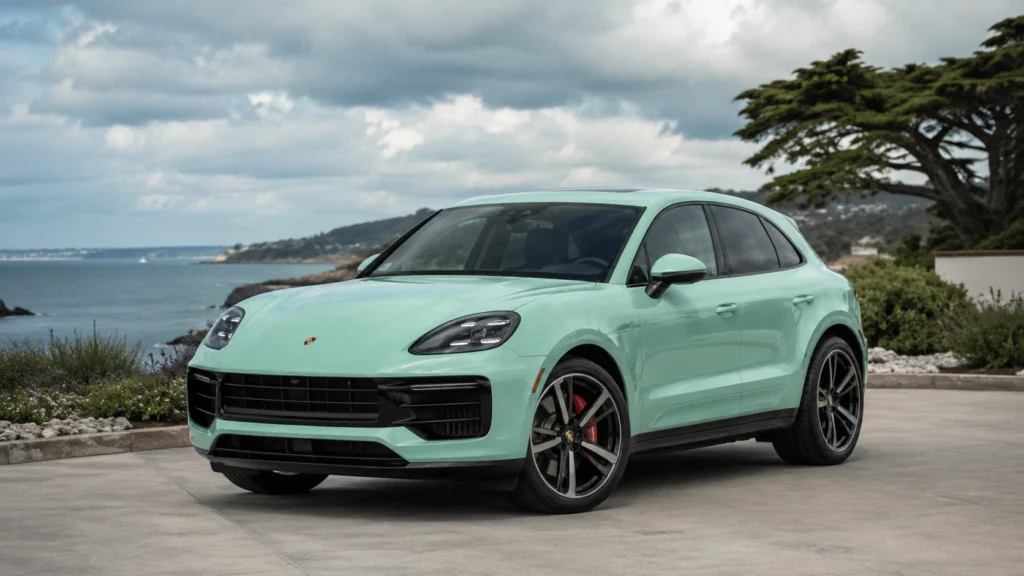
Cayenne. Porsche’s larger SUV, offered with gasoline, E-Hybrid, and — depending on market — newly introduced electric variants.
| Porsche Model | Vehicle Type | Powertrain Options | Main Strength |
|---|---|---|---|
| 718 Boxster / Cayman | Two-seat mid-engine sports car | Gasoline (current generation ending); electric successor planned | Purest handling balance in the lineup |
| 911 | Sports coupe, cabriolet, targa | Gasoline flat-six; T-Hybrid on GTS trims | Benchmark daily-usable sports car |
| Taycan | Electric sports sedan / wagon | Fully electric | Strongest EV driving dynamics, fast charging |
| Panamera | Luxury sedan / sport wagon | Gasoline, E-Hybrid plug-in | Sports-car feel with real rear-seat comfort |
| Macan | Compact luxury SUV | Gasoline (outgoing) or fully electric | Everyday usability, genuine Porsche handling |
| Cayenne | Midsize luxury SUV | Gasoline, E-Hybrid, electric depending on market | Power, space, and towing capability |
Design and Exterior
Porsche’s design language stays consistent across very different body styles, which is part of why a Taycan and a 911 read as siblings despite sharing no mechanical DNA. Signature cues include sloping rooflines, pronounced rear haunches, and horizontal taillight bars used across the SUV and sedan lineup, not just the sports cars.
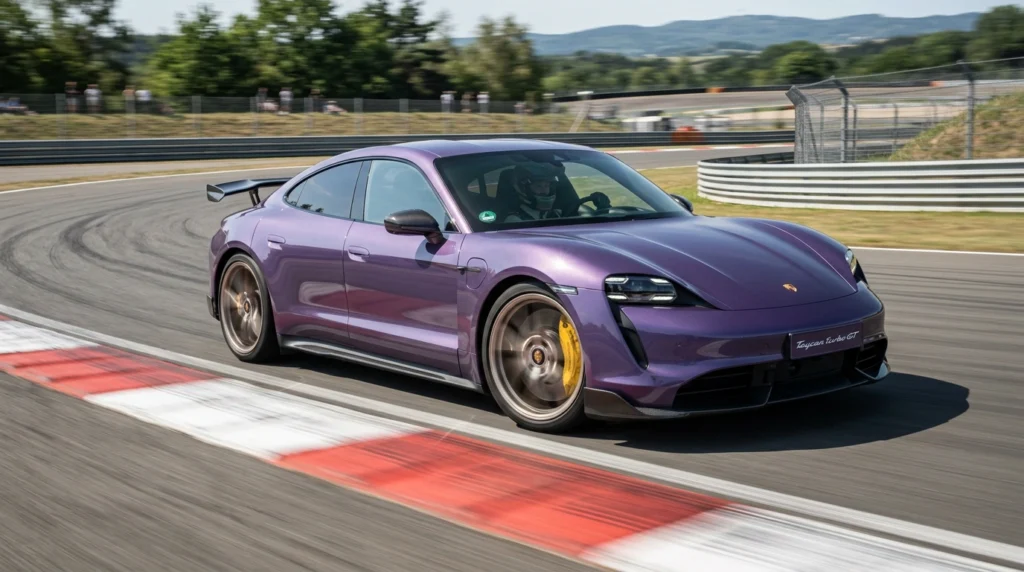
Aerodynamics is functional rather than purely cosmetic. Higher-performance 911 and Taycan variants use active aero elements — adjustable rear spoilers and cooling flaps that open and close with speed and drive mode — to balance high-speed stability against efficiency, generating real downforce on track-focused trims. Matrix LED and HD-Matrix headlights now appear across the range, enabling high-beam use without dazzling oncoming traffic, alongside four-point LED daytime running lights that have become a visual signature.
Proportions vary by the model’s job. The 718 and 911 keep classic short-overhang sports-car proportions, while the Panamera stretches that language over a longer wheelbase for four adults. The Cayenne and Macan trade some of that low stance for ground clearance and cargo space, though Porsche still tunes their suspension geometry to limit body roll — not a given in the SUV segment.
Interior, Comfort and Technology
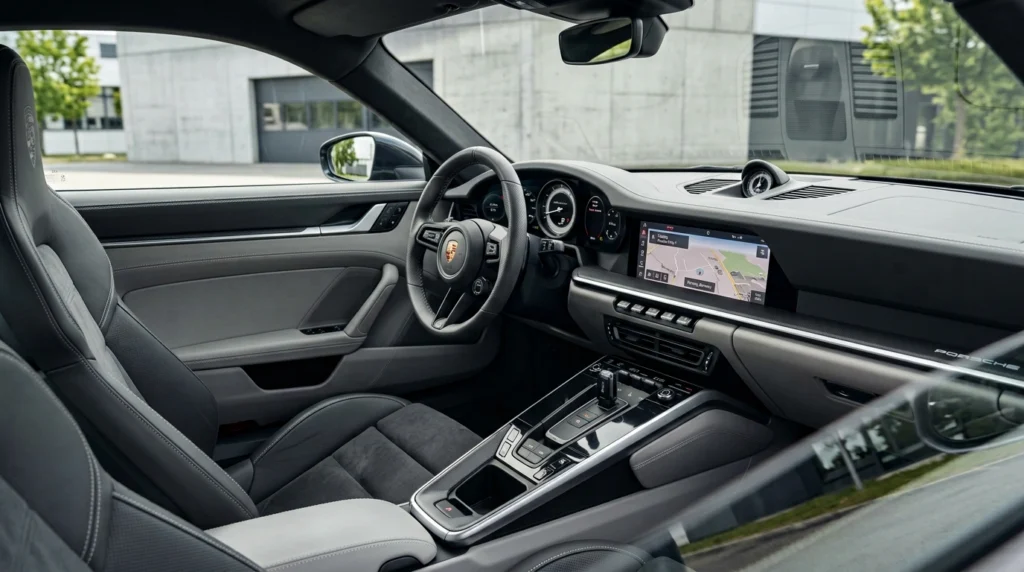
Porsche interiors are built around the driver first. Even in the SUVs, the dashboard and control layout borrow from the sports-car side of the business: a low-set wheel, tightly grouped switchgear, and either an analog-style tachometer or a digital cluster that mimics one on newer models. Materials skew toward leather, Alcantara, and brushed metal trim, with extensive personalization available for buyers who want a unique color and material combination. Infotainment runs on Porsche Communication Management (PCM), with touchscreen displays, smartphone integration, and voice control; newer 911 and Taycan models add a digital interface with customizable widgets and an app center for third-party software.
Practicality differs significantly by model. The 718 and 911 are genuinely tight two-seaters (with small rear seats on the 911), with cargo split between a front trunk and rear shelf. The Taycan and Panamera offer real four- or five-seat usability plus a front trunk, while the Macan and Cayenne behave like conventional SUVs, with usable rear seats, expandable cargo areas, and a frunk on electric variants. Driver-assistance features — adaptive cruise control, lane-keeping assistance, parking sensors and cameras, and night vision on some trims — are available across most of the range, though standard versus optional status varies by model and trim.
Engines, Powertrains and Performance
Porsche’s engine lineup spans three broad categories, and no single description fits the whole brand.
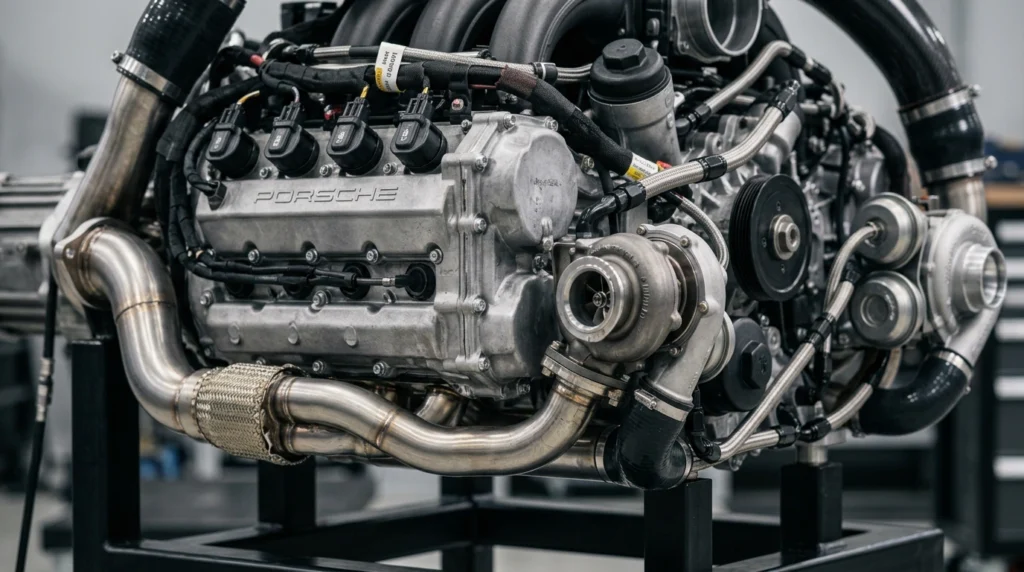
The 911 relies on a turbocharged flat-six (“boxer”) engine, a horizontally opposed layout that keeps the center of gravity low and gives the car its distinctive exhaust note. The same 3.0-liter architecture is tuned differently across trims, while Turbo variants use a larger-displacement version. Recent Carrera GTS models add a T-Hybrid system — a small electric motor built into the transmission alongside a compact battery — that sharpens response without turning the car into a plug-in hybrid.
The Cayenne and Panamera use turbocharged V6 and V8 gasoline engines, with E-Hybrid plug-in variants pairing those engines with an electric motor and a battery large enough for genuine electric-only driving at low speeds. The Taycan and electric Macan use dual electric motors (one per axle) on an 800-volt architecture — the same voltage class used in Porsche’s Le Mans-winning hybrid race cars — which allows unusually fast recharging compared with many EV competitors.
All-wheel drive is available across most of the lineup and standard on higher-output trims; rear-wheel drive remains available on base 911, 718, and Taycan variants for a more classic, rear-biased feel. No single powertrain description applies to “a Porsche” broadly — a base 718 and a Cayenne Turbo E-Hybrid share almost nothing mechanically beyond the badge.
Porsche Driving Experience
Ask longtime owners why they keep buying Porsches, and horsepower rarely comes up first. What usually comes up is steering feel — the sense that the front wheels communicate road texture back through the wheel rather than filtering it out. Adaptive suspension systems like Porsche Active Suspension Management (PASM) stay composed during hard cornering without making the ride harsh day-to-day, and braking response is tuned to feel progressive rather than grabby.
Chassis balance is where the engineering culture shows up most. Even in the Cayenne and Macan, Porsche minimizes body roll and keeps the car planted mid-corner rather than accepting the softer feel common in luxury SUVs — the gap to the sports cars is intentionally smaller than most competitors manage. Everyday drivability is often underrated, too: current 911 and Taycan models are genuinely usable daily transportation, with reasonable comfort-mode ride quality and driver aids that make commuting less tiring than performance cars of a generation ago.
Porsche Specifications
Figures below are representative, officially listed U.S. specifications and vary by trim, options, and market.
| Model | Powertrain | Horsepower | 0–60 mph | Top Speed | Drivetrain |
|---|---|---|---|---|---|
| 911 Carrera | 3.0L twin-turbo flat-six | 388 hp | 3.9 s | 183 mph | RWD |
| 911 Carrera S | 3.0L twin-turbo flat-six | 473 hp | 3.3 s | 191 mph | RWD (4S adds AWD) |
| 911 Carrera GTS | 3.0L twin-turbo flat-six + T-Hybrid | 532 hp combined | 2.9 s (Sport Chrono) | 194 mph | RWD (4 GTS adds AWD) |
| Taycan (base) | Dual electric motors | 402 hp | 4.5 s (Launch Control) | 143 mph | RWD |
| Taycan Turbo GT | Dual electric motors | up to 1,019 hp (overboost) | ~2.1 s (Launch Control) | 190 mph | AWD |
Cayenne, Panamera, and Macan span too wide a range of engines and outputs across their trims for a single meaningful line each — those ranges are covered in the pricing section below.
Top Speed and Acceleration
Quoting one 0–60 mph time for “a Porsche” is close to meaningless given the spread. A base 718 or 911 Carrera is properly quick by mainstream standards, yet modest next to the brand’s own flagship trims.
At the top end, Porsche’s fastest models split into two camps. Combustion halo cars like the 911 Turbo S use twin-turbocharging and all-wheel drive for reliably big power, while electric flagships like the Taycan Turbo GT take a different route: instant torque from dual motors lets it hit 60 mph in roughly two seconds, quicker than the current gasoline 911 lineup. Combustion 911 models still hold peak acceleration more consistently across repeated runs and offer a top-speed edge, since EV top speeds are capped to protect range and tires — so neither is “faster” in every sense, depending on whether you’re measuring a stoplight sprint or a top-speed run.
Porsche Technology and Innovation
Several technologies recur across the lineup, each solving a specific handling or efficiency problem. Adaptive suspension (PASM) continuously adjusts damping for road conditions and drive mode, letting the same car ride comfortably on rough roads and stiffen up for spirited driving. Torque vectoring (PTV/PTV Plus) uses selective rear-wheel braking, sometimes with a locking differential, to help the car rotate more precisely through corners, while launch control coordinates the engine or motors, transmission, and traction control for the quickest possible standing start.
Regenerative braking on the Taycan and electric Macan recovers energy under deceleration, with brake-pedal feel tuned to blend regenerative and friction braking more naturally than many early EVs managed. Rear-axle steering, standard on higher 911 trims and available elsewhere, turns the rear wheels opposite the fronts at low speed for easier maneuvering, and with them at higher speed for stability. Rounding things out, driver-assistance systems — adaptive cruise control, lane-keeping assistance, and available night vision — appear across most of the range, with exact availability depending on model and trim.
Porsche Price and Ownership Costs
There’s no single “Porsche price.” As of 2026, U.S. starting prices (before options, taxes, and destination fees, which Porsche notes can also be affected by tariffs) span roughly from the mid-$60,000s for the Macan to over $130,000 for a base 911, with flagship trims across every line reaching well past $200,000. These figures shift over time and by market, so the official Porsche configurator is the most reliable source for current pricing.
Trim level has an outsized effect on final price: moving from a base Cayenne to a Turbo E-Hybrid, or a base Taycan to a Turbo GT, can roughly double or triple the sticker price before a single option is added. Optional equipment — larger wheels, ceramic composite brakes, upgraded audio, and interior personalization — can add tens of thousands more, which is why real transaction prices often exceed the advertised starting figure.
Ownership costs extend past the purchase price. Scheduled maintenance tends to run higher than mainstream brands, partly due to specialized parts and Porsche-trained labor rates. Tires and brake components are a notable expense on performance trims, since staggered, low-profile setups wear faster and cost more than standard equivalents. Insurance runs higher too, reflecting both repair costs and performance capability.
Porsche Reliability and Maintenance
Reliability deserves a balanced answer rather than a claim in either direction. Porsche vehicles use more complex engineering than mainstream cars — turbocharging, adaptive suspension, dual-clutch transmissions, and on hybrids and EVs, additional battery and motor systems — which generally means higher repair costs when something goes wrong, even if failure rates aren’t necessarily worse than average. Scheduled maintenance matters more here than with typical commuter cars, and wear items like tires, brake components, and clutches (on manual models) tend to need replacement sooner on performance trims driven enthusiastically.
For used Porsche buyers, service history matters more than with most brands. A pre-purchase inspection by a Porsche specialist — checking engine seals, suspension components, and any track-use history — is worth the cost, since deferred maintenance tends to be more expensive to catch up on than with a mainstream car. Warranty coverage follows fairly standard premium-brand terms, and extended plans are available for buyers who want more predictable costs.
Pros and Cons of Porsche
Pros
- Consistent, engaging driving dynamics across the lineup, from SUVs to sports cars
- Strong resale value relative to most premium and luxury competitors
- Genuine everyday usability in the 911, Taycan, and Panamera
- Wide range of body styles and powertrains under one badge
- Fast-charging, motorsport-informed EV technology in the Taycan
Cons
- Higher purchase price than most competitors in the same vehicle category
- Options can add tens of thousands of dollars, inflating the real transaction price
- Maintenance, tires, and insurance costs generally run above mainstream-brand averages
- Model transitions, like the 718’s move to electric power, create short-term availability uncertainty
- Limited rear-seat and cargo space on two-door sports-car models
Porsche vs Competitors
Porsche competes in several vehicle categories at once, so comparing it segment by segment makes more sense than as a single brand.
| Category | Porsche | Key Competitors | What Typically Differs |
|---|---|---|---|
| Sports coupe | 911 / 718 | BMW M4, Mercedes-AMG GT | Porsche emphasizes everyday usability and steering feel over outright aggression |
| Electric performance car | Taycan | Tesla Model S, Audi e-tron GT | Taycan prioritizes repeatable performance and fast charging over maximum range |
| Compact luxury SUV | Macan | BMW X3/X4, Mercedes-Benz GLC, Audi Q5 | Sportier handling, generally at some cost to ride comfort |
| Midsize luxury SUV | Cayenne | BMW X5, Mercedes-Benz GLE, Audi Q7 | More power and towing capability, positioned above mainstream luxury rivals |
| Four-door luxury performance | Panamera | Mercedes-AMG GT 4-Door, Maserati Quattroporte, Aston Martin | Blends sports-car agility with genuine rear-seat comfort |
No brand wins outright across every category. Porsche generally trades some ride comfort and interior space for handling precision, while rivals like Mercedes-Benz and BMW lean further toward comfort and features at a similar price. Tesla and other EV-focused brands can undercut the Taycan on price and range but typically don’t match its chassis tuning or charging speed.
Who Should Buy a Porsche?
Performance enthusiasts who want a car that rewards attentive driving, rather than one that just posts fast numbers on paper, are the clearest fit for the 911 or 718, especially with occasional track driving in mind. Luxury buyers who want strong badge recognition, resale value, and daily comfort without giving up driving engagement are well served by the Panamera or higher Cayenne trims.
Families considering a Cayenne or Macan get genuine SUV practicality — usable rear seats, real cargo space, available all-wheel drive — without losing as much driving feel as most luxury SUVs require. EV buyers who prioritize charging speed and driving dynamics over maximum range should look closely at the Taycan or electric Macan.
Buyers considering a used Porsche can enter the brand at lower cost, particularly with an older 718, Cayenne, or Macan, but should budget for a pre-purchase inspection and higher running costs than a mainstream used car. Those who prioritize maximum interior space, the lowest ownership costs, or the newest mainstream tech features at a lower price are often better served by a mainstream luxury brand, or a range-focused competitor in the EV space.
Conclusion
Porsche isn’t a single car, and it’s worth resisting the urge to think of it that way. It’s a brand built around one engineering philosophy — precise, driver-focused performance — applied across sports cars, SUVs, sedans, and now electric vehicles. That philosophy is why a Cayenne can tow a trailer and still corner with more composure than most SUVs, and why the Taycan manages to feel like a proper sports car despite its weight.
The right Porsche depends on budget, intended use, and how much daily practicality matters versus outright driving engagement. A 911 or 718 rewards enthusiasts who want to feel every input; a Cayenne or Macan suits buyers who need real SUV usability without losing all of that feel; a Panamera or Taycan splits the difference with four-door comfort.
Whichever direction you’re leaning, the most useful next step is checking current model availability, pricing, and configurations directly through Porsche’s official channels, since trims and even entire model generations — as with the 718’s ongoing shift to electric power — continue to evolve.
Frequently Asked Questions (FAQs)
The 911, its rear-engine sports car in continuous production since the 1960s, along with a broader reputation for precise handling and motorsport-derived engineering.
Pricing varies enormously. As of 2026, U.S. starting prices run from roughly the mid-$60,000s for the Macan to over $130,000 for a base 911, with high-performance trims reaching well past $200,000. Check Porsche’s official configurator for current figures.
By sales volume, Porsche’s SUVs — the Cayenne and Macan — have long outsold the 911, even though the 911 remains the brand’s most recognized model.
Yes, generally classified as a luxury performance brand — above mainstream automakers but distinct from ultra-luxury or hypercar manufacturers.
The Cayenne and Macan offer the most conventional SUV practicality, while the 911 and Taycan are also genuinely usable daily drivers for buyers who prioritize a sportier feel.
Porsche vehicles are mechanically sophisticated, which generally means higher repair costs when issues occur, though that doesn’t necessarily mean more frequent problems than other premium brands. Following the maintenance schedule closely matters more here than with mainstream cars.
It depends on the measure. The electric Taycan Turbo GT currently accelerates to 60 mph quicker than any gasoline 911, while the 911 Turbo S and other combustion flagships tend to hold a higher top speed.
Generally yes, relative to mainstream vehicles. Specialized parts, higher labor rates, and performance-oriented wear items like tires and brakes push costs above average, though this is in line with other luxury and performance brands.