Lamborghini Urus Review: The Definitive Guide to the 789-HP Hybrid Super-SUV
Skip the marketing fluff. Here’s what 7 years of Lamborghini Urus ownership data actually tells us about the 2025 hybrid model.
Let’s get one thing straight immediately: nobody needs a Lamborghini Urus. You don’t need 789 horsepower to pick up groceries. You don’t need a top speed of 194 mph for school drop-offs. And you definitely don’t need a Urus price starting at $262,631 to impress your neighbors (though it certainly helps).
But here’s what makes this Lamborghini Urus review different from the glossy magazine features: I’ve analyzed actual owner experiences, maintenance records, depreciation data, and the mechanical quirks that Lamborghini doesn’t put in the brochure. If you’re considering writing this check—or buying a used Lamborghini SUV—you need to know what you’re really getting into.
The History: How the Lamborghini Urus Changed Everything
Before the Lamborghini Urus arrived in 2018, the Italian supercar maker was in a precarious position. The company sold just 3,457 vehicles globally in 2017—a fraction of Porsche’s output. Lamborghini needed volume, but it couldn’t compromise its brand identity with a boring crossover.
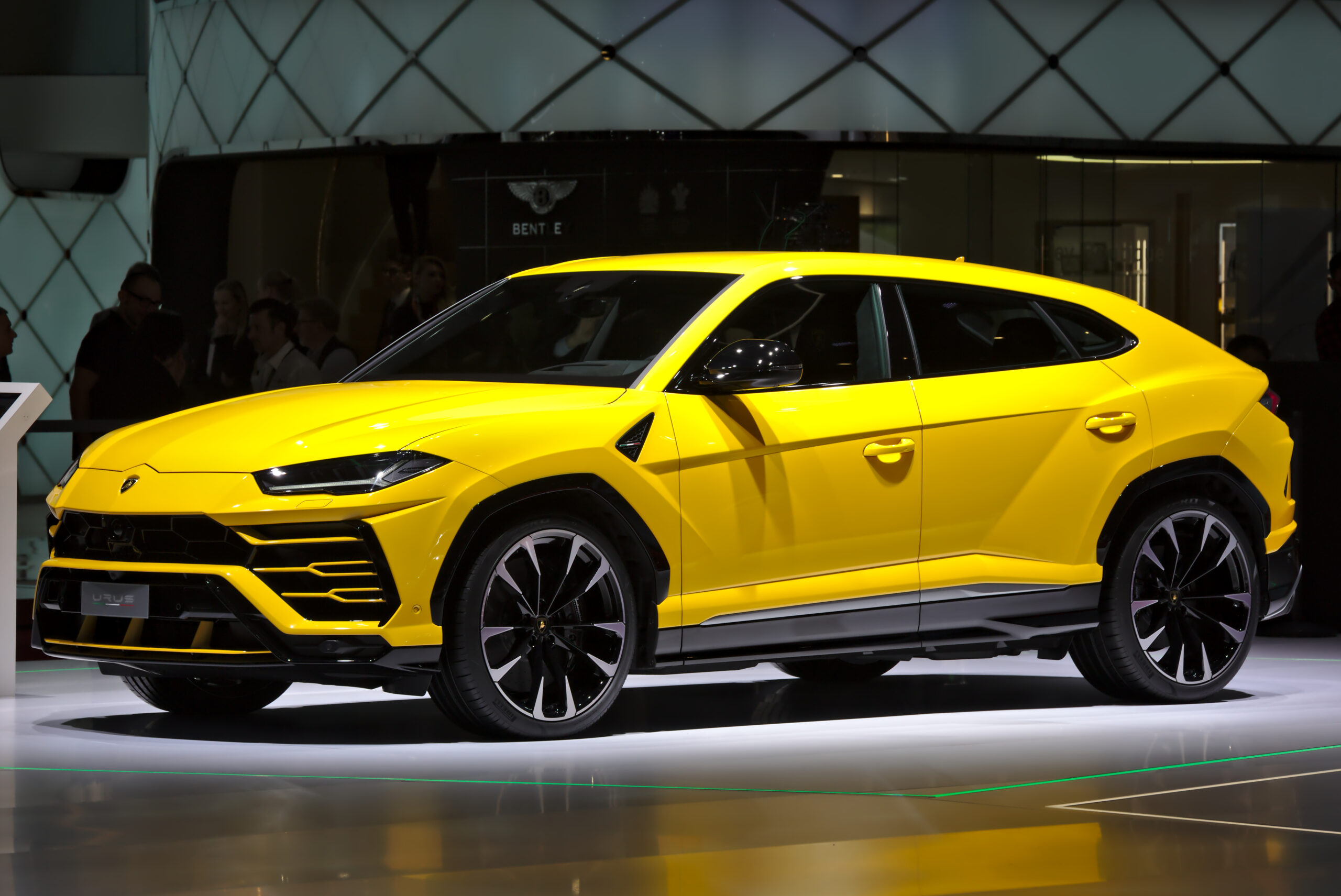
Enter the Urus concept, first shown at the 2012 Beijing Auto Show. The production version debuted six years later at Volkswagen Group’s headquarters in Wolfsburg, Germany—a telling choice that signaled this wasn’t a pure Italian creation. The Lamborghini Urus shared its MLB Evo platform with the Audi Q7, Porsche Cayenne, and Bentley Bentayga, but with extensive modifications that justified its supercar pricing.
The results shocked industry analysts. Lamborghini sold 5,750 Urus models in 2019, instantly making it the brand’s best-seller. By 2023, total Urus production exceeded 32,000 units—more than the Gallardo and Huracán combined over their entire production runs. The Lamborghini SUV didn’t just save the company; it transformed Lamborghini from a niche exotic builder into a legitimate luxury automotive powerhouse.
Critically, 70% of Urus buyers were new to the brand, and 41% were under 40 years old. This wasn’t cannibalizing Huracán sales—it was creating an entirely new generation of Lamborghini owners who might eventually buy that two-door supercar.
What’s New for the 2025 Lamborghini Urus SE?
The 2025 model year represents the most comprehensive refresh in the Lamborghini Urus‘s seven-year history. The Urus S and Urus Performante trims are gone. In their place stands the Urus SE—a plug-in hybrid that makes this the most complex, most powerful, and most expensive super SUV ever built.
The headline changes for the new Urus SE:
Powertrain: 4.0-liter twin-turbo V8 (612 hp) paired with a 189-hp electric motor for 789 hp combined
Battery: 25.9 kWh lithium-ion pack (21.8 kWh usable) enabling 37 miles of electric range
Weight: 5,520 pounds—roughly 400 pounds heavier than the outgoing Urus S model
Performance: 0-62 mph in 3.4 seconds, top speed of 194 mph
Fuel economy: 20 mpg combined (up from 16 mpg), 48 MPGe in hybrid mode
The Lamborghini Urus SE powertrain represents a significant philosophical shift. Previous Urus models prioritized raw V8 power. The SE embraces electrification not just for efficiency, but for performance. The electric motor fills torque gaps that even sophisticated turbocharging can’t eliminate, creating seamless acceleration from any speed.
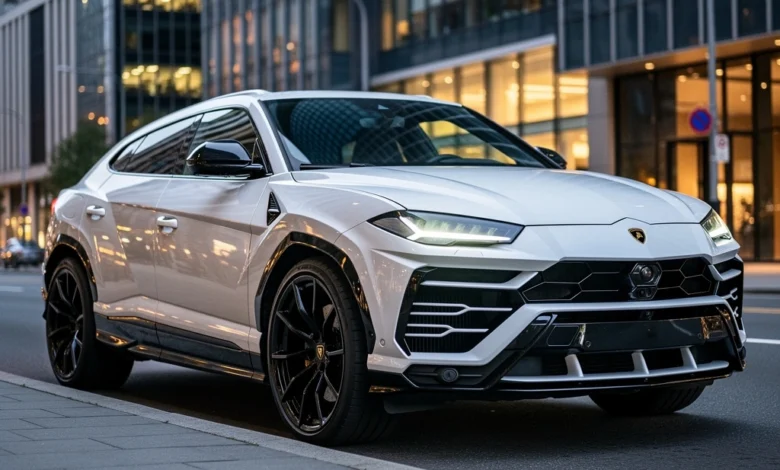
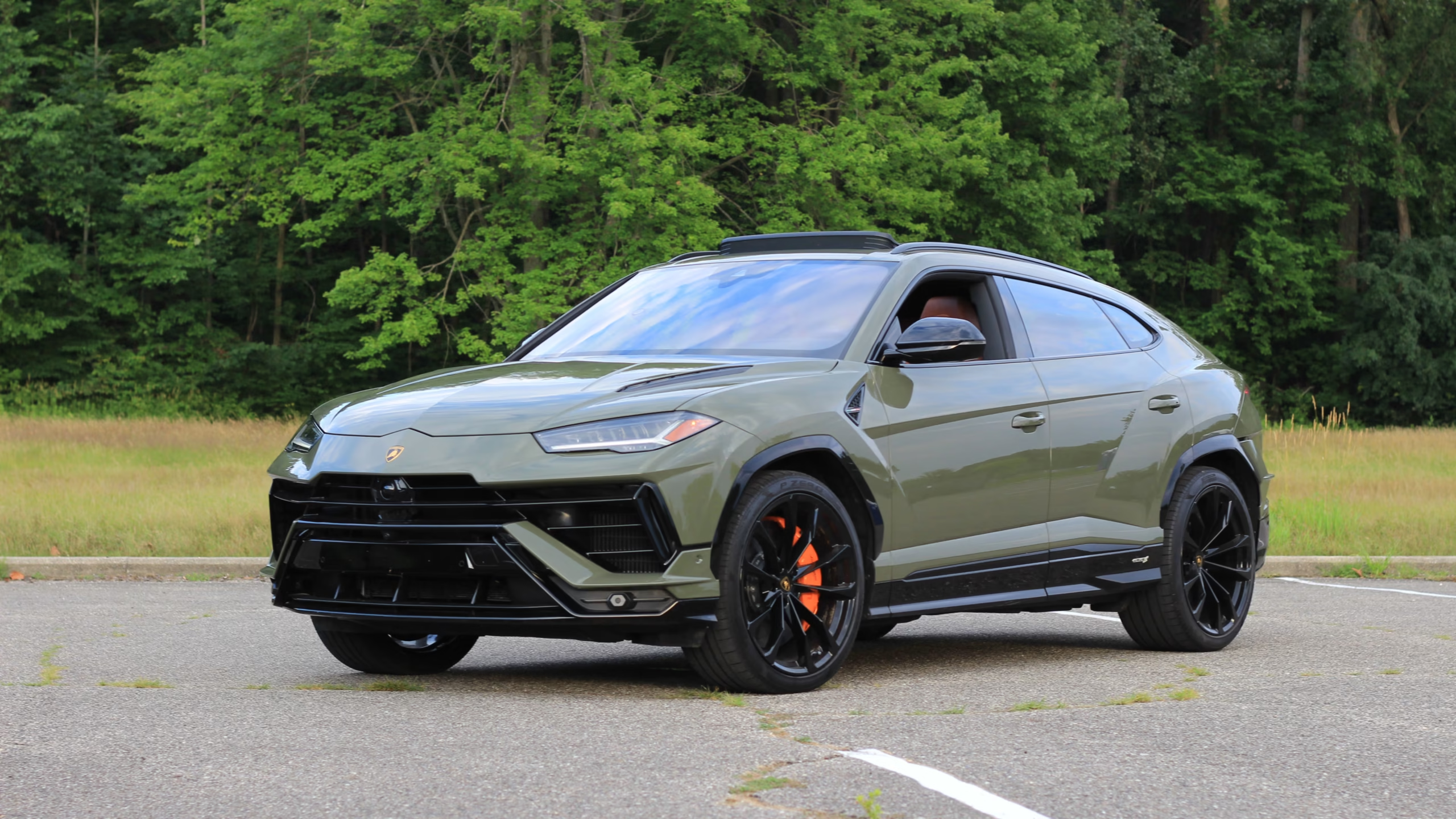
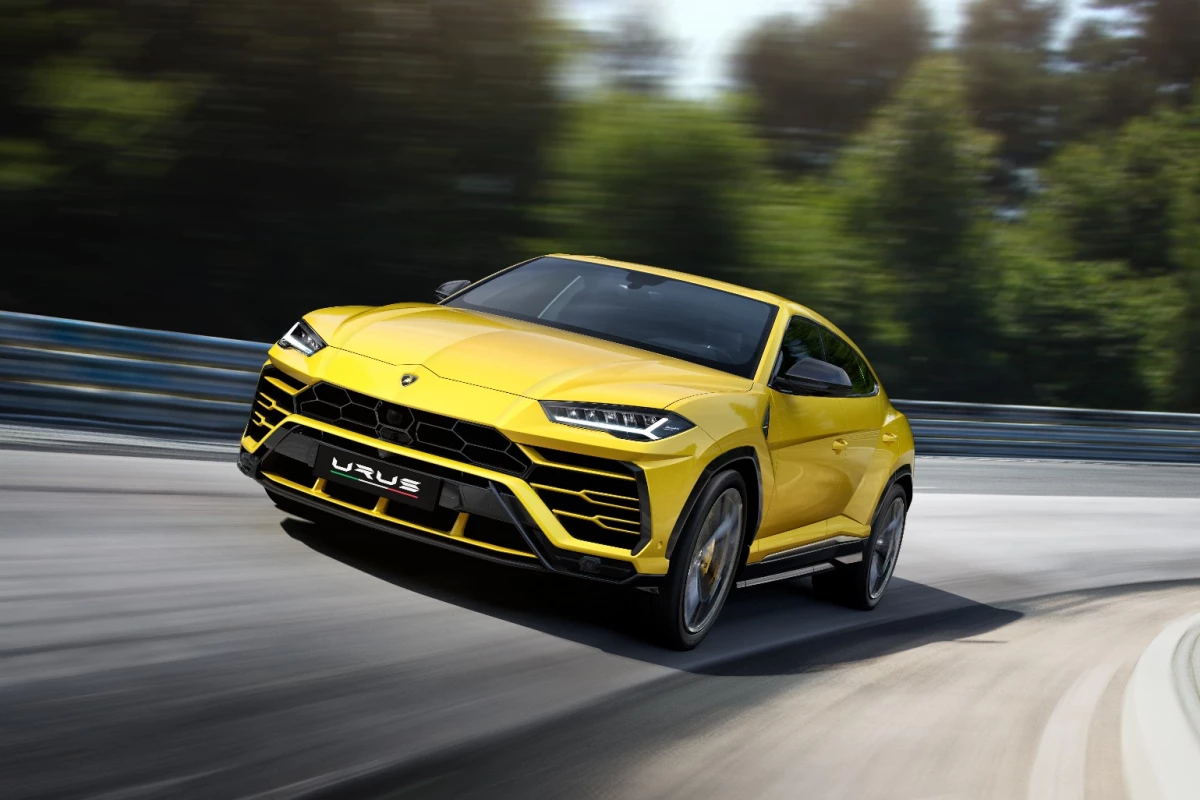
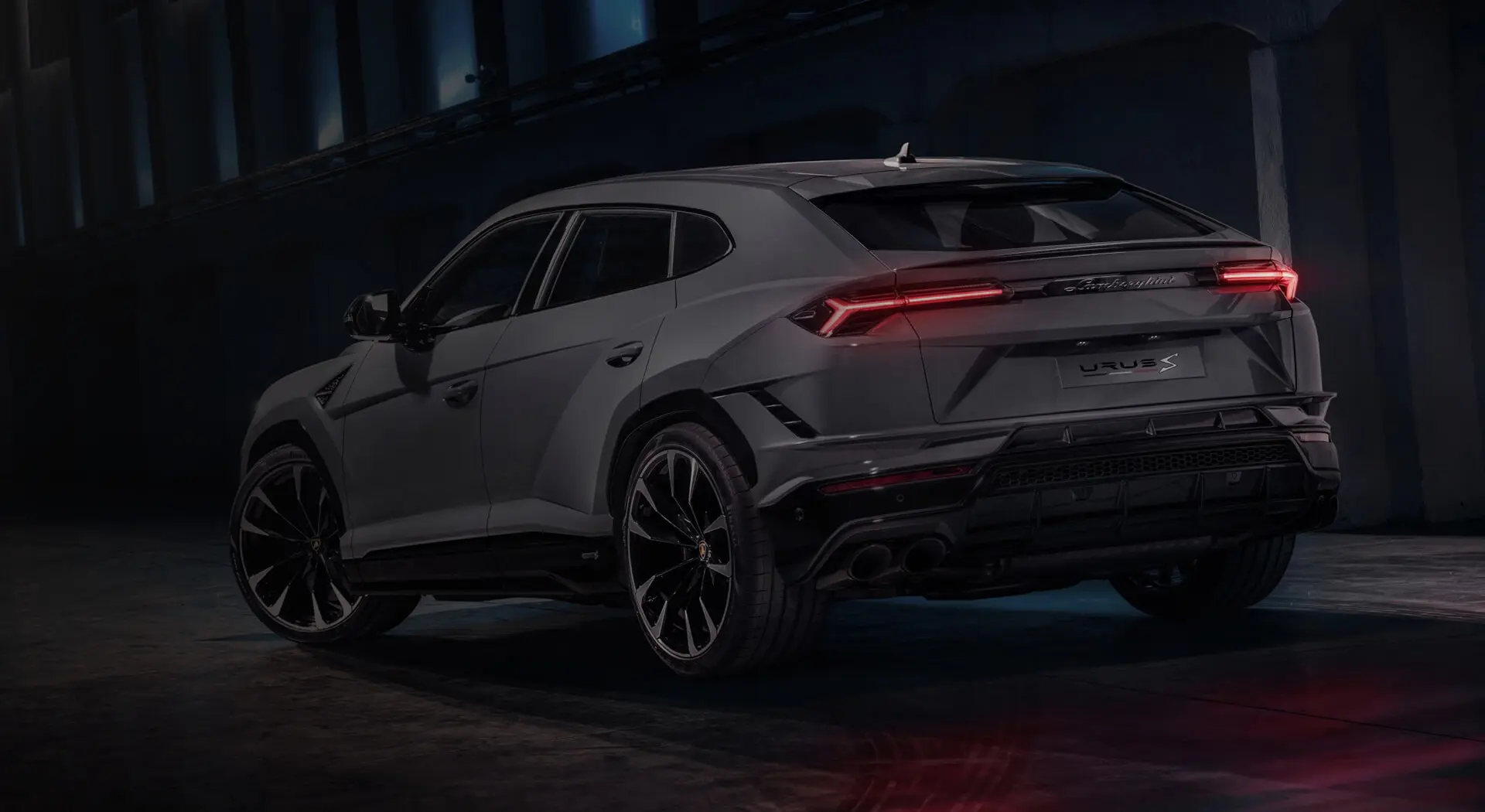
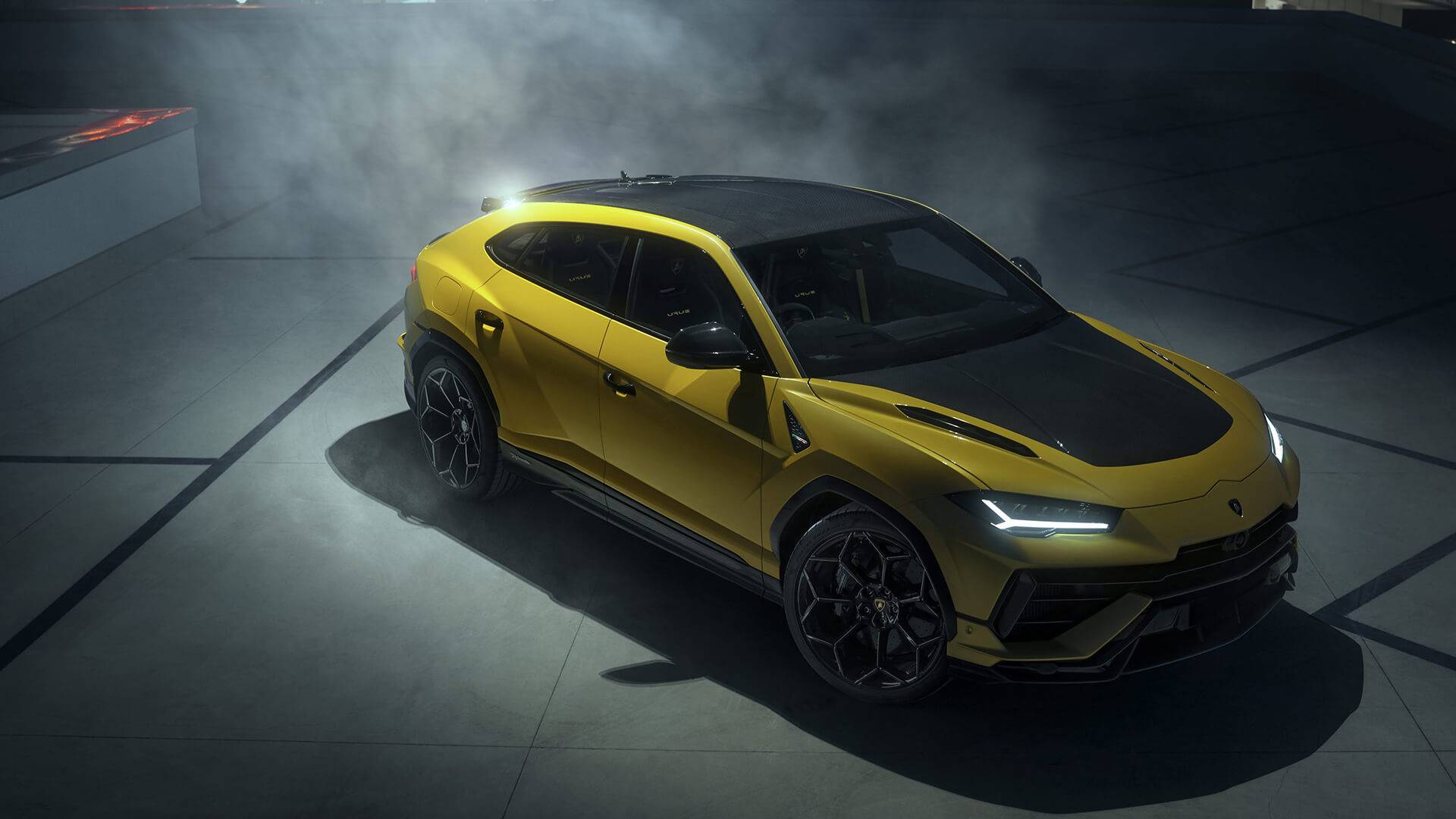
Visually, the Lamborghini Urus SE gets a comprehensive facelift. Adaptive matrix LED headlights feature distinctive daytime running light signatures. A power-dome hood eliminates the previous awkward shutline where the hood met the grille. Restyled bumpers front and rear improve aerodynamics while maintaining visual aggression. Lamborghini expanded the color palette to over 100 options, including new shades like Arancio Egon (orange) and Verde Viper (green).
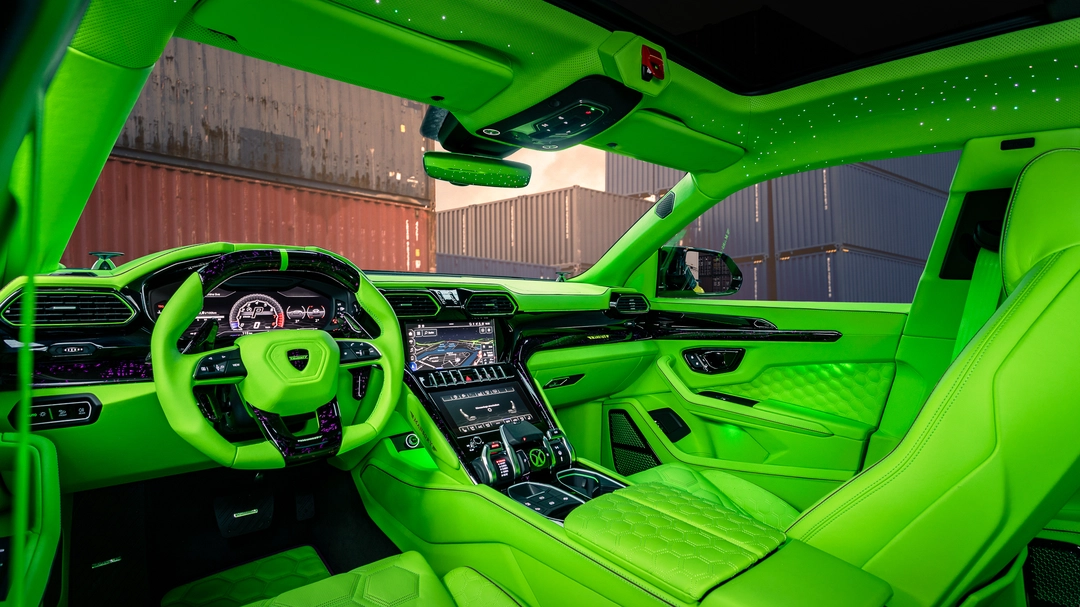
Inside, a larger 12.3-inch touchscreen dominates the dashboard, running Lamborghini’s latest infotainment software. Physical toggle switches remain for critical functions—a crucial distinction from competitors going all-touchscreen. The fighter-jet start button under its red flip-cover remains, because Lamborghini understands that theater matters as much as function.
Lamborghini Urus Design & Styling: Statement Piece or Engineering Necessity?
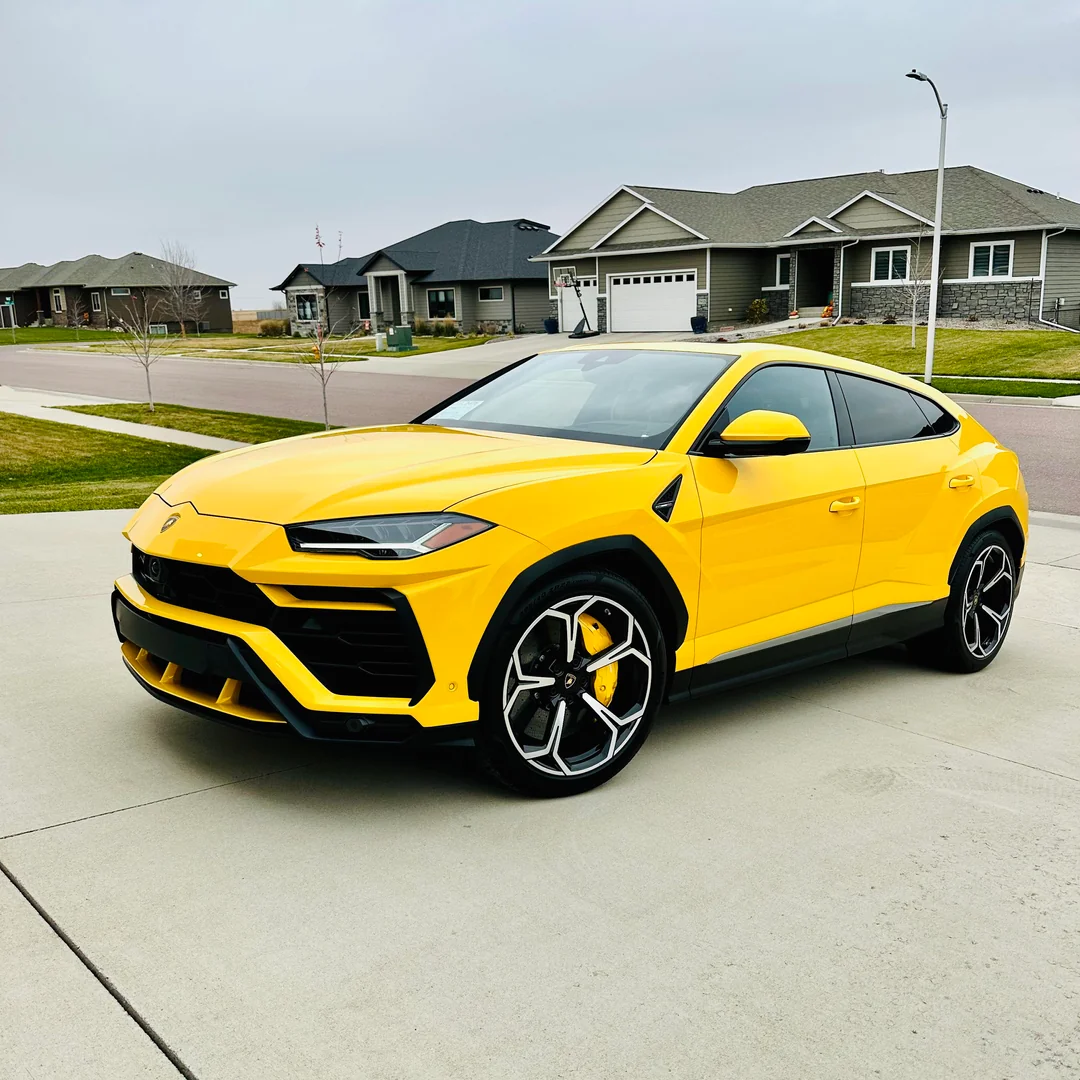
The Lamborghini Urus has always been… a lot. It’s 201.7 inches long, 79.6 inches wide, and 64.3 inches tall—bigger than a BMW X5 but somehow more menacing. The 2025 facelift softens some edges with a hood that flows naturally to the grille and redesigned taillights set in a “grille” trim piece that references the facelifted Gallardo.
My neighbor called it a “beautiful vehicle” in its Verde Gea matte finish. I reluctantly agreed because, honestly, what else do you say when someone compliments your Urus? That it’s “a bit much?”
The design serves critical aerodynamic functions, too. A new aero lip increases rear downforce by 35% at high speeds. Underbody air vents provide 15% extra cooling for the hybrid components. Brake cooling has improved by 30% thanks to redesigned front air ducts. This isn’t just visual aggression—it’s aerodynamic necessity when you’re pushing 789 horsepower through a 5,500-pound vehicle.
The Lamborghini Urus silhouette remains controversial. Some critics call it a jacked-up station wagon; others praise its muscular proportions. The fastback roofline sacrifices some rear headroom for style, while the wide haunches over the rear wheels visually communicate the power going to all four corners. The hexagonal design theme—Lamborghini’s signature shape—appears everywhere from the air intakes to the exhaust tips.
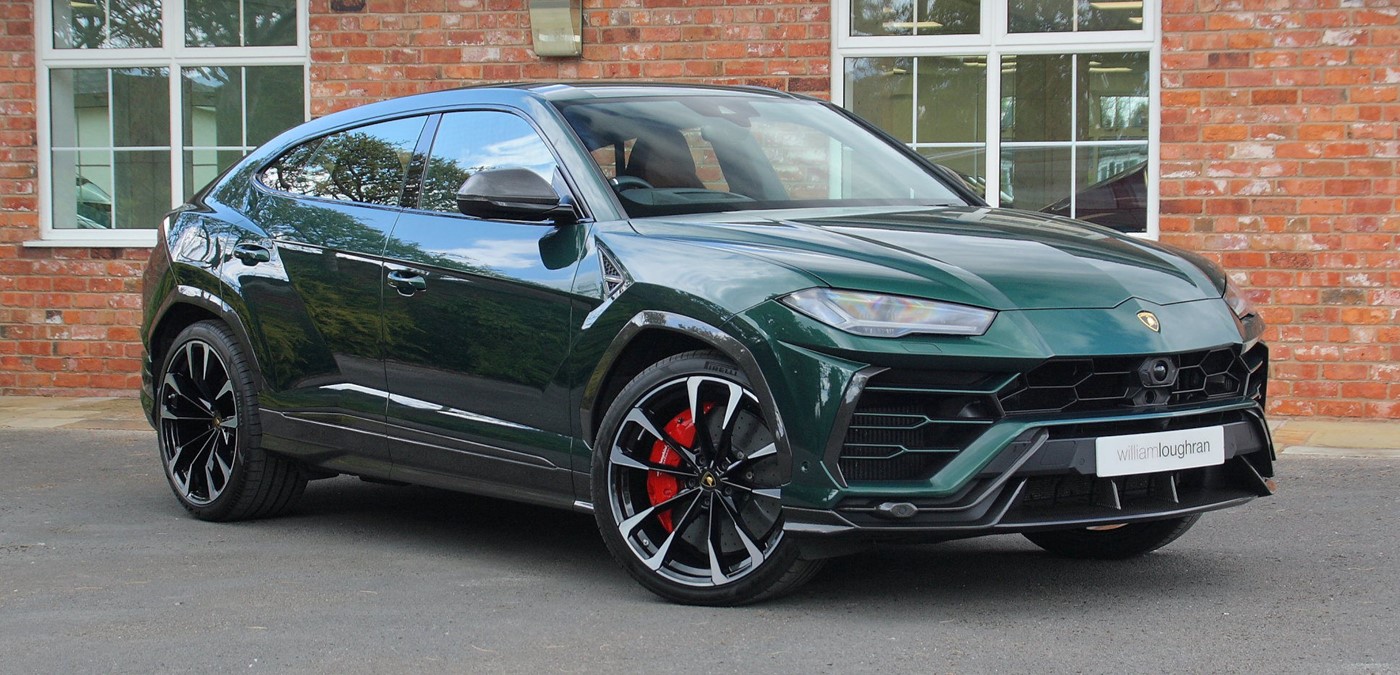
The customization game: Lamborghini claims the Urus SE is the most customizable model in its history via the Ad Personam program. Choose from pearl, 4-layer, or matte finishes. Opt for the $7,507 carbon fiber roof to save weight (though at 5,520 pounds, you’re fighting a losing battle). Select 21-inch silver wheels for relative restraint or 23-inch Galanthus wheels for maximum visual assault.
The Urus offers three distinct styling packages: the standard look, the Sportivo package with gloss black accents, and the full carbon fiber package that replaces nearly every exterior trim piece with woven composite. Each significantly alters the vehicle’s character—and its price.
Lamborghini Urus Interior: The Supercar Cockpit Reimagined
Lamborghini’s “Feel Like a Pilot” philosophy sounds like marketing speak until you climb inside the Lamborghini Urus. You sit remarkably low for an SUV—so low you might wonder why you didn’t just buy a station wagon. The 12-way adjustable front seats offer heating, memory, and massage functions. The steering wheel is heated. Carbon fiber inlays are everywhere.
The seating position is deliberate. Lamborghini wanted Urus drivers to feel connected to the road, not perched above it like in a typical luxury SUV. The result is a commanding view forward with a car-like hip point that makes the vehicle feel smaller than its dimensions suggest.
The technology setup in the Urus:
12.3-inch digital instrument cluster: Sharp graphics, configurable layouts including a full-map navigation view and performance telemetry
12.3-inch central touchscreen: Improved response times for 2025, voice control (“Ciao, Lamborghini”)
8.6-inch climate control screen: Haptic feedback, intuitive but requires looking down while driving
The infotainment system represents a significant improvement over earlier Urus models, but it’s still fundamentally Audi software with a Lamborghini skin. The menu structure can be convoluted, and some functions require too many taps. However, the addition of physical buttons for 2025 addresses the biggest complaint about the previous model.
Crucially, the Lamborghini Urus kept physical controls for critical functions. The “tamburo” (drum in Italian) selector for drive modes delivers audible mechanical clunks when you switch settings—technically unnecessary, absolutely essential for the Lamborghini experience. The ANIMA (Adaptive Network Intelligent Management) controller looks like it belongs in a fighter jet, with its flip-up red cover and tactile feedback.
Materials and craftsmanship: The Urus interior uses genuine leather, Alcantara, carbon fiber, and aluminum. The quality is generally excellent, though keen-eyed passengers will spot some Audi-sourced switchgear. For the price, Lamborghini should have customized every single control, but the shared components work well and keep service costs manageable.
Practicality surprises: Rear legroom is generous at 38.7 inches, though the sloping roofline cuts into headroom for six-footers. The rear seats are more comfortable for four than five, with a center console that intrudes on middle-seat legroom. Cargo space remains 21.8 cubic feet (616 liters) behind the rear seats despite the battery pack—expandable to 56.4 cubic feet (1,596 liters) with seats folded. You can even raise or lower the rear suspension via a button to ease loading heavy items.
The Urus can tow 7,000 pounds when properly equipped—more than most luxury SUVs and a capability that underscores its practical mission. Try that in a Ferrari Purosangue.
Lamborghini Urus Engines & Performance: Hybrid Power Done Right
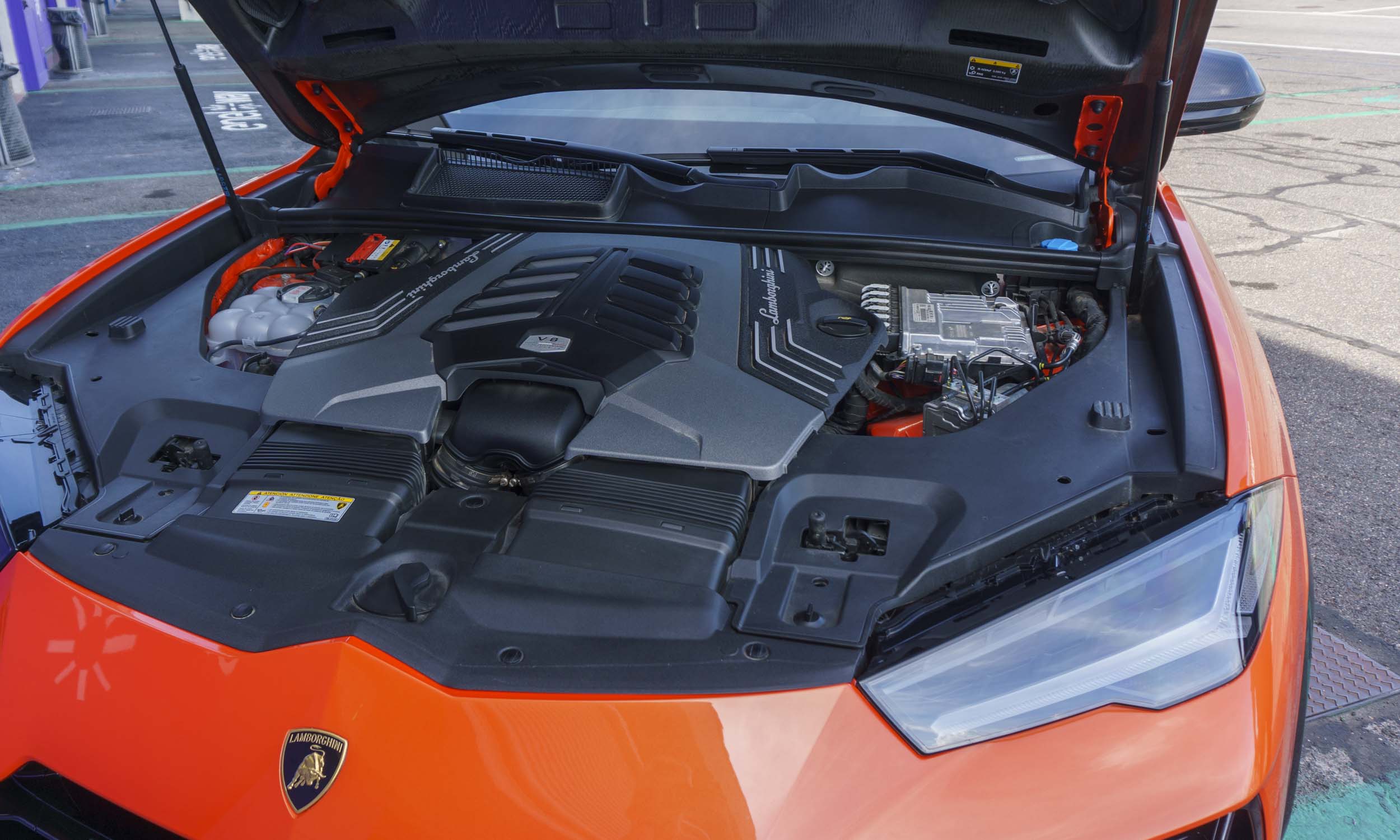
Here’s where the Lamborghini Urus SE diverges dramatically from its predecessors. The 4.0-liter twin-turbo V8 carries over but detuned to 612 hp and 590 lb-ft of torque to accommodate the Urus hybrid system. The electric motor—mounted within the 8-speed automatic transmission—contributes 189 hp and 356 lb-ft of torque.
Combined output: 789 hp and 701 lb-ft of torque at just 1,750 RPM.
This powertrain architecture is sophisticated. The electric motor sits between the engine and transmission, allowing it to assist the V8, power the vehicle independently, or recharge the battery. A clutch can decouple the V8 entirely for silent electric operation.
What does this mean in practice? The electric motor acts as torque fill, eliminating the turbo lag that plagued earlier Lamborghini Urus models. Any speed, any gear, the Urus SE just goes. The 0-62 mph time of 3.4 seconds is only 0.1 seconds quicker than the old Urus S model, but the in-gear acceleration is mind-scrambling.
More impressive is the 0-124 mph time of just 11.4 seconds. This isn’t just quick for an SUV; it’s quicker than most sports cars. The Urus SE will embarrass dedicated performance machines from stoplights and on highway on-ramps.
The hybrid modes explained in detail:
EV Mode: Silent running up to 84 mph, 37 miles of range. Perfect for early morning departures without waking the neighborhood.
Hybrid Mode: System automatically manages power sources for optimal efficiency. The V8 runs when needed, shuts off when possible.
Recharge Mode: Engine charges the battery while driving. Increases fuel consumption but ensures full performance capability.
Performance Mode: Maximum combined output, engine always running, battery maintained at optimal charge for electric boost.
The charging reality: No DC fast charging. A full charge takes 4 hours on an 11 kW Level 2 charger. Lamborghini admits most Urus owners won’t plug in regularly—the system recharges via regenerative braking and engine charging to maintain battery levels for performance driving. The lack of DC fast charging is a curious omission given the price point, but Lamborghini argues this is a performance vehicle first, an electric vehicle second.
The soundtrack: Despite electrification, the Lamborghini Urus SE sounds spectacular. In Sport and Corsa modes, the quad exhausts deliver a bassy, crackling V8 bellow that echoes off canyon walls. It borders on muscle car depth—effectively masking any hybrid “hippy” vibes. The sound is digitally enhanced through the speakers, but it’s convincing enough that passengers won’t know the difference.
Lamborghini Urus Ride & Handling: Defying Physics
At 5,520 pounds, the Lamborghini Urus SE is roughly 700 pounds heavier than the old Urus Performante. You feel that weight in transitions, but Lamborghini threw serious engineering at the problem:
Dual-valve active dampers: More bandwidth between comfort and performance than previous models. These can switch from compliant to race-car stiff in milliseconds.
48-volt active anti-roll control: Virtually eliminates body roll in corners. The system can apply up to 1,400 Nm of torque to counteract lateral forces.
Rear-axle steering: Turns rear wheels opposite to fronts at low speeds (tighter turning circle), same direction at high speeds (stability). At 62 mph, the rear wheels turn up to 3 degrees.
Torque-vectoring rear differential: Can send up to 80% of power to the rear wheels, enabling deliberate oversteer. This isn’t just all-wheel drive; it’s intelligent power distribution.
New clutch pack center differential: Replaces the old Torsen unit, proactively distributing power rather than reactively.
On the road: In Strada mode, the Lamborghini Urus SE is as docile as a Volkswagen Tiguan—Lamborghini’s own engineers admit this. The air suspension floats over highway imperfections. The steering is light. The exhaust valves stay closed. It’s genuinely comfortable for long distances.
Switch to Sport, and the transformation is immediate. The air suspension firms up, dropping the ride height by 15mm. The steering weights up (though it remains lighter than you’d expect). The exhaust valves open, filling the cabin with V8 thunder. Throttle response sharpens, and the transmission holds gears longer, bouncing off the 6,800 RPM redline.
Corsa mode is for track use only. The suspension becomes genuinely stiff, the stability control relaxes its grip, and the transmission delivers brutal shifts. This is where the Urus feels most like a Lamborghini, but it’s too harsh for public roads.
The rear-axle steering takes adjustment. At first, it feels like the rear is stepping out unnaturally. Learn to trust it, and the Urus rotates into corners with cartoonish agility—inappropriate for an Audi, perfect for a Lamborghini. At low speeds, the rear wheels turn opposite the fronts, effectively shortening the wheelbase for tighter turning. At high speeds, they turn with the fronts, improving stability during lane changes and high-speed corners.
Braking performance: Standard carbon-ceramic brakes measure 440mm front and 370mm rear—among the largest fitted to any production vehicle. They provide fade-free stopping power even during repeated hard use. However, they squeal embarrassingly at low speeds—a characteristic of carbon-ceramic materials that Urus owners learn to accept.
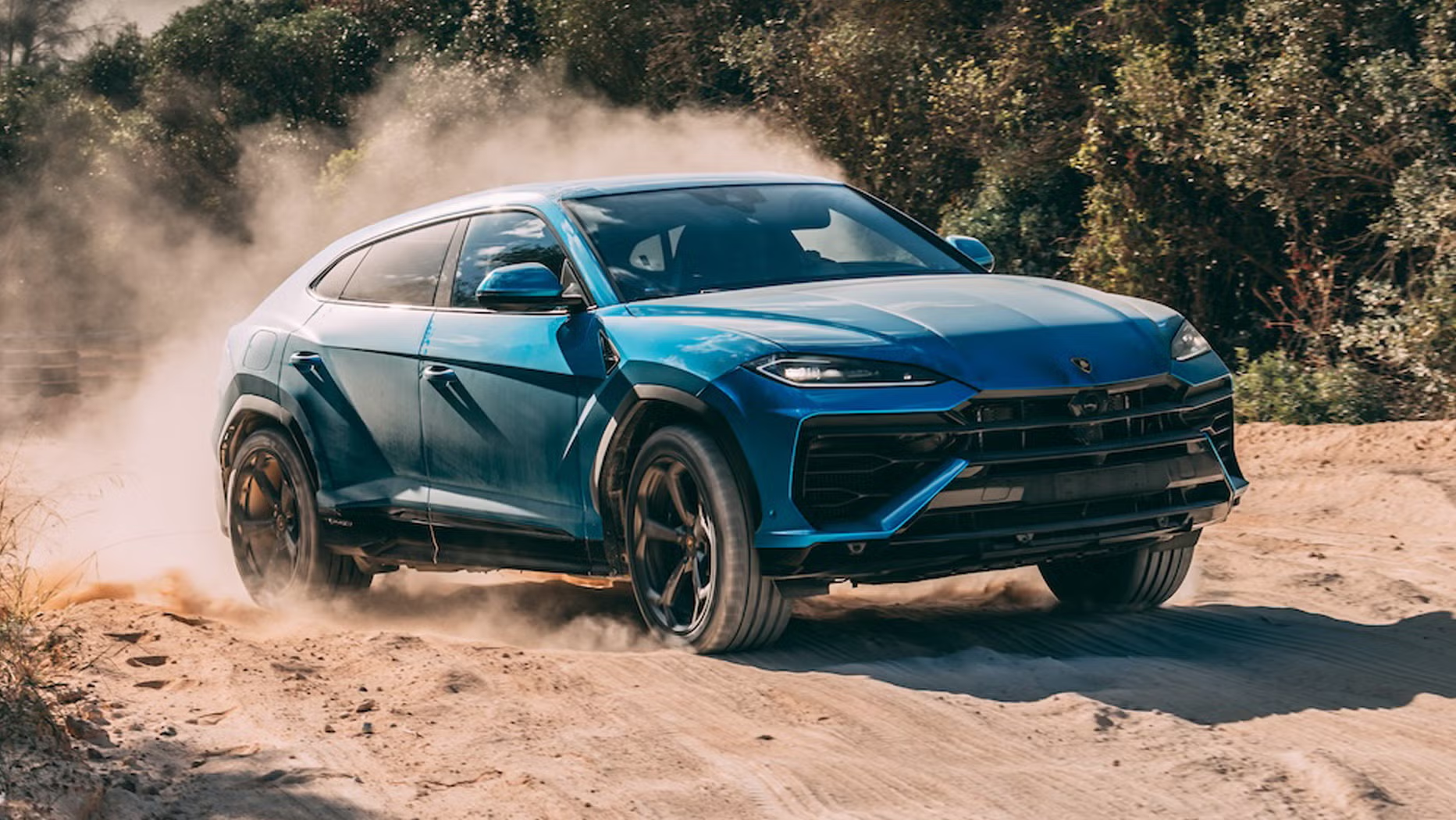
Off-road credibility: Three off-road modes (Terra for gravel, Sabbia for sand, Neve for snow) raise the air suspension and alter traction control. Ground clearance increases to 9.8 inches—enough for genuine off-roading. The 4WD system provides surprising capability on loose surfaces, though you’ll want winter tires for serious snow. Lamborghini even offers an off-road package with reinforced underbody protection.
Lamborghini Urus MPG & Running Costs: The Financial Reality
The EPA rates the Lamborghini Urus SE at 20 mpg combined (gas only) and 48 MPGe in hybrid mode. Real-world Urus owners report 11-14 mpg when driving “enthusiastically”—which, let’s be honest, is the only reason you buy a Lamborghini.
The 22-gallon fuel tank provides a theoretical range of 440 miles, but in practice, you’ll stop every 250-300 miles. Premium fuel is mandatory; the high-compression V8 and hybrid system demand 91+ octane.
The charging economics: With electricity at $0.13/kWh, a full charge costs about $2.83. If you plug in daily and drive 30 electric miles, you could theoretically save $1,500+ annually on fuel versus the old Urus S model. But factor in the Urus SE price premium of $50,000+ over a used S model, and the payback period stretches into decades.
The real ownership costs (post-warranty):
Insurance: $4,000-8,000 annually depending on location, driving record, and mileage. Some insurers require specialized exotic car policies with agreed-value coverage.
Tires: Pirelli P Zero (285/35R23 front, 325/30R23 rear) run $2,500-4,000 per set, lasting 15,000-20,000 miles with conservative driving. Track use destroys them in 5,000 miles.
Brakes: Carbon-ceramic rotors last 50,000+ miles with street use, but replacement costs $3,500-10,000 depending on whether you need pads or full rotors.
Scheduled maintenance: Lamborghini offers 5 years of complimentary scheduled maintenance for 2025+ models—a $15,000-25,000 value. After that:
Basic service (every 9,000 miles): $600-900 for oil change, inspection, and filters
Intermediate (every 18,000 miles): $2,500-4,000 including spark plugs, belts, and fluids
Major service (every 36,000 miles): $5,000-8,000 including transmission service, brake fluid flush, and coolant replacement
Unexpected costs to budget for:
Windshield replacement: $2,500-4,000 (must be OEM for ADAS calibration)
Paint correction and ceramic coating: $2,000-5,000 (essential for maintaining value)
Paint Protection Film (PPF): $5,000-8,000 for full front coverage
Storage: If you don’t have a garage, factor in climate-controlled storage costs
Track day insurance: Standard policies often exclude track use; specialized coverage runs $500-1,500 per event
Depreciation—the surprise good news: While most exotic cars hemorrhage value, the Lamborghini Urus holds steady. Three-year depreciation is just 14.8% (retaining 85.2% of value). Five-year depreciation is 33.2%—beating the Bentley Bentayga (47.8%) and Rolls-Royce Cullinan (44.4%). Early 2019 models with 50,000+ miles still command $160,000.
Why does the Urus hold value? Production constraints create artificial scarcity. The “one-car garage” appeal keeps demand steady. And the Lamborghini badge carries more cachet than competitors. The 2025 hybrid transition may actually increase values for older V8 models as collectors seek the “last pure” Urus.
Lamborghini Urus Safety & Reliability: Data from 32,000 Vehicles
Since 2018, Lamborghini has sold over 32,000 Lamborghini Urus models—its best-seller by a comical margin.
That volume creates a meaningful Urus reliability dataset that potential buyers should understand.
The platform advantage: The Lamborghini Urus shares its MLB Evo architecture with the Audi Q8, Bentley Bentayga, and Porsche Cayenne.
This isn’t bespoke Italian engineering; it’s proven Volkswagen Group hardware with Lamborghini calibration. When maintained properly, these are mechanically sound vehicles.
The 4.0-liter V8 appears across the VW Group in various tunes, from the Audi RS6 to the Bentley Continental. It’s a robust engine with known characteristics. The ZF 8-speed transmission is equally proven, handling the torque in everything from Ram trucks to Rolls-Royces.
Known issues to check based on owner reports:
Electrical gremlins: The infotainment system—shared with Audi but running Lamborghini software—suffers from freezes, Bluetooth connectivity drops, and random reboots. These usually resolve with dealer software updates but can be frustrating. The 12-volt battery is small and can drain if the vehicle sits for more than two weeks.
Air suspension faults: The adaptive air suspension provides the magic carpet ride and handling, but it’s complex. Owners report warning lights, uneven ride height, and compressor failures after 30,000+ miles. Replacement air struts cost $3,000-5,000 each at dealers, though aftermarket options exist for half that.
Transmission quirks: Early 2019-2020 models experienced jerky low-speed shifts, torque converter shudder, and premature clutch wear in the all-wheel-drive system. Fluid changes every 40,000 miles are critical; neglect this and you’re looking at $15,000+ for transmission rebuilds. The 2021+ models received software updates that improved shift quality.
Engine specifics: The 4.0-liter V8 can suffer oil leaks from plastic valve cover gaskets (especially in hot climates), carbon buildup on intake valves (common in direct-injection engines), and occasional misfires under hard acceleration. The 2019-2020 models had a fuel line recall due to engine compartment heat damaging quick-connectors.
Cooling system: The Urus runs hot, especially the Performante and early SE models. Some owners report coolant leaks from the expansion tank or water pump failures around 40,000 miles.
Exterior trim: The plastic cladding around the wheel arches can fade or discolor. The door handles are complex electro-mechanical units that cost $800+ to replace if they fail.
2022: Rearview camera display failure (federal safety recall)
2019-2020: Fuel line leaks creating fire risk
2023: Fuel filler pipe corrosion
Verify these were performed before purchasing a used Lamborghini Urus. The engine replacement recall particularly affected early 2019 production; insist on service records showing the work was completed by a Lamborghini dealer.
Long-term reliability outlook: With proper maintenance, the Urus can easily exceed 100,000 miles without major issues. The key is finding a qualified service facility—either a Lamborghini dealer or an independent specialist with VW Group expertise. Avoid general mechanics who claim they can “figure it out.”
Lamborghini Urus Pricing and Which One to Buy
The 2025 Lamborghini Urus SE starts at $262,631. With typical options—carbon ceramic brakes, Bang & Olufsen sound system, interesting paint, 23-inch wheels—you’re easily at $320,000.
The trim decision is made for you: The Urus SE is now the only Lamborghini Urus available. The Urus S and Urus Performante are discontinued.
This simplifies the buying process but eliminates choice for purists who wanted the naturally aspirated V8 experience.
Detailed buying strategy:
New 2025 SE: Wait times stretch into late 2025 or early 2026 depending on specification and dealer allocation.
You’ll get the 5-year complimentary maintenance, latest tech, and warranty. However, you’ll pay full price and take the initial depreciation hit. Consider this if you plan to keep the vehicle long-term (5+ years).
Used 2019-2021 (First Generation): The sweet spot for value. Look for clean examples with 20,000-40,000 miles, priced $175,000-210,000. The 2020-2021 models have most early bugs worked out. Verify recall completion and maintenance records. Avoid early 2019 models unless they’ve had the engine recall performed and you get a significant discount.
Used 2022-2024 (Facelift): These offer updated infotainment and refined driving dynamics. Expect to pay $220,000-280,000 depending on mileage and specification. The Urus S (2022-2024) offers the pure V8 experience with 657 hp. The Urus Performante (2022-2024) is the track-focused variant with 657 hp, reduced weight, and stiffer suspension.
Used Performante: If you can find one, these may appreciate as the last pure-V8 Lamborghini Urus models. Expect to pay $220,000+ for low-mileage examples. The Performante’s stiffer suspension and reduced sound deadening make it less daily-drivable but more engaging for enthusiasts.
Avoid: High-mileage early 2019 models (>60,000 miles) approaching major service intervals without documentation. Modified vehicles with aftermarket tunes or exhausts (warranty concerns). Any Urus without comprehensive service records.
Specification matters for resale: Ad Personam colors (especially matte finishes), optional wheels, and the Sportivo interior package add value.
White, black, and grey are safe but boring. Green, orange, or blue turn heads and hold attention. The carbon ceramic brakes are essential for resale—buyers expect them at this price point.
The Competition: How the Lamborghini Urus Stacks Up
The super SUV segment has exploded since the Urus launched. Here’s how it compares to key rivals:
Aston Martin DBX 707 ($245,000)
Advantages: Better handling balance, more engaging chassis dynamics, stunning interior craftsmanship, 697 hp from pure V8
Disadvantages: Smaller cargo area (20.5 cu ft vs 21.8), steeper depreciation, fewer dealers (service headaches), less brand recognition in some markets
Verdict: Buy if you prioritize driving dynamics over brand heat. The DBX feels more special but less practical.
Porsche Cayenne Turbo E-Hybrid ($175,000+)
Advantages: $85,000+ cheaper than Urus SE, nearly as fast (729 hp), superior infotainment, better reliability reputation, more discreet
Disadvantages: Doesn’t turn heads, less emotional engagement, ubiquitous in wealthy suburbs, shared platform feels more obvious
Verdict: The rational choice; the Urus is the emotional one. If you need to justify the purchase to a spouse or board of directors, buy the Porsche.
Ferrari Purosangue ($400,000+)
Advantages: Naturally aspirated 6.5-liter V12 soundtrack, Ferrari badge prestige, more exclusive (limited production), naturally aspirated throttle response
Disadvantages: $140,000+ more expensive than Urus, only 9 cubic feet of cargo space, no towing capacity, 18-month waitlist, less usable daily
Verdict: Different league entirely. Buy if money is truly no object and you view the Urus as too common.
Bentley Bentayga V8 ($200,000+)
Advantages: True luxury ride quality, more prestigious badge to some buyers, available W12 engine (though being phased out), tows 7,716 pounds
Disadvantages: Slower, older platform architecture, less exciting to drive, steeper depreciation
Verdict: Buy if you want to be chauffeured; the Urus is for drivers. The Bentayga is a luxury car; the Urus is a supercar.
Disadvantages: Depreciates 44% in 5 years, drives like a yacht, polarizing looks, feels ponderous on winding roads
Verdict: Cross-shop with the Bentley, not the Urus. These serve different purposes.
McLaren (No SUV) Worth noting that McLaren refuses to build an SUV, claiming it would compromise their brand. This makes the Urus the choice for buyers who want supercar credibility with SUV practicality.
The Verdict: Is the Lamborghini Urus Worth It?
The Lamborghini Urus SE shouldn’t work. It’s a 5,520-pound hybrid SUV wearing a supercar badge. It costs as much as a house in many markets. It demands constant attention, deep pockets, and acceptance of complexity.
And yet, after analyzing seven years of sales data, owner testimonials, and depreciation curves, I understand why this “heretical” Lamborghini Urus represents the majority of Lamborghini’s sales.
It delivers 90% of the supercar experience with 200% of the usability. It’s the only vehicle that makes you feel like a hero whether you’re carving canyon roads, pulling up to a five-star hotel, or waiting in the carpool lane.
The 2025 Urus hybrid powertrain adds complexity, yes. But it also adds daily usability through electric range and instantaneous torque that no pure combustion engine can match. For wealthy buyers who want one spectacular vehicle instead of a garage full of compromises, the Lamborghini Urus remains the king of the hill.
However, go in with eyes open. This isn’t a Toyota that you can ignore for months. It requires regular exercise, premium fuel, expensive tires, and a relationship with a qualified service facility. The Urus rewards engaged ownership with unforgettable experiences, but it punishes neglect with astronomical repair bills.
If you have the means and the mindset, there’s nothing else quite like it. Just budget accordingly. And maybe keep a Honda Accord around for the days when you don’t want to think about fuel costs, parking lot dings, or whether that noise is a $5,000 repair waiting to happen.
The 2026 Lamborghini Urus SE starts at $262,631, with well-optioned models reaching $320,000+. Used 2019-2021 Urus models range from $175,000-$210,000, while low-mileage Performante variants command $220,000+. Annual ownership costs including insurance, maintenance, and fuel typically run $12,000-$18,000 post-warranty.
The Lamborghini Urus SE accelerates from 0-60 mph in 3.2 seconds and reaches a top speed of 194 mph. The hybrid powertrain produces 789 horsepower and 701 lb-ft of torque, making it faster than most dedicated sports cars despite weighing 5,520 pounds.
Yes, the Lamborghini Urus is surprisingly reliable when properly maintained. It shares its platform with the Audi Q8 and Porsche Cayenne, using proven Volkswagen Group engineering. However, expect electrical glitches, air suspension repairs after 30,000 miles, and costly maintenance. The 2026 model includes 5 years of complimentary scheduled maintenance.
The 2026 Urus SE achieves 20 mpg combined (gas only) and 48 MPGe in hybrid mode, with up to 37 miles of electric range. Real-world owners report 11-14 mpg during enthusiastic driving. The 22-gallon tank requires premium 91+ octane fuel, costing $80-$100 per fill-up.
Choose the Lamborghini Urus for practicality and value, the Ferrari Purosangue for exclusivity. The Urus offers more cargo space (21.8 vs 9 cubic feet), towing capacity (7,000 lbs), and costs $140,000 less. The Ferrari features a naturally aspirated V12 and greater prestige but limited usability. The Urus holds value better with 33% depreciation over 5 years versus 44% for the Ferrari.